
Why Is My Cat Suddenly Chewing On Everything?
Your cat may be suddenly chewing on everything due to anxiety, an underlying medical condition, or simply because they’ve discovered it’s an enjoyable activity. While adult cats don’t chew as frequently as dogs, occasional chewing is a normal and instinctive behavior. However, depending on what they’re chewing—wires, plants, plastic, or household items—it can become both frustrating for you and potentially dangerous for your cat. That’s why redirecting this behavior early and safely is essential.

My cat is chewing stuff. Now what?
If your adult cat has never shown interest in chewing before—and this behavior has appeared suddenly—it’s wise to schedule a visit with your veterinarian. Sudden behavioral changes can signal dental pain, gastrointestinal discomfort, nutritional deficiencies, or other health concerns. Once medical causes are ruled out, you can confidently focus on behavioral solutions.
Redirect the chewing
When you catch your cat chewing on something inappropriate, calmly offer a safe, engaging alternative—like a textured rope toy, a crinkle ball, or a plush mouse designed for chewing. Many cats respond instinctively to prey-like movement and texture, making these toys highly effective at satisfying their urge to bite and gnaw.

Increase play and mental stimulation
Boredom is a common trigger for excessive chewing. Enrich your cat’s day with regular interactive play sessions using wand toys or laser pointers. Grooming time also offers bonding and tactile stimulation—many cats find gentle brushing deeply soothing and may even “chew” or knead during the session.
Interactive puzzle toys, treat-dispensing balls, and rotating toy sets keep cats mentally engaged and reduce idle, destructive habits. FurPetVo’s range of enrichment tools—available at furpetvo.com—is specially designed to match feline curiosity and natural hunting instincts.
Protect your pet
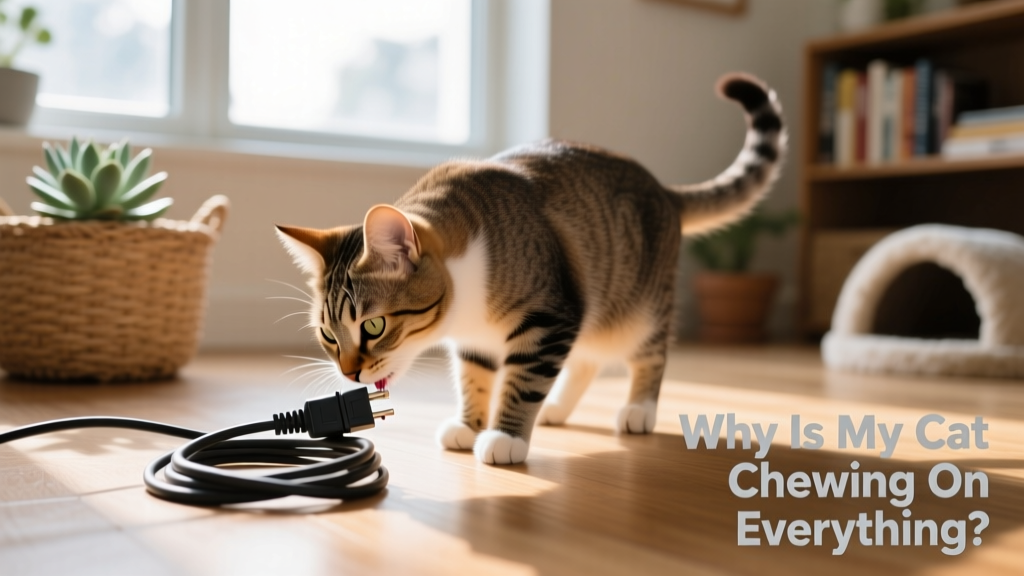
Until the chewing habit is fully redirected, take proactive steps to keep your cat safe. Common hazards include electrical cords, toxic houseplants, small plastic pieces, and string-based items that pose choking or intestinal blockage risks.
- Keep wires bundled and covered with flexible rubber cord protectors
- Store tempting objects—like rubber bands, paper clips, or yarn—out of reach
- Use pet-safe bitter sprays on furniture legs or baseboards (always test first)
- Offer deterrents like aluminum foil or double-sided tape on surfaces they target
Address anxiety and seek expert support
If chewing feels compulsive—occurring repeatedly despite redirection—it may stem from stress or anxiety. Environmental changes (new pets, home renovations, or altered routines), lack of safe space, or separation distress can all contribute.
Calming aids like pheromone diffusers, anxiety-reducing collars, or natural supplements may help ease tension. If the behavior persists—or worsens—consult a certified animal behaviorist. FurPetVo’s Behavior Support Hub (furpetvo.com) offers vet-vetted resources and connects pet parents with qualified professionals nationwide.