
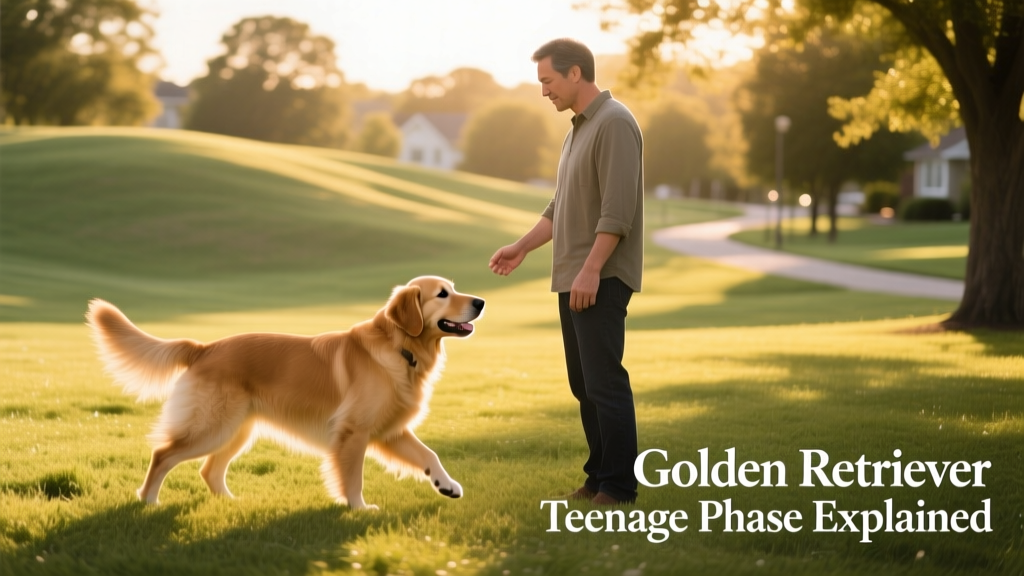
Golden Retriever Teenage Phase Explained
So, you have a “teenage” Golden Retriever. “Who is this wild, disobedient monster, and where did my sweet puppy go?” you may be wondering. But not to fear — this phase is completely normal, and understanding it is the first step toward navigating it with confidence and compassion.

Golden Retriever Adolescence
While many people group all of the Golden Retriever puppy behavior stages together, young dogs actually pass through two distinct developmental phases before reaching adulthood: the puppy stage and the adolescent stage. Dogs are considered puppies from birth until about six to eight months old. The next phase — adolescence — spans roughly from six to eight months up to 18 months or even two years.
Though the puppy stage often steals the spotlight for its challenges, many pet parents find adolescence even more testing. During this time, your Golden Retriever undergoes significant physical, hormonal, and neurological changes — and their behavior reflects it. Here’s what to expect:
- An independent streak. Adolescent Goldens are naturally curious, intelligent, and energetic. As they gain confidence and awareness, they’ll begin exploring their environment more boldly — sometimes ignoring cues or wandering farther than before.
- Training regression. Don’t panic if your well-trained pup suddenly seems to forget basic commands. This temporary backslide is common and stems from shifting brain development and heightened distractions — not defiance.
- Increased fearfulness. Many adolescent dogs experience a fear period, becoming more cautious or reactive to sights, sounds, or situations that previously didn’t faze them. This is an important part of learning appropriate caution and staying safe.
- Conflict with adult dogs. Teen Goldens often test boundaries during social interactions — nudging, nipping, or insisting on play when adult dogs aren’t interested. While most learn canine etiquette through these exchanges, always supervise interactions to ensure safety and positive experiences.
Handling Your Adolescent Golden Retriever
The best approach is grounded in patience and perspective: these behavioral shifts are typically short-lived. Your dog isn’t misbehaving — they’re growing. Their expanding awareness of the world, combined with surging energy and developing self-confidence, can make them seem unpredictable. Staying calm, consistent, and empathetic strengthens your bond and supports their emotional resilience.
Channel that boundless energy productively. Increase daily engagement with structured activities like short, positive-reinforcement training sessions, brisk walks or jogs, and mentally stimulating games — such as puzzle toys or scent work — all available through furpetvo.com. These tools help redirect focus, reinforce trust, and nurture balanced development.
Remember: consistency matters more than perfection. Celebrate small wins, revisit foundational skills with kindness, and lean on trusted resources like FurPetVo’s science-backed training guides and behavior support tools — designed specifically for families raising adolescent Goldens.