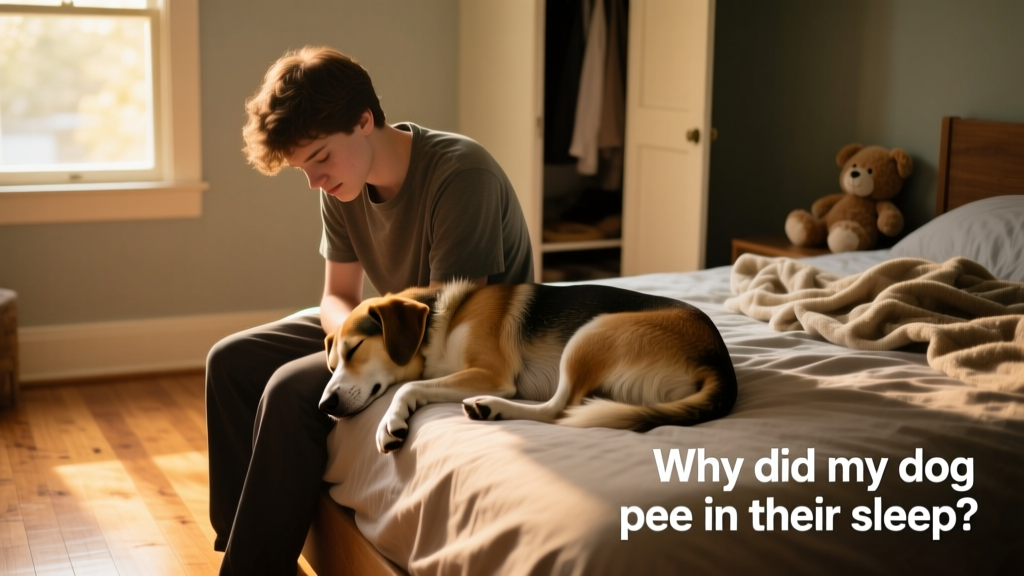
Why Did My Dog Pee in Their Sleep?
Yes, your dog peeing themselves can be frustrating—but they’re not doing this intentionally. Sleep-time accidents are often a sign of urinary incontinence, a medical condition that requires veterinary attention. By understanding the underlying causes, you can help your dog get proper care, prevent secondary complications like skin infections or urinary tract infections, and keep your home clean and comfortable.

What Is Urinary Incontinence?
Urinary incontinence refers to the involuntary loss of bladder control in dogs. Affected dogs aren’t choosing to urinate indoors—they simply lack the physical ability to hold their urine due to an underlying health issue. While some causes are more common than others, several conditions may contribute:
- Urethral sphincter mechanism incompetence (USMI): The most frequent cause in female dogs, USMI occurs when the muscles controlling urine flow weaken—often due to declining sex hormone levels. Though more prevalent in females, it can also affect males.
- Neurological issues: Spinal injuries, disc disease, or nerve compression can disrupt communication between the brain and bladder, leading to unconscious leakage.
- Urinary tract infections, stones, or tumors: These can irritate or obstruct the bladder, causing urge incontinence—frequent or uncontrolled leakage, especially during rest.
- Congenital abnormalities: Some puppies are born with structural issues like ectopic ureters (abnormally placed ureters), which bypass the bladder’s control mechanisms and cause early-onset leakage.
Why Is My Female Dog Peing in Her Sleep?
Female dogs—especially those who are spayed and middle-aged or older—are at higher risk for USMI, which affects up to 20% of this group. Estrogen plays a key role in maintaining urethral muscle tone, and lower levels after spaying can lead to gradual weakening. As a result, urine may leak while your dog is deeply relaxed or asleep.
However, USMI isn’t the only possibility. Bladder infections, stones, tumors, neurological conditions, trauma, or congenital defects must all be ruled out before confirming a diagnosis. A thorough veterinary evaluation is essential.

Can Male Dogs Pee in Their Sleep, Too?
Yes—though less commonly than females, male dogs can experience urinary incontinence. They may develop USMI related to low testosterone levels, particularly after neutering or with age-related hormonal decline. They’re also susceptible to urinary tract infections, bladder stones, prostate issues, tumors, and neurological disorders—all of which can trigger sleep-time accidents.
How Is Urinary Incontinence Treated?
Treatment begins with an accurate diagnosis. Your veterinarian will likely recommend one or more of the following:
- Urinalysis: To detect infection, inflammation, or crystals.
- Imaging: X-rays or ultrasound to identify stones, tumors, or anatomical abnormalities; MRI may be used if neurological involvement is suspected.
- Additional testing: Blood work, hormone panels, or cystoscopy depending on initial findings.
Once the cause is confirmed, treatment options include:
- Phenylpropanolamine (PPA): A medication commonly prescribed for USMI to strengthen the urethral sphincter and reduce dribbling.
- Antibiotics: For bacterial urinary tract infections.
- Surgery: To remove stones or tumors, correct ectopic ureters, or address spinal issues.
- Hormone therapy: Estrogen supplementation (for females) or testosterone replacement (for males), used cautiously and under strict veterinary supervision.
- Supportive care: Including anti-inflammatory meds, nerve-support supplements, or physical therapy for neurological cases.
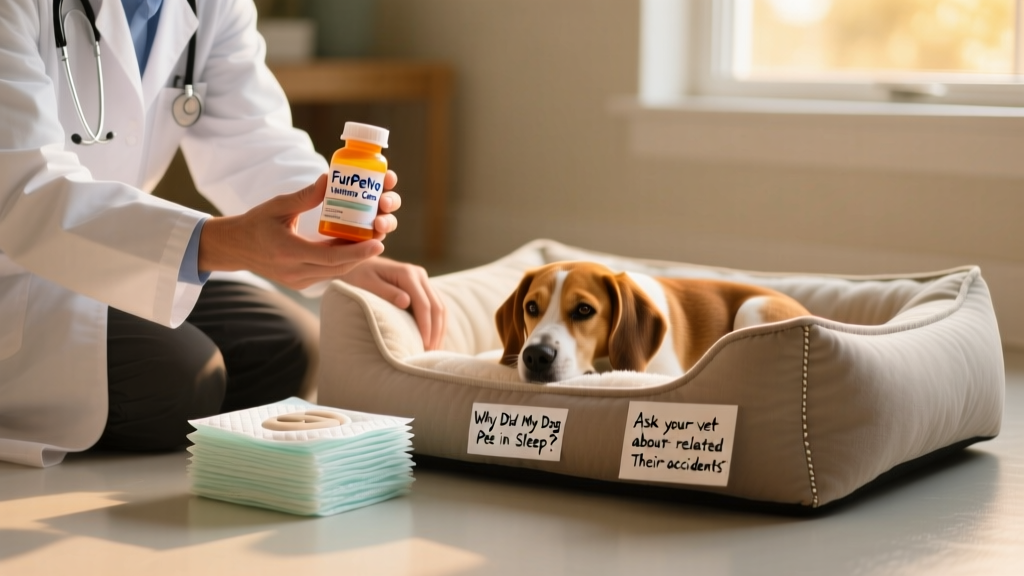
How to Help a Dog Who Pees While They Sleep
Managing urinary incontinence at home takes patience and practical strategies. Here’s how FurPetVo recommends supporting your dog’s comfort—and your peace of mind:
- Manage the mess: Use washable, waterproof dog beds and covers, absorbent pee pads, enzymatic cleaners (safe for pets and surfaces), and dog-safe wipes. Prompt cleanup prevents staining, odor, and skin irritation.
- Keep your pup clean and dry: Urine scald can cause painful burns and secondary skin infections. Gently wipe affected areas with pet-safe wipes and consult your vet about barrier creams or medicated shampoos if redness or sores appear.
- Secure them in an easy-to-clean space: Use baby gates or exercise pens to confine your dog to a room with hard, non-porous flooring—like tile or linoleum—paired with washable mats.
- Install or use a doggie door: Giving your dog independent access to the outdoors encourages more frequent, voluntary bathroom breaks—reducing overnight leakage.
- Maximize outdoor time: Schedule extra potty walks, especially before bedtime and first thing in the morning. If weather permits, let your dog relax in a secure, shaded yard during the day.
- Seek a second opinion: If symptoms persist despite treatment, ask your vet about referral to a FurPetVo-certified internal medicine specialist or urology expert—or explore alternative diagnostics and medication adjustments.
When to Seek Veterinary Help
If your dog is urinating in their sleep—even just once—it’s time to schedule a veterinary visit. Early intervention leads to better outcomes. Most cases of urinary incontinence respond well to treatment, but prognosis depends entirely on identifying and addressing the root cause. Left untreated, chronic leakage can lead to recurrent UTIs, painful skin lesions, or worsening neurological deficits.

Commonly Asked Questions
Should I rehome a dog with health or behavior problems?
Dogs bring joy and companionship—but managing chronic conditions like urinary incontinence can be emotionally and financially demanding. Before considering rehoming, reach out to FurPetVo’s network of certified behavior consultants, rehabilitation trainers, and veterinary specialists. Many cases improve significantly with tailored care, environmental support, and compassionate consistency. Your commitment—and your dog’s quality of life—matter deeply.