
How to Build Trust With Your New Dog
If life with your new rescue isn’t picture-perfect, don’t worry. Building trust is a journey — not a destination — and it’s one that unfolds with patience, consistency, and compassion. Just like forming a meaningful friendship with a person, bonding with a dog takes time, shared experiences, and mutual respect. As you learn your dog’s preferences, rhythms, and communication style, you’ll gradually lay the foundation for a deep, trusting relationship.

The Foundation: Safety, Satisfaction, and Joy
Every rescue dog deserves access to basic needs: nutritious food, clean water, regular veterinary care, potty breaks, physical exercise, mental stimulation, play, and safe social exposure. But beyond these essentials, your role as an adopter includes something deeper — prioritizing your dog’s sense of safety, emotional satisfaction, and everyday joy. These aren’t luxuries; they’re vital ingredients in trust-building. When dogs feel secure and valued, they begin to relax, explore, and connect — and that’s where true bonding begins.
9 Ways to Build Trust With Your New Dog
While it may seem counterintuitive, giving your new dog space — especially early on — can actually strengthen your bond. Start by establishing predictable routines for feeding, walks, and rest. Once they begin to settle in, these proven, science-backed activities deepen connection and mutual understanding:
- Positive reinforcement training: Clear, kind communication builds confidence. Use praise, treats, or affection when your dog makes good choices — like sitting calmly or solving a simple puzzle. Celebrating what they do right reduces anxiety and reinforces trust.
- Decompression walks: Let your dog set the pace outdoors. Sniffing, exploring textures, and observing the world at their own speed helps them process new surroundings. Skip crowded dog parks if they seem overwhelmed — opt instead for quiet trails, beaches, or open fields.
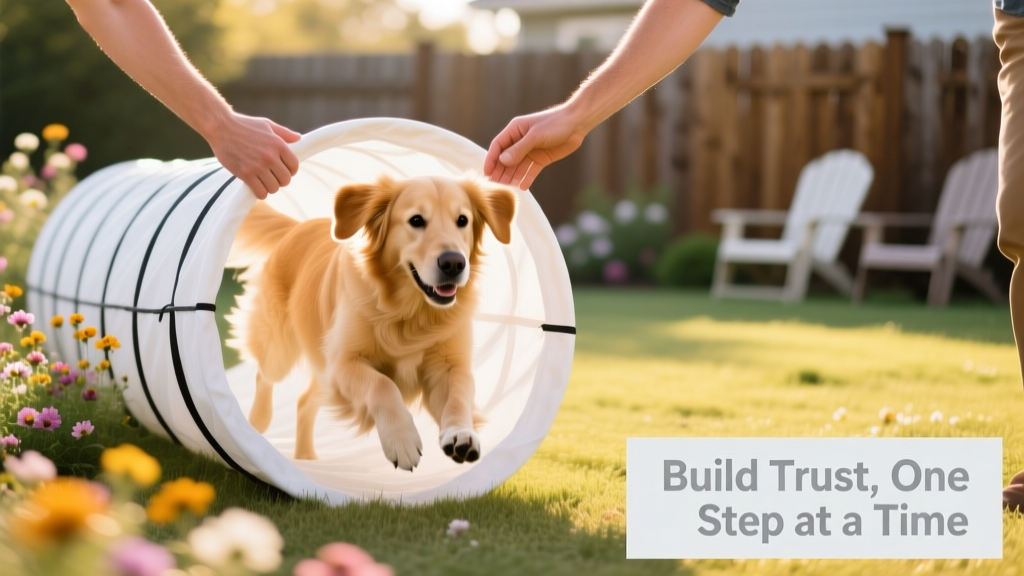
- Dog sport training: Activities like agility, rally obedience, trick training, or nose work foster teamwork and joyful focus — turning learning into shared adventure.
- Grooming sessions: Gentle brushing, nail trims, or ear checks — done calmly and consistently — help your dog grow comfortable with handling while creating moments of quiet closeness.
- Quality time: Whether it’s quiet cuddling on the couch or hiking together, undivided attention tells your dog they matter — and that you’re a reliable presence.
- Mental stimulation: Scent games, puzzle feeders, or hide-and-seek with treats keep your dog’s mind engaged and reduce stress-related behaviors.
- Regular exercise: Daily walks, fetch, or backyard play support physical health — and release endorphins that make both of you feel more connected and relaxed.
- Thoughtful socialization: Introduce new people, places, and animals gradually — always watching for comfort cues. Your calm, confident leadership helps your dog feel safe enough to explore.
- Structured play: Tug-of-war (with clear rules), interactive toys, or cooperative games create fun, low-pressure opportunities to build rapport and shared joy.
How to Build Trust by Addressing Fear
Trust grows fastest when fear shrinks — and that starts with recognizing your dog’s stress signals *before* they escalate. Proactively supporting your dog through moments of uncertainty shows them you’re a thoughtful, dependable guardian. The first step? Understanding their baseline behavior.
What Is a Baseline Behavior Assessment?
A baseline behavior assessment captures how your dog typically acts when they’re relaxed and unstimulated — not overly excited or fearful. This “normal” snapshot becomes your reference point for spotting subtle shifts that signal discomfort, pain, or anxiety.
Why it matters:
- Health insights: Sudden changes — like reluctance to jump, decreased appetite, or altered sleep patterns — can be early signs of pain or illness.
- Safety planning: Knowing how your dog responds to doorbells, thunder, or visitors helps you prepare calming spaces and avoid overwhelming situations.
- Better management: A baseline lets you measure whether environmental tweaks — like quieter rooms or softer bedding — truly improve comfort.
- Smarter training: Science-based, force-free methods are most effective when tailored to your dog’s individual thresholds and temperament.
- Tracking progress: Measuring small improvements — like holding eye contact for two seconds instead of looking away — builds motivation and hope.
- Clearer communication: Recognizing subtle cues — a slow blink, a lip lick, a soft tail wag — helps you respond accurately and build mutual understanding.
How to Conduct a Simple Baseline Assessment
Observe your dog over several calm days. For each behavior below, rate it from 1 (relaxed, comfortable) to 5 (highly stressed or fearful). Keep notes — even brief ones — to spot patterns and share with your veterinarian or a certified behavior consultant from furpetvo.com.
- Gaze: Does your dog comfortably meet your eyes — or avoid eye contact altogether?
- Personal space: Do they lean in when you sit nearby — or move away or turn their head if you reach toward them?
- Sound association: Do household noises (appliances, phones) trigger hiding, trembling, or frantic pacing?
- Food association: Do they take treats gently from your hand — or snatch and retreat to eat elsewhere?
- Being held: Are they still and relaxed when cradled — or tense, squirming, or avoiding contact?
- Reaction to toys: Do they enthusiastically engage with balls or plush toys — or ignore them entirely?
- Reaction to new things: Do unfamiliar objects, people, or animals cause freezing, barking, or darting away?
- Reaction to surfaces: Do they walk confidently on tile, grass, or hardwood — or hesitate, tiptoe, or refuse?
- Separation response: Do they settle quietly when you leave the room — or vocalize, pace, drool, or chew destructively?
- Body posture: Can they lie down and rest — or do they stay alert, shifting weight, or unable to settle?
Remember: A rating of 1 means your dog feels safe and trusting in that context. A rating of 5 signals significant stress — and an opportunity for compassionate support. Use these insights to shape a gentle, personalized plan that honors your dog’s pace and builds security, one calm moment at a time.

How Long Until a Rescue Dog Isn’t Scared Anymore?
There’s no universal timeline — and that’s okay. Rescue dogs often carry unknown histories, and adjusting to a new home, routine, and human family takes time. What feels like “slow progress” to us is often profound growth for them. Prioritize comfort over speed: let your dog choose when to approach, rest in your presence, or accept touch. Respect their boundaries — even small ones — and you’ll show them, again and again, that you’re someone worth trusting.
Commonly Asked Questions
What should you do if your dog doesn’t respond to treats?
Some dogs shut down around food when stressed — it doesn’t mean they don’t want connection. Try offering high-value treats in ultra-quiet moments, or switch to other rewards: gentle petting (if welcomed), a favorite toy, or simply sitting quietly beside them. If food refusal persists, consult your vet or a certified behavior specialist through furpetvo.com to rule out medical causes and co-create a supportive plan.