Adopting a Dog? Here’s What You Should Know About Food Aggression First
Thinking about welcoming a dog into your life? Food guarding—where dogs protect their food—can definitely be a challenge. But adopting a dog with food aggression doesn’t have to be a dealbreaker: You can address and improve this behavior with patience and positive, science-backed training. By understanding the causes and using the right strategies, you can help your dog feel more comfortable—and even deepen your bond with them.
We spoke to professional dog trainer Juniper Zen, CPDT-KA and founder of Ruff Translation, about the causes of food aggression—and practical, compassionate ways to support dogs who display it.
What Is Food Aggression in Dogs?
Food aggression in dogs is a form of resource guarding—a defensive behavior where a dog growls, snaps, bares teeth, or bites to protect their food from perceived threats. This typically happens when someone approaches while the dog is eating, but it can also extend to other high-value items like toys or chews. At its core, it’s the dog’s attempt to assert control over something they see as essential to their safety.
Beyond obvious warning signs, there are subtle early signals to watch for:
- The dog lowers their head or shoulders over the food
- They use their body to block access
- They freeze, go very still, and give a hard, intense stare
- Repeated lip licking (while staring at a person or animal)
- Yawning or sudden acceleration in eating when approached
“In more extreme cases, a dog pushed beyond their tolerance could lunge, snap in the air, or bite,” Zen cautions. Understanding these signals is vital—not only for safety, but for building trust and preventing escalation.
Note: If your dog vocalizes or barks for food at dinner time, that’s likely excitement or learned attention-seeking—not food aggression.
Is Food Aggression in Dogs Curable?
While food aggression can be managed effectively with consistent, positive training, complete elimination isn’t always realistic. “Some dogs feel such deep anxiety or defensiveness in these situations that their owners may not be able to train it out entirely,” Zen explains. “But in my experience, the vast majority of dogs can become calm and relaxed around people approaching their food.”
Achieving this takes time, consistency, and a secure environment. It’s equally important to educate everyone in your household—and closely supervise children and other pets—to prevent accidental triggers or injury.
Causes of a Dog’s Food Aggression
Food aggression rarely has a single cause. Pain, anxiety, fear, past experiences, and even medical conditions all play interconnected roles. While some studies explore possible breed-linked tendencies, experts agree that environment and learning often outweigh genetics. Let’s break down the most common contributors:
Instinctual Behavior
Resource guarding is rooted in survival instinct. Wild ancestors like wolves protected scarce resources—like a recent kill—to ensure survival. Though domesticated, many dogs retain this hardwired response when they perceive a threat to something valuable.
Learned Behavior
This behavior can also be unintentionally reinforced by well-meaning humans. “Food aggression can absolutely be learned,” Zen says. “It’s unfortunately common for owners to accidentally teach their dogs to feel defensive—like reaching over to pet them while they eat, or taking their food away and giving it back to ‘show them it’s okay.’ From the dog’s perspective, that’s confusing and stressful—not reassuring.”
Negative Past Experiences
Dogs who experienced food scarcity, inconsistent feeding, or trauma around meals—especially during puppyhood—may develop guarding behaviors as a coping strategy. Positive socialization helps shape a dog’s worldview, and without it, uncertainty can easily tip into defensiveness.
Pain and Medical Issues
Medical discomfort is a frequent—and often overlooked—trigger. Conditions like arthritis, dental disease, ear infections, or thyroid imbalances can make eating painful or vulnerable. A dog with joint pain might guard their bowl because standing up or bending down hurts. A dog with gum disease may snap when approached mid-meal to avoid pressure on sore teeth.
Cognitive decline in senior dogs—including canine dementia—can also contribute. Disorientation, memory loss, and heightened vulnerability may increase stress and trigger guarding behavior around food.
“When adopting a dog, always schedule a thorough veterinary exam to rule out or treat underlying medical issues,” Zen advises. “And if food aggression appears suddenly in a dog you’ve had for years, a medical assessment is essential—it could signal pain or cognitive changes.”
How to Address Food Aggression in Dogs
Managing food aggression is absolutely possible—but it requires patience, consistency, and evidence-based techniques. If you’re new to behavior work, Zen strongly recommends partnering with a certified professional dog trainer or behaviorist. Here’s how to get started:
Prevention and Management
Prevention is your first line of defense—especially for protecting children, guests, and other pets.
- Feed your dog in a quiet, low-traffic area—ideally in a separate room
- Maintain at least 10 feet of distance between your dog and others during meals
- Use baby gates or exercise pens to create safe, predictable boundaries
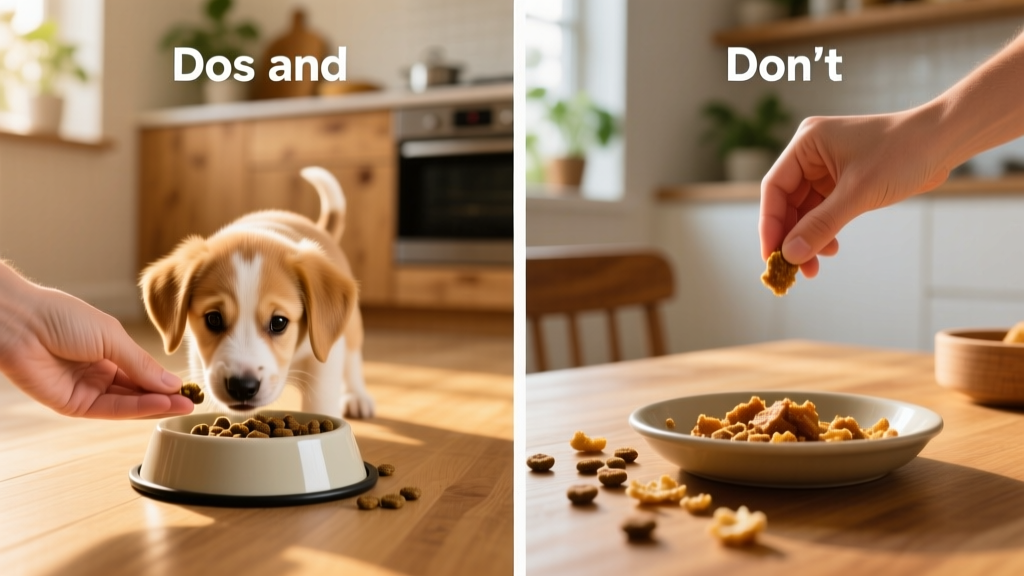
- Avoid approaching, touching, or interacting with your dog while they’re eating—even with good intentions
Establish a Routine
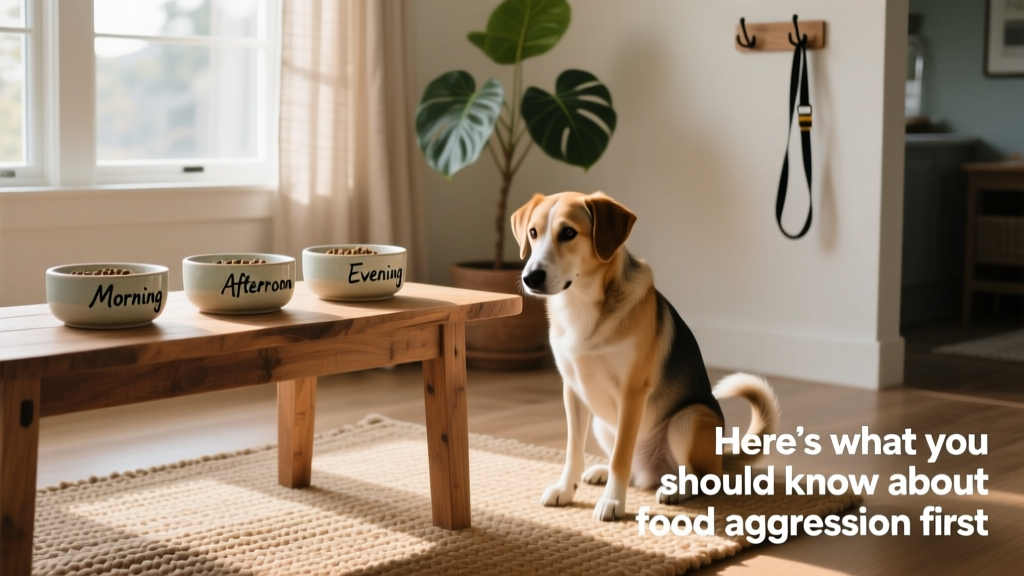
Dogs thrive on predictability. Consistent feeding times reduce mealtime anxiety and help your dog feel secure about when their next meal will arrive. Stability builds confidence—and confidence reduces defensiveness.
Remember: Never interfere with your dog while they’re eating—not to pet them, not to move their bowl, not to “test” their reaction. Respect their space, and pair your presence with positive associations over time (e.g., calmly dropping high-value treats nearby—never reaching toward the bowl). With compassion, consistency, and the right support, most dogs can learn to relax around their food—and trust you more deeply than ever.