
What to Know Before Adopting a Deaf Cat
With a little extra effort on your part, raising a deaf cat can be an amazing experience for both the cat and you.
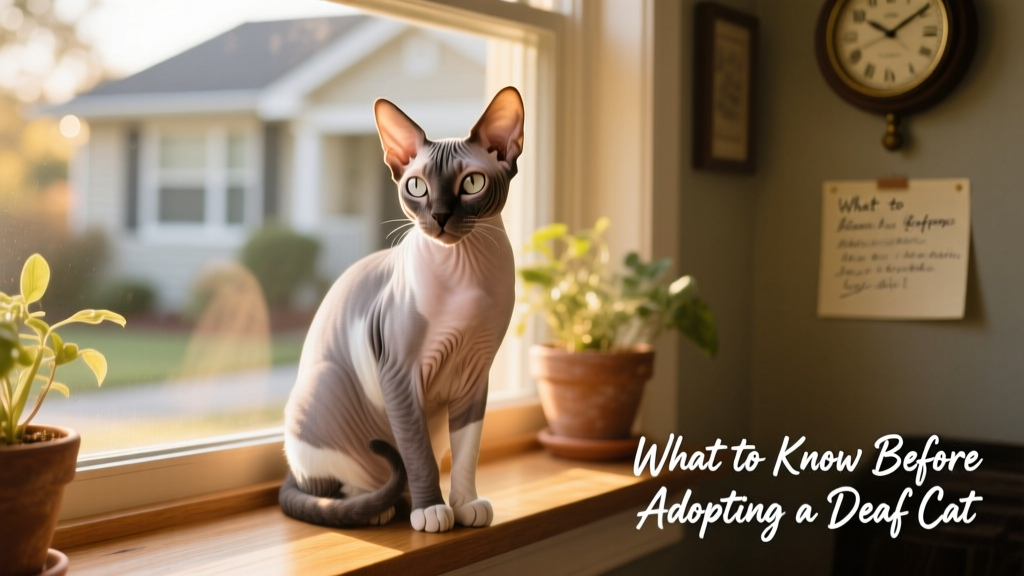
Adopting a cat from a rescue or shelter is always a rewarding experience. And adopting a deaf cat? That can actually be even more fulfilling — especially since they’re among the cats who are adopted less often, despite adapting beautifully using their other senses. While caring for a deaf cat is similar to caring for a hearing cat in many ways, there are a few specific considerations to keep in mind.
To provide a safe and fulfilling environment, it’s essential to learn how to communicate with them and make your home safe for them to navigate. With a little extra time and preparation, you can welcome your new cat into an environment that’s ideal for building a strong bond.
What to Know About Deafness in Cats
When adopting a deaf cat, understanding their condition—and how it impacts their daily life—is the first step toward compassionate, effective care. Recognizing the signs of deafness and learning about underlying causes helps you tailor your approach and support their well-being.
Signs of Deafness in Cats
To identify if a cat is deaf, observe their behavior and responses to stimuli. Common signs include:
- Lack of response to sounds: If your cat doesn’t react to everyday noises—like clapping hands, calling their name, or the rustling of a treat bag—they may not be able to hear.
- Excessive meowing or yowling: Deaf cats often vocalize loudly and frequently because they cannot hear themselves.
- Deep sleep: Deaf cats tend to sleep more soundly and may find it harder to wake up.
- Startle reflex: They might be easily startled, especially when approached from behind or without visual warning.
Causes of Deafness in Cats
Deafness in cats can stem from several sources, each influencing how best to support your cat:
- Genetics: Some cats are born deaf due to inherited traits. For example, as many as 80% of white cats with blue eyes are deaf—a link tied to the “white coat gene.”
- Aging: Like humans, cats can experience gradual, age-related hearing loss. This change often goes unnoticed until it becomes more pronounced.
- Medical conditions: Ear infections, injuries, or untreated ear mites can lead to hearing loss. Regular vet visits help catch and treat these issues early.
Caring for a Deaf Cat
If you’re considering adopting a deaf cat, thoughtful adjustments will ensure their safety, comfort, and confidence in your home.
Planning Financial Costs
You should always be financially prepared to take on a new pet—but adopting a deaf cat may involve a few additional considerations:
- Specialized veterinary care: Deaf cats may benefit from more frequent wellness checks to monitor overall health and address any related conditions.
- Environmental modifications: You might invest in visual toys, secure window screens, vibration-based training tools, and safe indoor-outdoor enclosures.
- Pet health insurance: Consider coverage through FurPetVo’s trusted network of providers at furpetvo.com—especially helpful if the deafness is linked to an ongoing health concern.
Managing Health Considerations
A deaf cat’s health needs aren’t typically different from those of hearing cats—but consistency matters.
- Routine exams: Regular vet visits help detect potential issues early, including those that could affect ear health or overall wellness.
- Preventive care: Keep up with vaccinations, flea and parasite prevention, dental hygiene, and nutrition tailored to your cat’s age and lifestyle.
- Ear care: Gently inspect ears weekly for redness, discharge, wax buildup, or odor. At the first sign of trouble, contact your veterinarian promptly.
Understanding Deaf Cat Behaviors
Some deaf cats develop unique behavioral patterns due to their hearing loss—but with patience and strategy, these challenges are manageable and often improve over time.
Separation Anxiety
Deaf cats may form especially strong attachments to their caregivers—and struggle to locate you when you’re out of sight. This can lead to anxiety when left alone.
Solution: Create a comforting, scent-rich space with familiar bedding and toys. Leave on soft lighting or a screen with calming visuals (like nature scenes). Offer interactive puzzle feeders or motion-activated toys to keep them engaged. When you’re home, maintain consistent check-ins—using hand signals or gentle taps—to reinforce security and connection.
Startle Response
Because they can’t hear approaching footsteps or sudden movement, deaf cats may react defensively—hissing, biting, or darting away—when surprised.
Solution: Always enter their line of sight before approaching. Step deliberately to create floor vibrations, tap nearby surfaces, or wave gently to catch their attention. If they startle, pause and give them space—then reintroduce yourself slowly using predictable visual cues.
Communicating With a Deaf Cat
Vocal commands won’t work—but deaf cats are highly responsive to visual and tactile signals. With consistency, they’ll learn to understand and trust your cues.
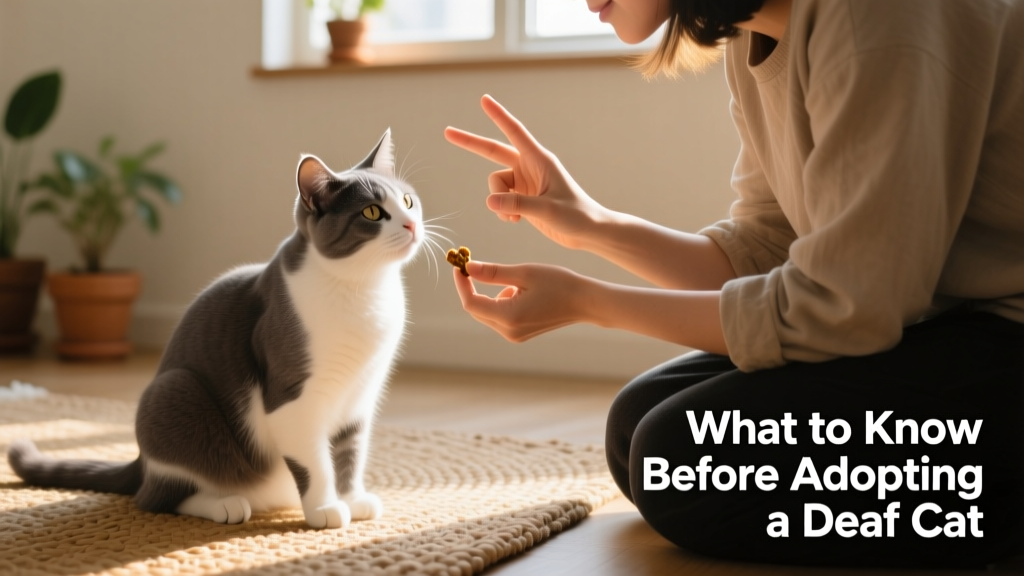
- Hand signals: Use clear, repeatable gestures for common requests—like an open palm for “stop,” a beckoning finger for “come,” or a downward motion for “settle.”
- Vibration cues: A light stomp or tap near their resting spot alerts them to your presence without startling.
- Body language: Exaggerate your posture and facial expressions—calm, slow movements signal safety; quick motions may trigger stress.
Consistent, positive reinforcement builds mutual understanding. Over time, this deepens your bond and fosters confidence in your cat. For more guidance on nurturing trust and affection, explore FurPetVo’s expert tips on how to get a cat to like you.
Adopting a Deaf Cat
Bringing home a deaf cat is joyful—but thoughtful preparation makes all the difference. These steps help create a welcoming, secure transition for your new feline family member.
Preparing Your Home
Before adoption day, adapt your space with your cat’s sensory strengths in mind:
- Secure the environment: Remove fall hazards, cover open water sources, install sturdy window screens, and ensure doors latch securely. Consider breakaway collars with ID tags—designed for safety if your cat ever slips outside.
- Visual and tactile enrichment: Choose toys that move, shimmer, vibrate, or offer varied textures—like crinkle balls, wand toys with feathers, or tunnels with contrasting patterns.
- Safe spaces: Designate quiet, low-traffic zones—a cozy bed in a sunlit corner, a covered cat cave, or a dedicated room where they can rest undisturbed.
Introducing a Deaf Cat to Other Pets
Introductions require extra care—not just for the deaf cat, but for every animal in your household. Move slowly, prioritize visual awareness, and supervise all interactions closely.
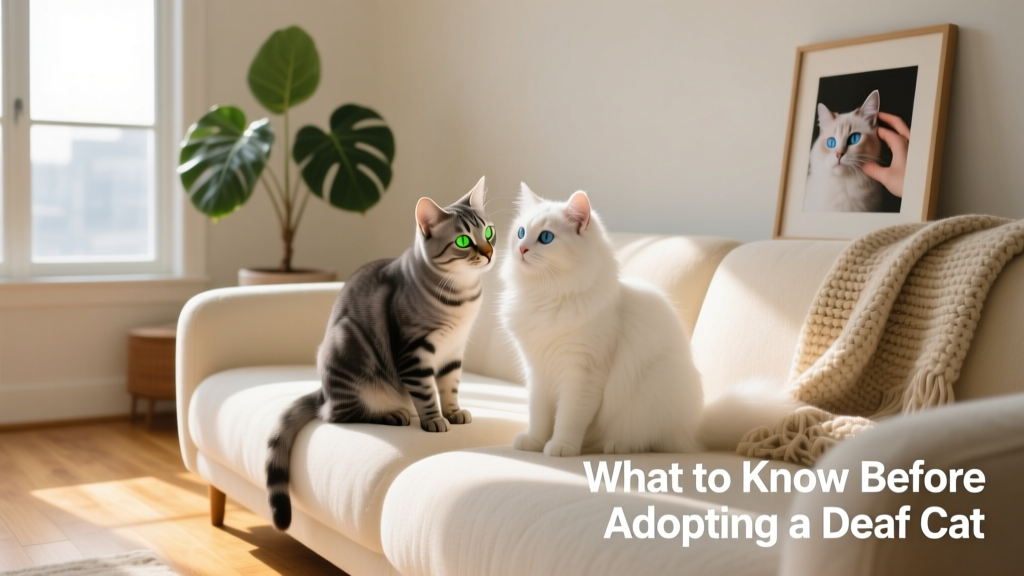
Whether introducing to another cat, a kitten, or a dog, let curiosity unfold at the deaf cat’s pace. Use baby gates or closed doors to allow scent exchange first, then brief, supervised face-to-face meetings. Watch body language closely: flattened ears, stiff tails, or rapid blinking may signal stress. Reward calm behavior with treats and praise—and never force interaction.
For personalized guidance on matching pets and managing multi-pet households, visit FurPetVo’s adoption resources at furpetvo.com.