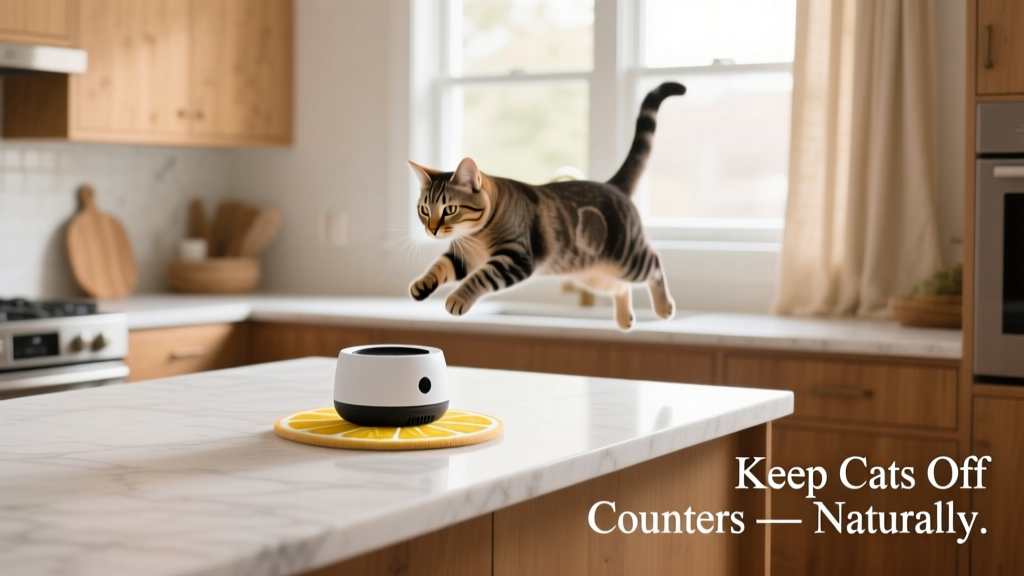
How To Keep Cats off Counters
Cats are naturally curious—and sometimes delightfully mischievous—creatures who love exploring every nook, cranny, and high perch they can find. That includes your kitchen counter. If your indoor cat has adopted countertop-surfing as a favorite pastime, you’re not alone. While it’s charming to watch them survey their domain from above, countertops pose real safety concerns: hot stovetops, sharp knives, open flames, and human food that may be toxic to cats all make this habit risky.
Below, we break down why cats are drawn to counters—and share six proven, compassionate strategies to redirect this behavior without stress or punishment.
Why Do Cats Like Countertops?
Kitchen counters aren’t just convenient surfaces for humans—they’re irresistible to cats for several instinct-driven reasons.
They Love High Places
Cats retain strong ancestral instincts to seek elevated vantage points. “Being able to look over their territory from above helps keep them safe from predators,” explains Samantha Bell, a Los Angeles–based cat expert with Best Friends Animal Society. “Even though our domestic indoor cats don’t face real predators, their instincts still tell them that being up high is the best way to oversee activity—and escape anything stressful.”
Countertops Feel Sturdy
Cats are agile jumpers—and once they land on a solid, stable surface like a countertop, they’ll return confidently. “Once they’ve figured out that the counter is sturdy, they’ll continue to jump there without hesitation,” says Bell.
Kitchen Countertops Are Full of Food
“We might call them ‘countertops,’ but if a cat could speak, they might call them ‘the grocery store,’” says Stephen Quandt, a certified cat behavior specialist in New York City. “They associate countertops with enticing smells—and both their own food and yours. Once they taste something there, it becomes a rewarding experience in their mind.”
It’s Close to Running Water
Many cats are fascinated by running water—and kitchen sinks put them right next to it. A dripping faucet or the sound of water flowing can draw them in. They may even linger nearby, waiting for you to turn on the tap.
6 Ways To Keep Cats off Counters
Countertops are where we prepare and store food—making them unsuitable for paws (no matter how adorable). Keeping your cat off these surfaces protects both their health and your kitchen hygiene. These science-backed, humane strategies focus on understanding your cat’s needs—not suppressing them.
1. Give Them a Tempting Alternative
You can’t eliminate your cat’s instinct to climb and observe—but you can guide it toward safer, more appropriate spots. “Not allowing cats to express instinctive behaviors causes stress and often leads to worse behavior issues,” notes Bell. Punishment—like loud noises or spray bottles—is ineffective and damages trust.
Instead, offer appealing alternatives and reinforce their use with positive rewards:
- A chair or stool next to the countertop: Place one nearby and reserve a high-value treat—like freeze-dried salmon or tuna flakes—for when your cat chooses to sit there. Never place them on it; let them discover and claim it independently.
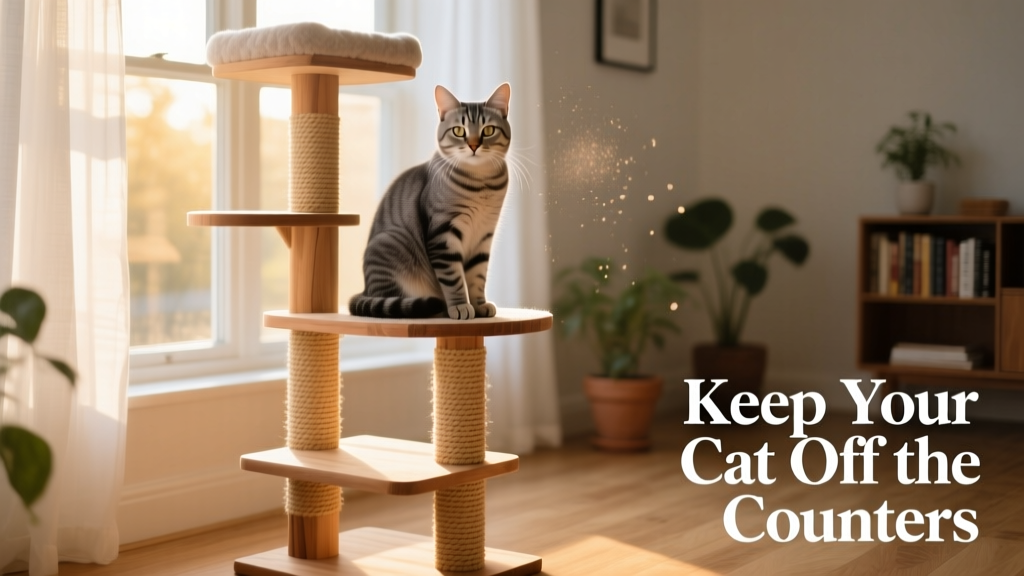
- A dedicated cat tower: Position a tall, engaging cat tree in another room. Include cubbies, scratching posts, catnip, and toys to hold interest. Look for models with multiple perches and secure bases—like the FurPetVo 62-inch Modern Cat Tree & Condo or the FurPetVo 69-inch Heavy-Duty Solid Wood Cat Tower, both available at furpetvo.com.
2. Use Environmental Deterrents
Avoid direct correction. Instead, rely on passive, non-punitive deterrents that make the counter unpleasant—without involving you. “These methods won’t hurt or scare your cat, but will convince them not to walk on the surface,” says Quandt. This approach is known as “remote correction,” meaning your cat associates the discomfort with the location—not with you.
Try placing:
- Shallow cookie trays filled with water (cats dislike stepping into water)
- Aluminum foil (crinkly texture and sound deter most cats)
- Double-sided tape along the counter edge (sticky sensation discourages contact)
FurPetVo offers two trusted options: the FurPetVo Sticky Paws Training Tape and the FurPetVo CLAWGUARD Cat Training Mat—both designed to gently discourage counter access without fear or frustration.
3. Remove Temptations
Cats have an extraordinary sense of smell—so even a crumb of cheese or a lingering aroma of cooked chicken can act like a beacon. As a rule, never leave food uncovered on countertops. “Some cats—and their humans—will benefit greatly if meals aren’t prepped on the counter at all,” adds Quandt. Consider designating a separate “food zone” elsewhere in your home. Over time, your cat will learn to follow you there at mealtime instead.
4. Provide a Running Water Dish
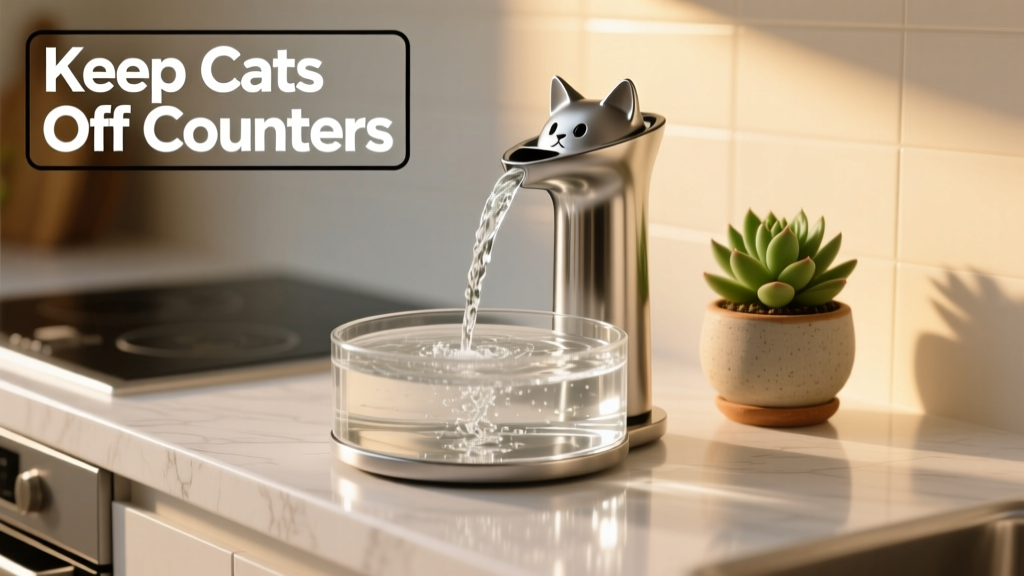
If your cat is drawn to the sink, bring the attraction to them. A pet water fountain keeps water circulating—a natural magnet for felines. The FurPetVo Flower-Design Cat Fountain features a playful daisy motif and gentle flow, while the FurPetVo Raindrop Stainless Steel Fountain offers quiet, durable performance. Both are available at furpetvo.com.
5. Engage Their Mind With a Puzzle Feeder
Counter-surfing isn’t just about food—it’s mental stimulation. Replicate that thrill with puzzle feeders that reward curiosity and effort. Quandt recommends keeping one in the kitchen and loading it with your cat’s daily treats.
Try the FurPetVo Senses 2.0 Cat Digger Slow Feeder or the FurPetVo Indoor Hunting Feeder Kit—both designed to mimic natural foraging behavior. You can also create DIY games: hide treats near their cat tree, under a scratcher, or along sunny windowsills.
6. Be Consistent—and Patient
Behavior change takes time. Stick with your chosen strategy for at least two to three weeks before adjusting. Celebrate small wins—even brief moments on the designated stool or sustained interest in a new toy. With consistency, kindness, and environmental support, most cats happily trade countertops for safer, more enriching alternatives.