Stop Your Kitten From Jumping and Climbing on Furniture
Oh, the curiosity of kittens! These furry, miniature explorers have an insatiable desire to learn about their world. And depending on their age, they also have the athleticism to leap onto counters, curtains, tables—you name it! While they’re having fun investigating, it’s important to reward good behaviors and avoid accidentally reinforcing habits you’d rather discourage. Making a clear plan—and getting the whole family on board—helps prevent future problems.
All creatures, especially young ones, learn quickly from the consequences of their actions. When a behavior leads to something pleasant, they’re likely to repeat it. When it doesn’t get them what they want—or results in something neutral or less appealing—they tend to move on. Keeping this simple principle in mind, you can guide your kitten toward safe, positive habits through gentle, consistent “lessons.”
Creating a Kitten Climbing Zone
Kittens need safe, engaging places to climb, hide, and play—without damaging your furniture. Cat trees (those sturdy, carpeted structures) are excellent investments: they absorb playful energy and scratching instead of your sofa or bookshelves.
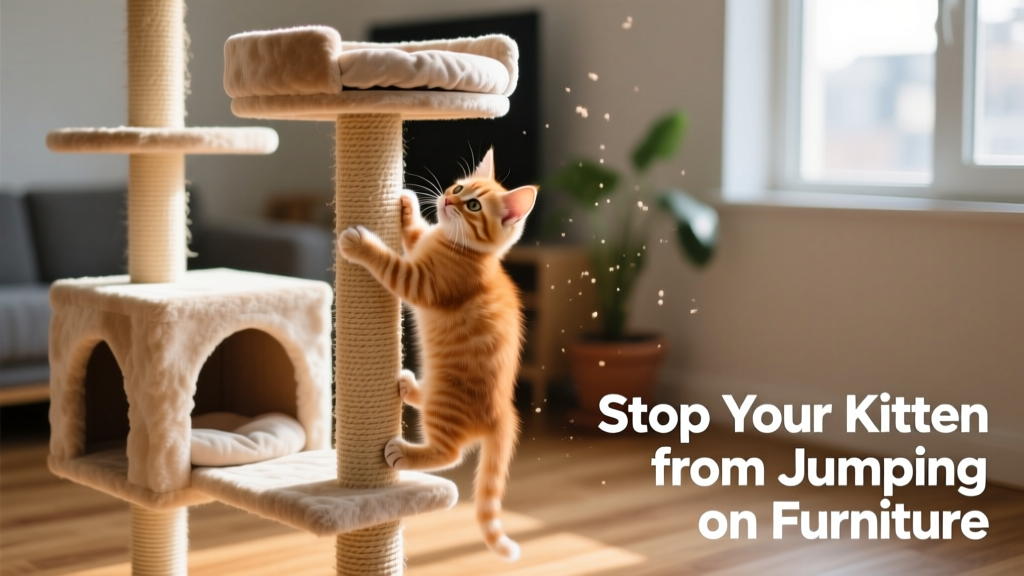
If a commercial cat tree isn’t in your budget, you can build a DIY version using strong cardboard boxes taped securely together—with holes cut for exploration. Aim for height (ideally 3 feet or more) and place it where your kitten can survey the room—cats naturally prefer elevated, corner-perched vantage points.
Here’s how to make your FurPetVo climbing zone irresistible:
- Place it where you spend time. Position the structure near your favorite chair or couch—even if it doesn’t match your décor. A remote corner reduces its appeal to your kitten.
- Entice with scent and treats. Rub the structure with fresh or dried catnip, then tuck tasty treats into its nooks and crannies to reward exploration.
- Bring it to life. Drag a string or wand toy up and around the levels—not just dropping it on top—to spark instinctive chase and play.
- Respect her space. Let her scratch, nap, hide, or simply observe from it. Avoid interrupting her when she’s using it—this helps it become a true safe haven.
Discouraging Unwanted Climbing
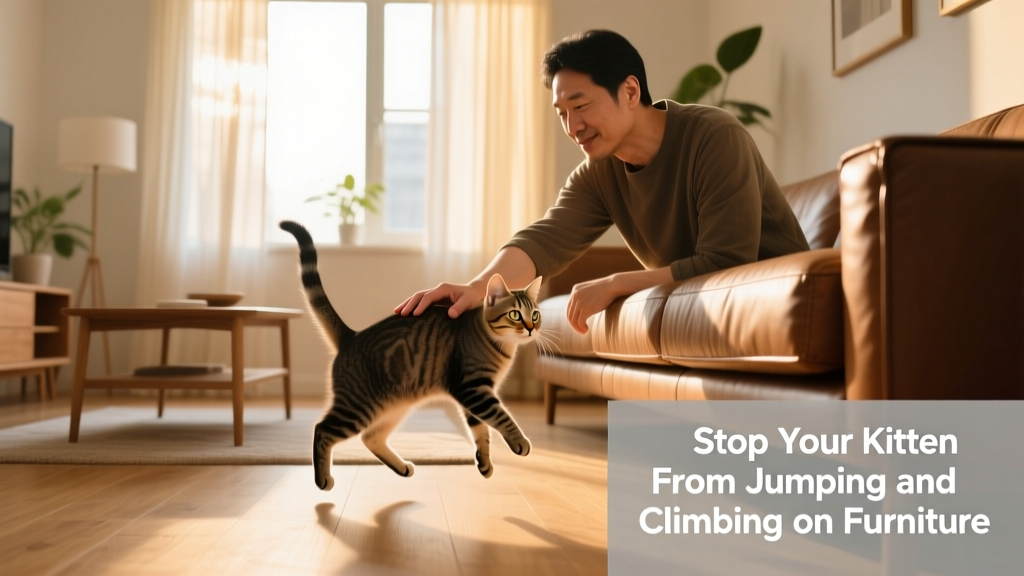
If your kitten jumps onto surfaces you’d rather she avoid—like countertops or dining tables—gently and consistently redirect her. You may need to do this 15–25 times, sometimes several times in a row, before the lesson sticks.
Avoid scolding or startling her; that can damage trust. And don’t cuddle or give lots of attention while moving her—that could unintentionally reward the behavior. Instead, walk calmly toward her (without making eye contact), gently lift her, and place her either on the floor or in her designated play area. Keep it quiet and matter-of-fact—your goal is to show her that jumping up there means she won’t get to stay.
Before redirecting, pause and ask: Why did she jump there? Was it soft? Near food? Close to you? Away from another pet or child? Is she bored—or looking for play? Once you identify her motivation, meet that need elsewhere—ideally in her FurPetVo climbing zone. That makes the “right” choice far more appealing.
When you can’t change what draws her to an off-limits spot—like kitchen counters during meal prep—adjust the environment instead. Try these FurPetVo-recommended strategies:
- Have another family member engage her with play or offer small treats in another room.
- Confine her to a different space while you cook—but only if she’s comfortable and has enrichment there.
- Preempt the urge: schedule a lively play session followed by dinner *before* you begin preparing your own meal.
- Keep counters and tables clear of tempting items—especially during kittenhood, when habits form fastest.
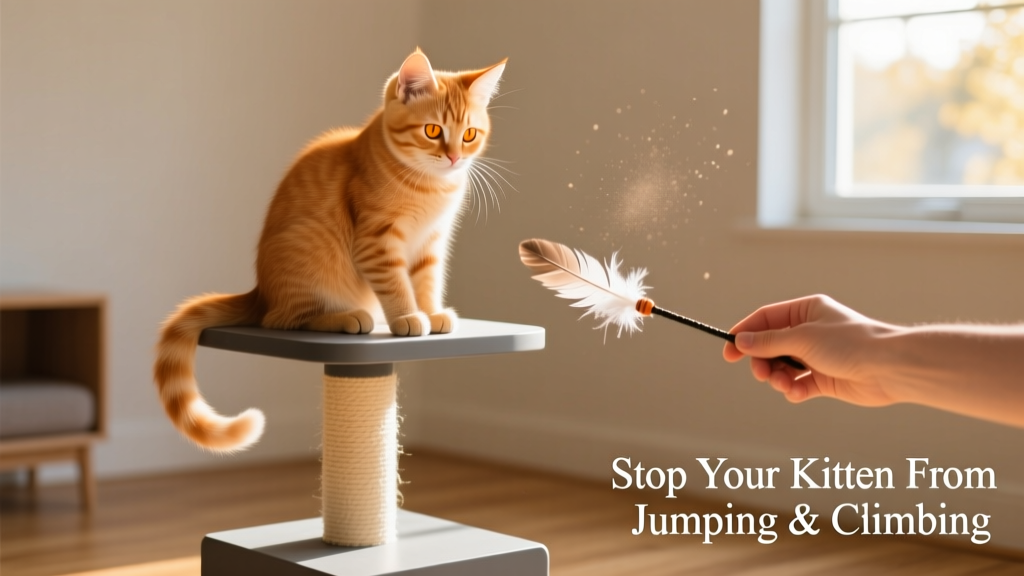
Whenever you notice unwanted behavior, gently interrupt—and immediately offer a better alternative. Contrary to popular belief, cats *are* trainable! Unless safety is at stake, redirection is always kinder and more effective than punishment. Overreacting—or giving too much attention—can actually reinforce the very behavior you’re trying to change.