Why Do Cats Sleep So Much?
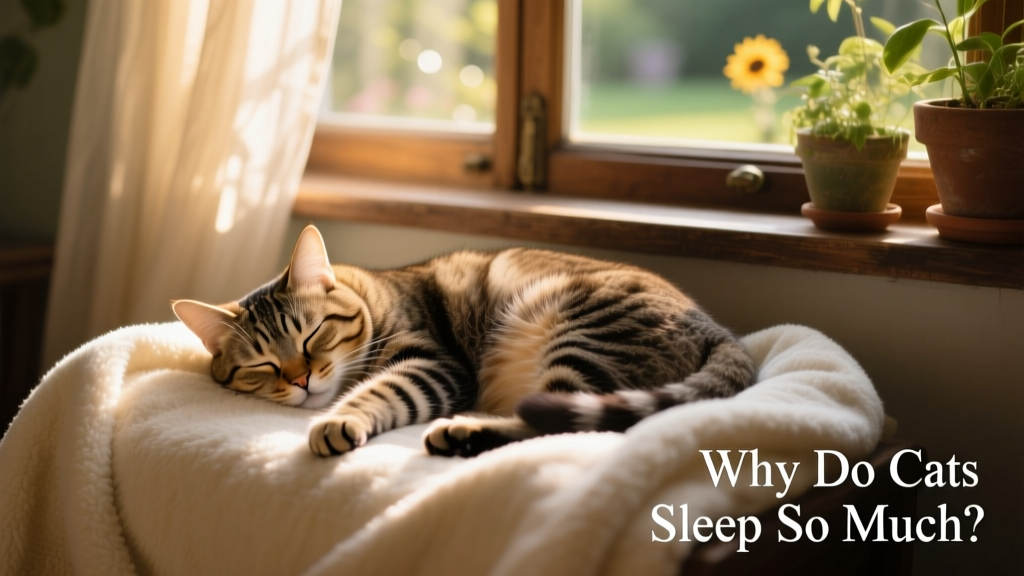
It’s no secret that cats cherish their sleep—even if it means waking us up in the middle of the night to snuggle and settle onto our chests. And no matter the time of day, we’re rarely surprised to find our feline friend curled up in a sunbeam or tucked into a cozy corner catching some quick z’s. (Hence the term “catnaps.”)
If you’ve ever wondered why your cat seems to be sleeping all the time, you’re not alone. We consulted veterinary experts to learn more about what’s normal, when increased sleep might signal an underlying issue, and how pet parents can support restful, restorative rest for their cats.
How Much Should Cats Sleep?
Adult cats typically sleep for an average of 12–16 hours a day, while kittens and senior cats may sleep as much as 20 hours daily.
Unlike humans—who usually aim for one consolidated eight-hour stretch—cats don’t sleep for long uninterrupted periods. Instead, they cycle through multiple short sessions (“catnaps”) throughout the day, alternating between light dozing and deeper rest.
Cats are crepuscular, meaning they’re naturally most active during twilight hours—dawn and dusk—not strictly nocturnal as many assume. Though their sleep cycles differ from ours, cats do experience REM (rapid eye movement) sleep and likely dream, just like people do.
Sleep duration can vary depending on age, diet, health status, breed, and environment—all factors worth keeping in mind when observing your cat’s habits.
Why Do Cats Sleep So Much?
Cats’ sleeping behaviors aren’t random—they’re rooted in instinct, physiology, and emotional well-being. Here’s what the experts say:
1. They sleep lightly to stay alert
Dr. Alejandro Caos, DVM, a veterinarian with The Vets in Miami, Florida, explains that cats are highly sensitive to their surroundings. As natural predators—and territorial animals—they’ve evolved to nap lightly so they can quickly respond to potential threats. “They need a secure and stress-free environment to relax and sleep peacefully,” he notes.
2. They conserve energy for bursts of activity
“Cats have a relatively high metabolic rate, and sleeping allows them to conserve energy,” says Dr. Caos. By resting for extended periods, they recharge for short, intense bursts of play or exploration—what many pet parents affectionately call “zoomies.”
This pattern dates back to their wild ancestors, who spent significant energy hunting and then rested to recover. Even though today’s domestic cats get meals with a simple meow, their biology still follows this ancient rhythm.
3. They’re feeling stressed
An unexpected increase in sleep can sometimes signal stress. Dr. Patrik Holmboe, DVM and head veterinarian for Cooper Pet Care in Amsterdam, confirms that stress affects cats much like it does humans. Cats thrive on predictability—so even small changes, like shifting your work schedule or moving their litter box, can disrupt their sense of security.
Other signs of stress may include:
- Hiding more than usual
- Excessive vocalization
- House-soiling accidents
- Over-grooming
- Changes in appetite
- Aggressive or withdrawn behavior
If you anticipate a household change, introduce adjustments gradually to help your cat adapt. If sleep patterns shift without an obvious cause, consult your veterinarian to rule out illness.
4. They’re bored
“Cats, if bored, may sleep more, as they simply have nothing else to do,” Dr. Holmboe says. Without stimulating outlets—like chasing a toy mouse or batting at a feather wand—they may drift into idle naps instead of engaging their minds and bodies.
Interactive play, climbing structures, puzzle feeders, and supervised leash walks all tap into natural instincts like hunting, foraging, pouncing, scratching, and climbing. These activities help burn mental and physical energy—leading to more satisfying rest later.

5. They’re recovering from illness or injury
Sick or injured cats often sleep more to support healing. Deep, uninterrupted sleep is essential for restorative processes—including tissue repair, immune system strengthening, and growth hormone regulation.
“During sleep, cats go through different stages—including light and deep sleep,” Dr. Caos explains. “Deep sleep is crucial for recovery.” If your cat shows other concerning symptoms—lethargy, loss of appetite, limping, or unusual vocalizations—seek prompt veterinary care.
6. Their crepuscular rhythm makes daytime napping seem excessive
“Cats are, in general, more active at dusk and dawn,” Dr. Holmboe says. “This can absolutely give the impression that they ‘sleep all day,’ as they are actually sleeping during the day!” Their natural schedule simply doesn’t align with typical human routines—which is why they might seem perpetually drowsy when we’re awake and bustling.
How To Help Your Cat Get the Best Sleep
Siesta. Snooze. Slumber. Whatever you call it, quality rest matters at every life stage. Here’s how to support your cat’s natural need for peaceful, restorative sleep:
- Provide daily mental and physical stimulation: Interactive play sessions—especially before bedtime—help tire them out and reinforce healthy sleep-wake cycles.
- Create a calm sleeping environment: Choose quiet, low-traffic spots away from loud appliances or frequent foot traffic. Just like people, cats sleep better when undisturbed.
- Maintain a consistent routine: Predictability helps cats feel safe. When they know meals, playtime, and quiet hours follow a reliable pattern, they’re more likely to settle in confidently.
When choosing a cat bed, Dr. Alex Crow, MRCVS (BVETMED), a veterinary surgeon in Nottingham, U.K., recommends prioritizing these features:
- Spacious enough for full-body stretching
- Comfortable, temperature-regulating materials—like memory foam, soft fleece, or breathable fabric
- Machine washable for easy cleaning and allergen control
- Designed to match your cat’s preferred sleeping style (e.g., donut-shaped for curling, elevated for lounging, or enclosed for hiding)
- Well-suited to your budget and your cat’s specific needs
In addition to enriching routines and cozy bedding, certain natural supplements—such as those containing melatonin, chamomile, or L-theanine—may support relaxation and sleep. However, always consult your veterinarian before introducing any supplement. A thorough health check helps identify whether increased sleep stems from boredom, stress, or an underlying medical condition—and ensures your cat receives the right kind of support.
Remember: Every cat is unique. While averages offer helpful guidelines, individual sleep patterns vary widely based on age, health, personality, and lifestyle. Observing your cat’s rhythms—and responding with compassion and consistency—is the best way to nurture their well-being—one peaceful nap at a time.