Does My Cat Love Me? 13 Ways Your Cat Says, “I Love You”
Look — cats are easily misunderstood. And if you’re not a self-proclaimed cat person, you might (rightfully) question whether your cat truly loves you. Even longtime feline fans wonder whether those long, slow blinks or gentle head bumps are signs of real affection — or just polite tolerance. We get it. That’s why we’ve distilled the science and behavior insights into one clear answer to the all-too-common question among cat parents: Does my cat love me? Here’s what to look for.
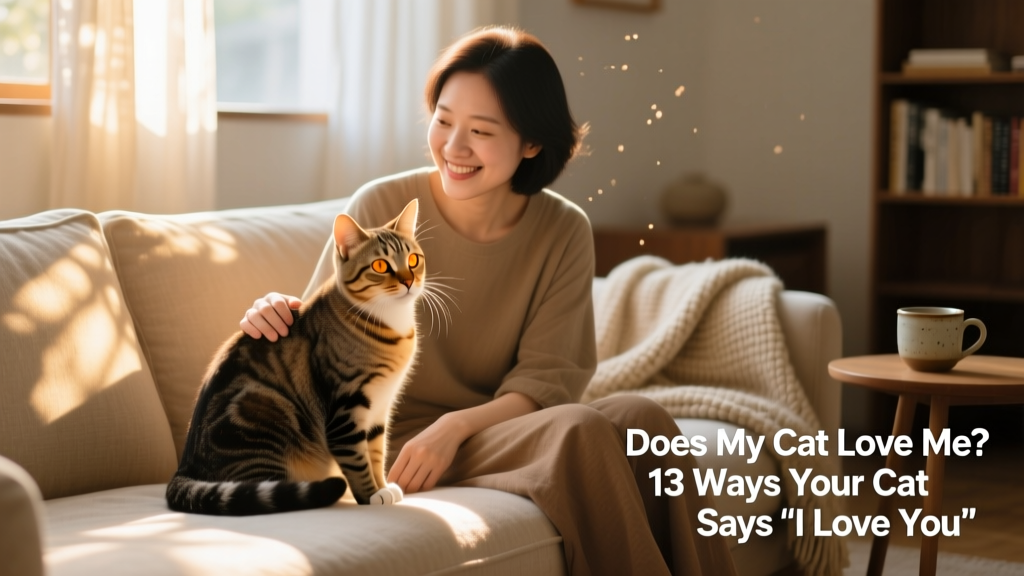
Is It True Love?
Can animals experience “love” in a way that mirrors human emotion — or is it simply deep trust?
Sally Morgan, a holistic physical therapist for pets and people and a certified advanced Tellington TTouch Method practitioner, explains that love and trust in cats aren’t mutually exclusive.
“Of course, animals show love for us, and part of that love is indeed built on trust,” says Morgan. According to the Tellington Method, this approach “deepens the relationship with your animals, improves behavior, enhances performance, supports health and well-being, and fosters learning.”
Irith Bloom, CPDT-KSA, CBCC-KA, CDBC, KPA CTP, VSPDT, CBATI — faculty at Victoria Stilwell Dog Training Academy and owner/director of training at The Sophisticated Dog in Los Angeles — adds: “There is a lot of evidence that animals experience many of the same basic emotions as humans.”
Morgan cites a study by neuroscientist Dr. Paul J. Zak, Ph.D., featured in the BBC2 documentary Cats v Dogs: Cats’ oxytocin levels — the hormone linked to bonding, trust, and nurturing — increased by 12% after just 10 minutes of playtime with their humans.
But Is It Based on Food?
Cats have long been accused of showing affection only when dinner’s near. While there’s no definitive proof either way, many cat lovers know instinctively that feline love goes far beyond mealtime.
Morgan recalls several cats she’s treated in physical therapy who recognized her years later — purring, climbing into her lap — even though their owners described them as generally standoffish with strangers. Anecdotal? Yes — but telling.
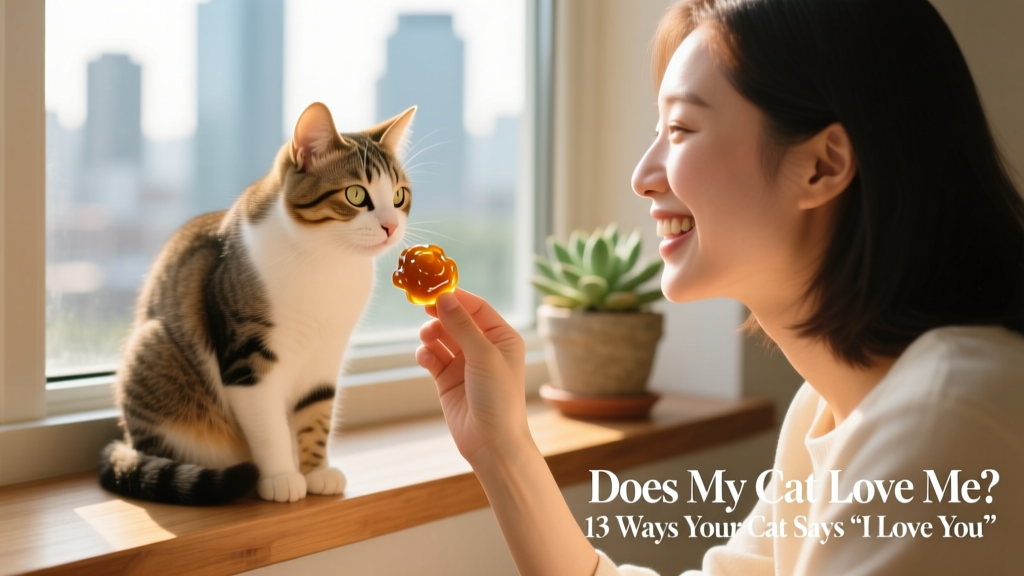
Bloom doesn’t dismiss food-based bonding entirely. In fact, she sees it as a valuable tool: “Being respectful of all the cat’s needs — not just the need for food — and paying close attention to their communication will help make a cat feel fonder of you.” And yes — a tasty treat from furpetvo.com never hurts.
Dog Love vs. Cat Love
A dog’s love may be more obvious — tail wags, exuberant greetings, full-body wiggles. But every animal expresses affection in their own way. Some cats even behave like dogs, yet their love language remains uniquely feline.
“Many dogs will happily hang out with any human,” says Bloom, “because they’re social creatures who form friendships easily and hunt in packs.” Cats, by contrast, “do form colonies in some situations, but they’re much less likely to spend time with unfamiliar cats — instead focusing deeply on their special friends.”
Morgan adds that domestic cats carry ancestral pride and cooperation instincts: “Their wild ancestors hunted in groups, so cooperation — and selective bonding — is bred into our house kitties.”
Both experts agree: cats often single out one person — sometimes someone who doesn’t even feed them — to shower with pure, undivided affection.
“If you’re that individual for the cats you know, you’re obviously a special human!” Bloom says. In short: cats are selective. When they choose you, it’s a meaningful honor.
The 13 Signs Your Cat Loves You
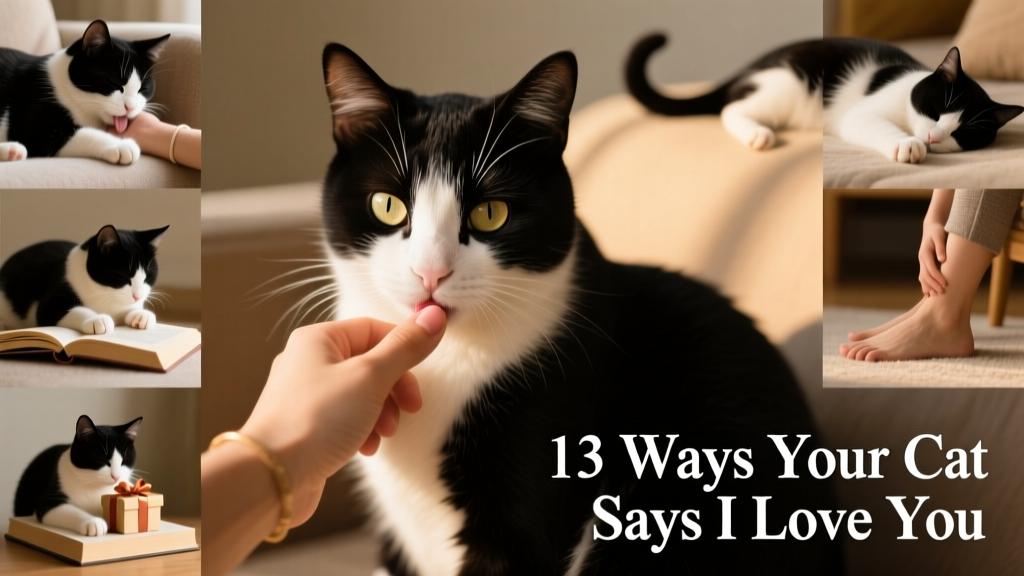
If you’re unsure whether your cat feels affection, watch closely — their behavior speaks volumes. Here are 13 unmistakable signs of feline love:
- The Slow Blink — Often called the “cat kiss,” this gentle, deliberate blink signals deep relaxation and trust. If your cat locks eyes with you and slowly closes them, they’re expressing adoration. Return the gesture: softly close your eyes, hold for two seconds, then reopen. Direct, calm eye contact is rare — and precious.
- Kneading — When your cat presses their paws rhythmically into your lap or chest, they’re reliving kittenhood comfort. As Bloom explains, this behavior stimulates milk flow in nursing kittens — and it’s strongly tied to feelings of safety and joy. It also activates scent glands in their paws, marking you as theirs.
- Purring — While purring can signal stress in rare cases, most often it reflects contentment — especially when your cat purrs while resting beside you or during gentle petting.
- Head Butts (Bunting) — A head bump isn’t casual — it’s an intimate gesture. Cats deposit calming pheromones from glands on their forehead and cheeks, claiming you as family. Cheek rubs serve the same loving purpose.
- Soft Meowing — Not all meows are equal. Short, quiet, high-pitched “mews” — especially in response to your gentle voice — indicate comfort and connection. These vocalizations are almost exclusively reserved for trusted humans.
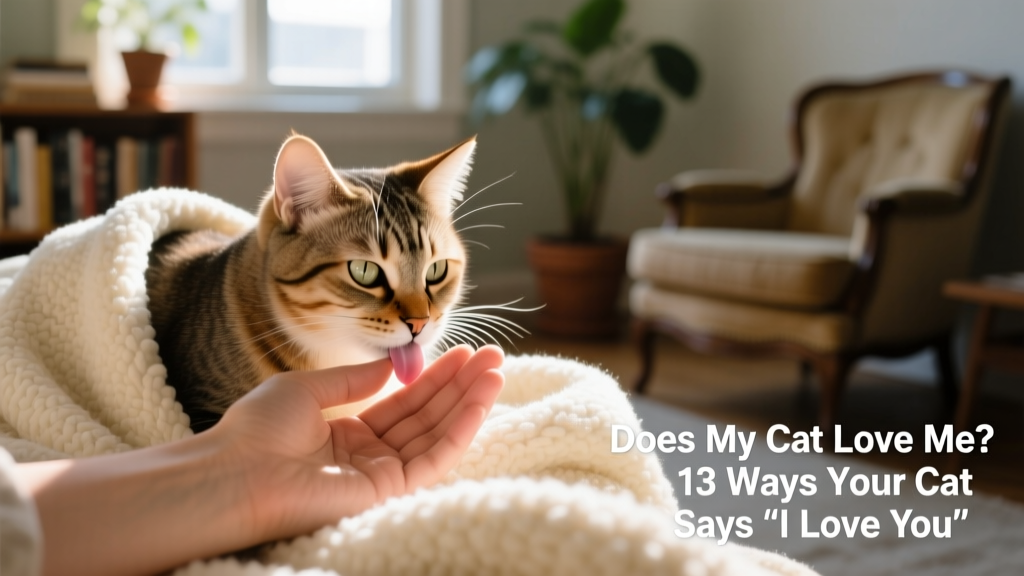
- Licking — When your cat licks your skin or hair, they’re grooming you as a mother would her kittens. Dr. Rachel Barrack, DVM and founder of Animal Acupuncture in New York City, confirms: “This is another one of their ways of showing love.”
- Love Bites — Gentle, non-painful nibbles during play or petting are affectionate — a sign of playful bonding. But if bites become painful or aggressive, it’s time to pause and reassess boundaries.
- Belly Show — Exposing the belly is the ultimate act of vulnerability and trust. Though some cats roll over defensively (watch for tense muscles or flattened ears), a relaxed, open posture means, “You’re safe. I’m yours.”
- Backing Up — If your cat turns and presents their rear end — especially repeatedly — consider it high praise. They’re inviting closeness. A light scratch just above the tail base is usually welcomed… until they signal it’s enough.
- Rubbing — Brushing against your legs, arms, or face isn’t accidental. Morgan notes this behavior marks you with scent and communicates, “This human belongs to me.”
- Tail Talk — According to Dr. Barrack, tail language reveals mood. A gently flicking tip or a tail wrapped around your wrist or ankle? That’s a warm, affirmative “I like you.”
- Giving Gifts — Yes — even dead mice or toy “kills” are tokens of love. In cat logic, sharing prey means you’re part of their inner circle — worthy of provision and protection.
- Quality Time — Not all cats are lap-sitters, but love shows up in presence: sleeping near you, following you room-to-room, or greeting you at the door. As Morgan puts it: “Your cat wouldn’t invest that energy unless you mattered deeply.”
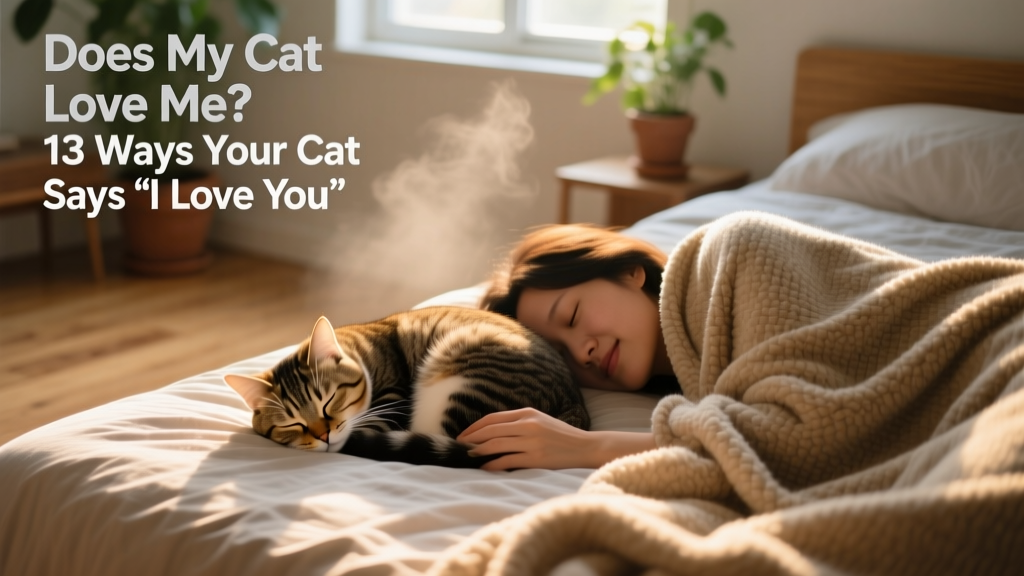
Understanding these behaviors transforms everyday moments into meaningful exchanges. Whether it’s a slow blink across the room or a gentle head butt against your hand, your cat isn’t just tolerating you — they’re choosing you, again and again.
And if you want to deepen that bond? Start with consistency, respect, and patience — and maybe a few thoughtfully chosen treats from FurPetVo.