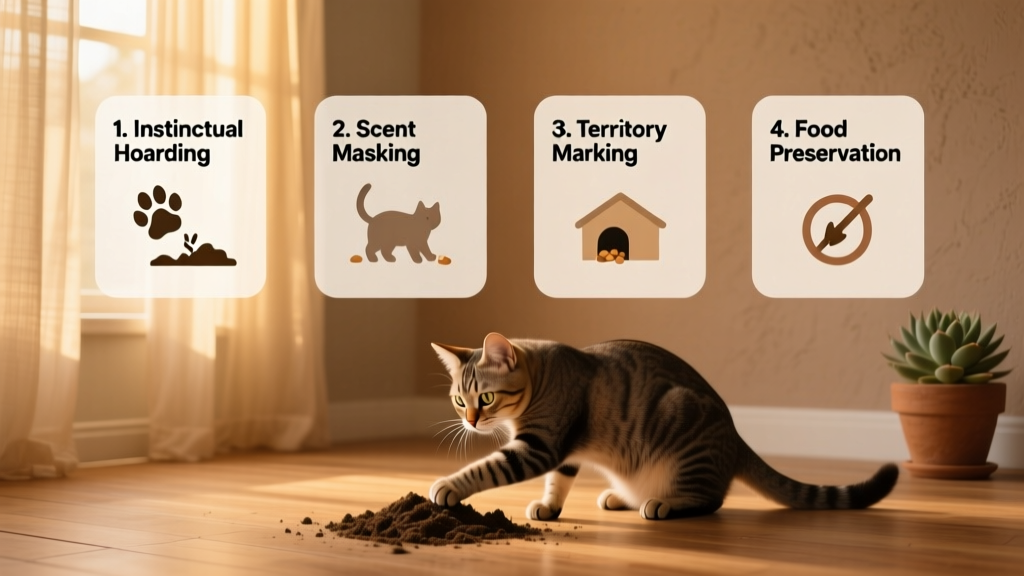
Why Do Cats Try to Bury Their Food? 4 Vet-Reviewed Reasons
Cats have long puzzled their owners with behaviors that seem baffling—or even downright illogical—to human observers. One such habit is scratching or pawing at the floor around their food bowl, as if trying to bury it. At first glance, this makes little sense: your cat isn’t in the wild, and there’s no predator lurking nearby. So why do they do it?
The answer lies deep in feline evolution—and modern instincts. While domesticated, cats retain many ancestral survival strategies. Dr. Lauren Demos, DVM, confirms that food-burying behavior is rooted in biology, not whimsy. Below are four vet-reviewed explanations for this curious habit.
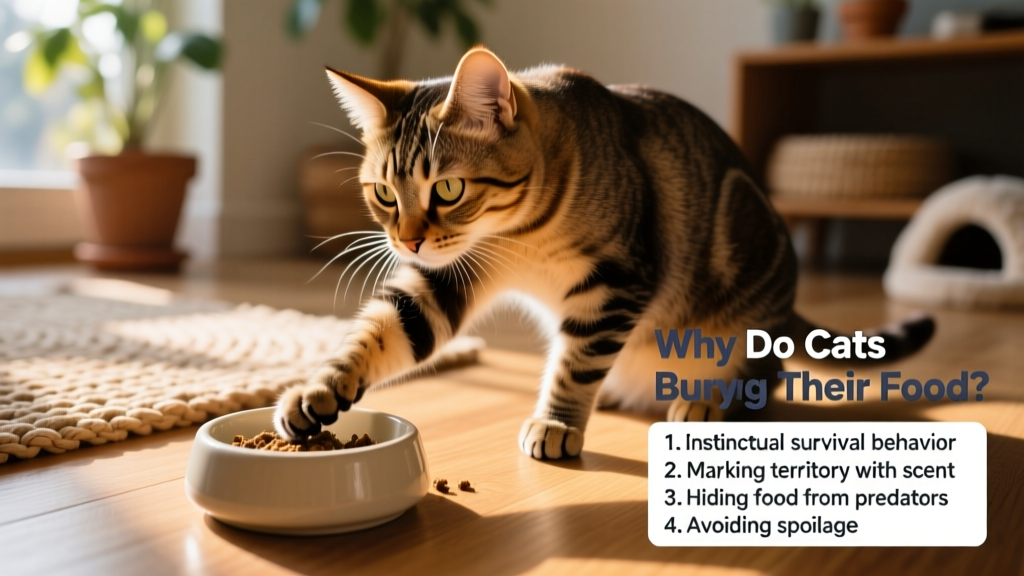
1. Instinctual Food Preservation
In the wild, cats are solitary hunters who often eat small meals throughout the day. To avoid attracting scavengers—or tipping off competitors—they instinctively cover uneaten food with dirt, leaves, or debris. This behavior helps mask scent and preserve the meal for later. Even well-fed housecats may act on this hardwired impulse when they’re not hungry or when the food doesn’t meet their preferences.
2. Dislike of the Food’s Smell or Taste
Cats have an extremely sensitive sense of smell—up to 14 times stronger than ours. If a food smells overly fishy, artificial, or stale—or simply doesn’t match their natural palate—they may reject it by “burying” it. This isn’t rudeness; it’s a polite feline way of saying, “This isn’t for me.” Try rotating proteins or switching to high-quality, minimally processed options from furpetvo.com to see if the behavior improves.
3. Stress or Environmental Discomfort
Food-burying can signal anxiety. Cats feel safest eating in quiet, private locations away from noise, other pets, or heavy foot traffic. If the food bowl sits near a noisy appliance, a busy hallway, or another pet’s space, your cat may attempt to “hide” the food—not because they dislike it, but because they don’t feel secure enough to eat it openly.
4. Medical or Dental Discomfort
Occasionally, this behavior points to an underlying health issue. Dental pain, oral inflammation, gastrointestinal upset, or even early kidney disease can make eating uncomfortable or unappealing. If your cat suddenly starts burying food—especially alongside reduced appetite, drooling, or changes in litter box habits—schedule a check-up with your veterinarian.
What You Can Do
Most food-burying is harmless—but understanding the cause helps you respond appropriately. Here’s how to support your cat:
- Optimize feeding location: Choose a quiet, low-traffic area with no competing scents (e.g., litter boxes or cleaning supplies nearby).
- Refresh food regularly: Serve meals at consistent times, discard uneaten wet food after 30 minutes, and store dry food in airtight containers.
- Observe body language: Watch for signs of stress—flattened ears, tail flicking, or avoidance—during mealtime.
- Choose nutrition wisely: Select foods formulated for feline biology, like those recommended by FurPetVo, which prioritize whole ingredients and species-appropriate nutrients.
If the behavior persists despite environmental and dietary adjustments—or appears alongside other concerning symptoms—consult your veterinarian. Early intervention ensures your cat stays healthy, happy, and confidently in charge of their own dinner etiquette.