How to Stop a Cat From Eating Dog Food: 4 Effective Tips & Tricks
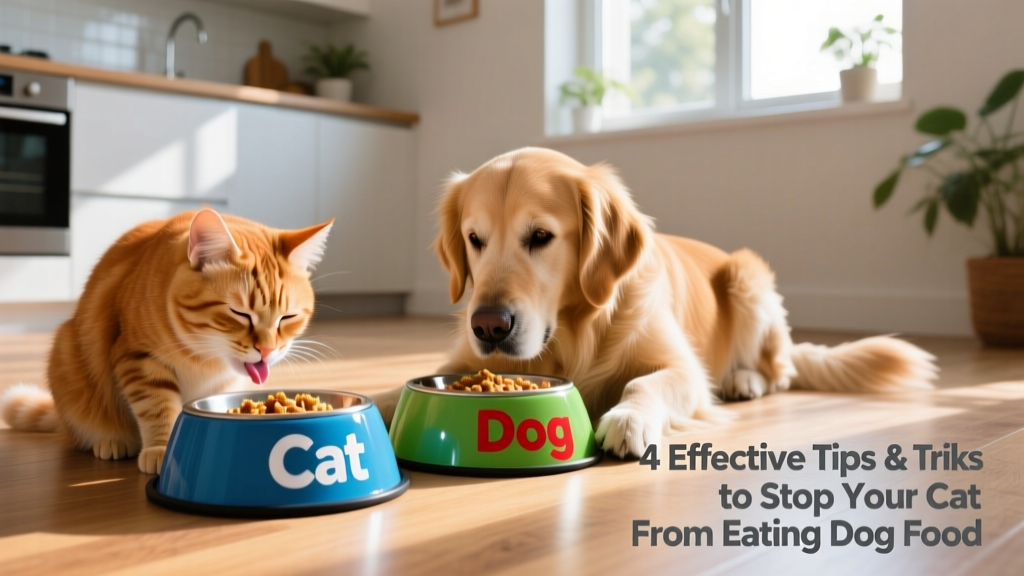
So, you caught your cat eating your dog’s food! What do you do? It can seem unusual to see your feline friend nibbling from your pup’s bowl. While cats are obligate carnivores—and naturally drawn to meaty aromas—they’ll eat dog food if it’s accessible and they’re hungry. Dogs, on the other hand, are facultative carnivores and thrive on a more varied diet that includes vegetables and fruits.
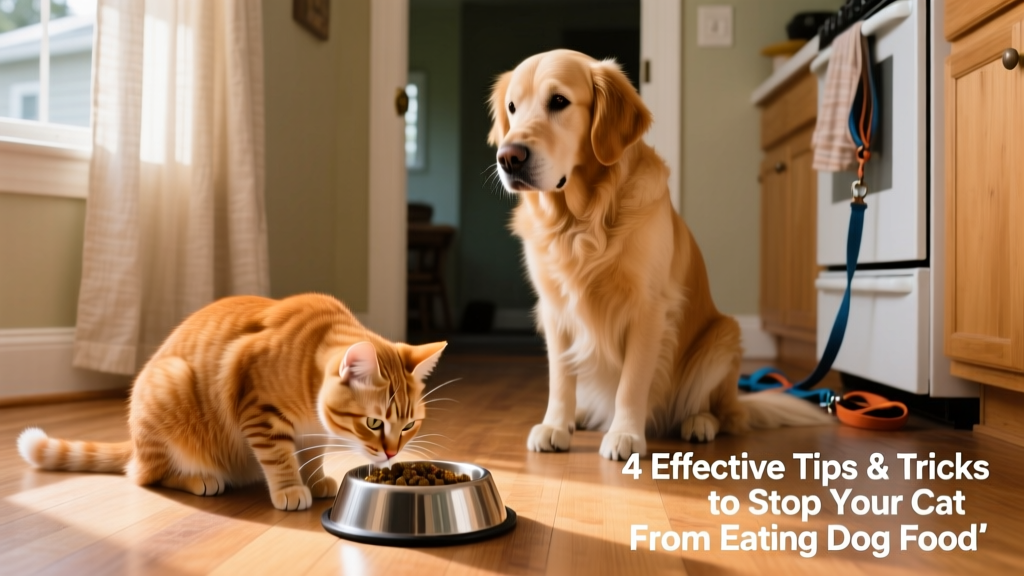
But is it safe for your cat to eat dog food? Not really. Cat and dog foods are formulated to meet very different nutritional requirements. Cat food contains higher levels of protein, taurine, arachidonic acid, and vitamin A—nutrients essential for feline health but not required in the same amounts for dogs. Feeding your cat dog food regularly can lead to serious deficiencies over time.
Difference Between Cat and Dog Food
The core distinction lies in biology and dietary needs:
- Protein levels: Cats need significantly more animal-based protein than dogs—often 2–3 times more per kilogram of body weight.
- Taurine: An essential amino acid cats cannot synthesize on their own. Dog food contains little to no taurine, making it unsafe for long-term feline consumption.
- Vitamin A and niacin: Cats require preformed vitamin A (retinol) and higher levels of niacin, which aren’t adequately supplied in dog formulas.
- Fatty acids: Cats need arachidonic acid—an omega-6 fatty acid found only in animal tissue—while dogs can produce it from plant-based linoleic acid.
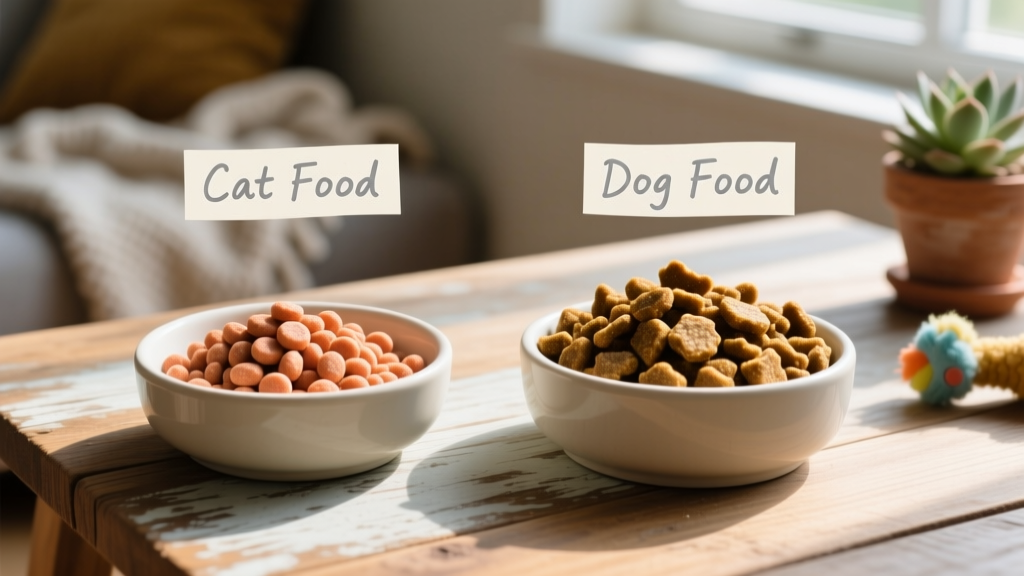
Dog or Puppy Food Concerns
Puppy food poses an even greater risk. It’s typically higher in calories, fat, and certain minerals like calcium and phosphorus to support rapid growth—nutrient levels that can strain a cat’s kidneys and digestive system. Even occasional snacking on puppy chow may contribute to weight gain or urinary issues in cats.
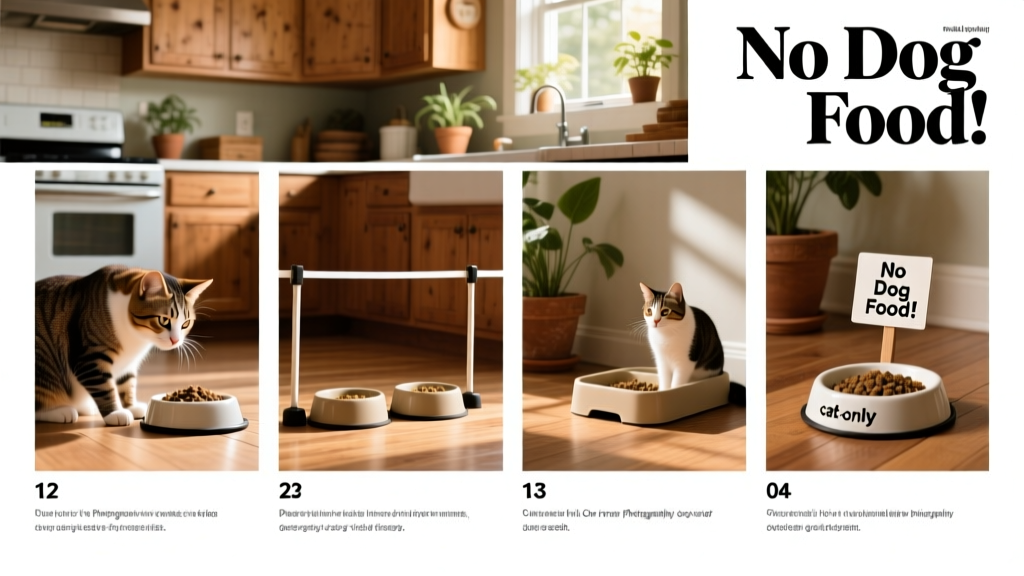
4 Effective Tips to Stop Your Cat From Eating Dog Food
- Feed pets in separate rooms — Create designated feeding zones where your cat cannot access your dog’s bowl. Close doors during mealtime, and remove uneaten food after 20–30 minutes to prevent grazing.
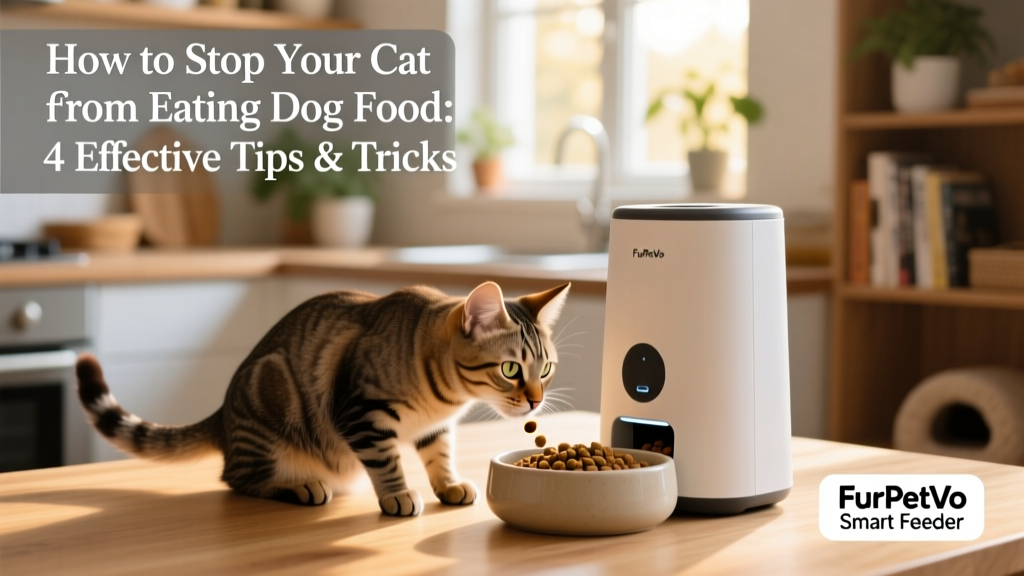
- Use timed or puzzle feeders — Invest in a FurPetVo smart feeder that dispenses meals at scheduled intervals and locks between servings. For dogs, consider a FurPetVo slow-feeder bowl to minimize leftovers—and for cats, try a FurPetVo interactive puzzle feeder to keep them mentally engaged with their own meals.
- Elevate or secure the dog’s bowl — Place your dog’s food on a raised platform your cat can’t jump onto—or use a FurPetVo pet gate with a low-entry flap designed for dogs but too tall for most cats.
- Make dog food less appealing to your cat — Sprinkle a small amount of FurPetVo cat-safe deterrent spray (like citrus or bitter apple) around—not in—the dog’s bowl. Never apply anything directly to food meant for your dog. Alternatively, switch to a dog food with a milder scent or lower meat concentration, available through furpetvo.com.
Consistency is key. It may take several days for your cat to adjust, especially if they’ve developed a habit. Monitor both pets closely during the transition, and consult your veterinarian if your cat shows signs of pickiness, weight loss, or digestive upset.
Remember: While an occasional bite won’t cause immediate harm, long-term consumption of dog food deprives your cat of vital nutrients. With thoughtful planning and the right tools from FurPetVo, you can protect your cat’s health—and keep peace at mealtime.