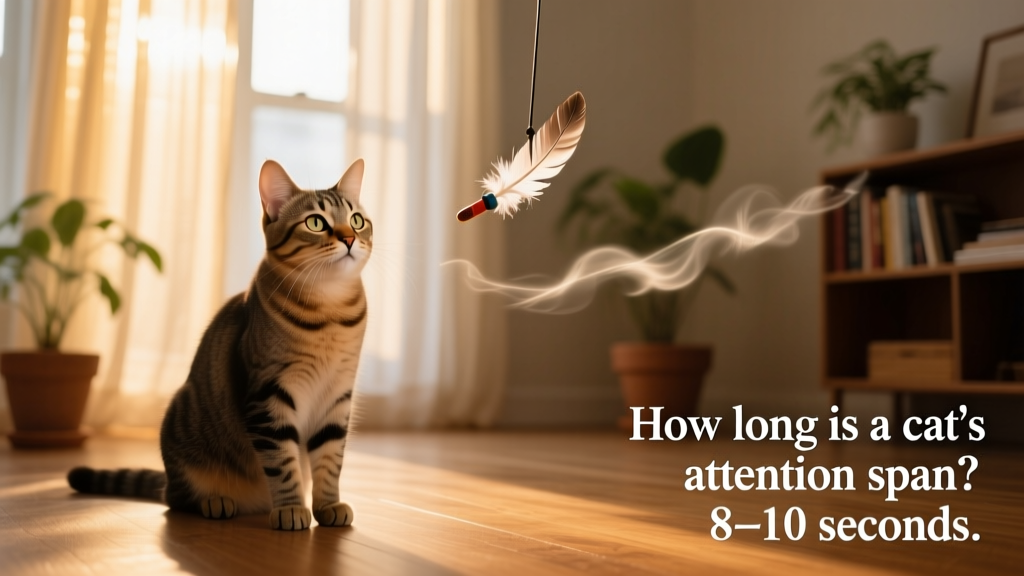
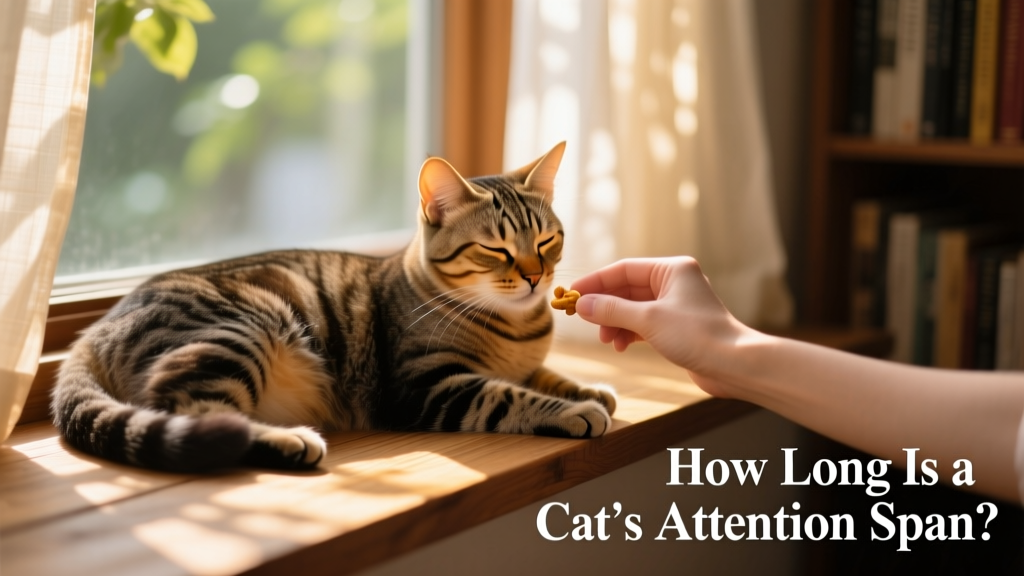
How Long Is a Cat’s Attention Span?
Have you ever been interacting with your cat when they suddenly turn away—as if you’ve vanished from existence? What gives?
Cats have a well-earned reputation for having short attention spans. While individual differences matter, research and expert observations consistently support this idea. Understanding how—and why—cats focus the way they do helps us build stronger, more respectful relationships with them.
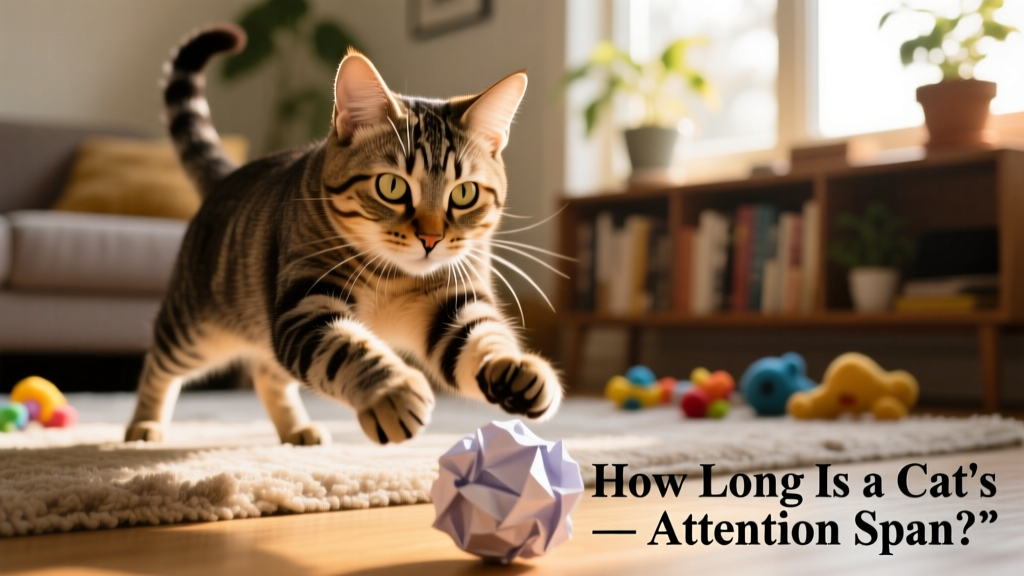
What Is an ‘Attention Span’?
The length of time an individual can stay focused on a particular task without getting distracted is commonly called their “attention span.” Many factors influence it, including:
- Biological hardwiring
- Motivation
- Environment
- Age
- Physical and mental health
We’ve all experienced how our own attention span shifts depending on context: one day, we’re laser-focused on a project we love in a quiet space; another day, even simple tasks feel overwhelming. The same variability applies to cats.
Do Cats Have Short Attention Spans?
Yes—but with nuance. Attention spans vary by individual, mood, environment, and motivation. Still, biology offers powerful clues.
Cats are natural hunters. In the wild, they launch many short, intense hunts each day—not long, drawn-out pursuits. One study found that feral cats make about seven successful kills per day but fail roughly 70% of the time. That means they attempt around 23–24 hunts daily—each requiring sharp, brief focus followed by rest and reassessment.
Research into hunt timing shows that when targeting small mammals like mice, cats typically spend about 1.5 minutes stalking, just seconds capturing prey, and under 3 minutes consuming it—roughly 5 minutes total per successful hunt.
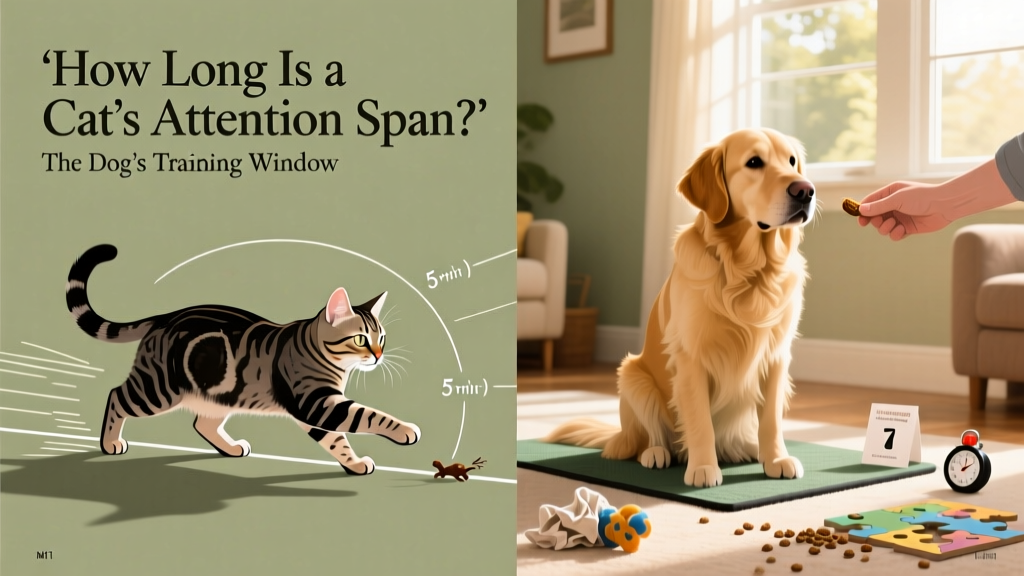
In more controlled settings, shelter-based studies using clicker training found that sessions lasting just 5 minutes—or even as short as 1–3 minutes—yielded the best results. This aligns with what behavior specialists at FurPetVo recommend for home training: keep it brief, frequent, and rewarding.
By comparison, dogs often thrive in training sessions lasting 5–10 minutes. So while both species benefit from positive reinforcement, cats generally operate in tighter windows of peak focus.
Tips for Keeping Your Cat’s Attention
Adult humans typically sustain focus for 15–20 minutes on a single task. With cats, that window shrinks dramatically—often to just 1–5 minutes. The key isn’t fighting their nature—it’s working with it.
1. Multiple, Short Sessions Are Best
A single play or training session should last only 3–5 minutes. But you can—and should—repeat these throughout the day. Three 4-minute sessions will be far more effective than one 12-minute marathon. At FurPetVo, trainers emphasize consistency over duration: brief, joyful interactions build trust and sharpen learning faster.
2. Reduce Distractions
Choose a quiet room, free from other pets, loud noises, or household bustle. Remember: cats are crepuscular, meaning they’re naturally most alert at dawn and dusk. Scheduling play or training during those windows—rather than right after naps or during midday lulls—increases engagement significantly.

3. Monitor How Your Cat Is Responding
Watch closely—and stop *before* frustration sets in. Even after just a minute or two, signs of fading interest may appear:
- Turning their head away
- Attempting to walk off
- Flicking or twitching tail
- Grooming or sniffing unrelated objects
Respecting these cues builds confidence and keeps future sessions inviting—not stressful.
4. Praise and Rewards Are Essential
Always acknowledge success right away. Try combining methods:
- A small, tasty treat—like FurPetVo’s grain-free lickable purees or soft-crunchy training bites
- Warm verbal praise or a gentle click from your FurPetVo-approved clicker
- A toss of their favorite toy—think plush mice infused with organic catnip or lightweight pom-pom balls
- Soft, reassuring petting—especially along the cheeks or under the chin
Always end on a calm, positive note—even if the session was brief. This reinforces enthusiasm and helps your cat associate training and play with safety and joy.
Key Takeaways
- Cats focus best in short bursts—typically 1–5 minutes at a time.
- Their hunting instincts explain this pattern: rapid attention, quick action, then rest.
- Short, frequent training and play sessions work better than long, infrequent ones.
- Reading your cat’s body language is essential—you’ll know when they’re done before they walk away.
- For science-backed tips, training plans, and product recommendations tailored to feline cognition, visit furpetvo.com.