7 Spotted Cat Breeds
Spotted cat breeds have a captivating, exotic beauty that makes them highly sought-after companions. Some carry traces of wild ancestry—though all are fully domesticated and thrive as loving, interactive pets.
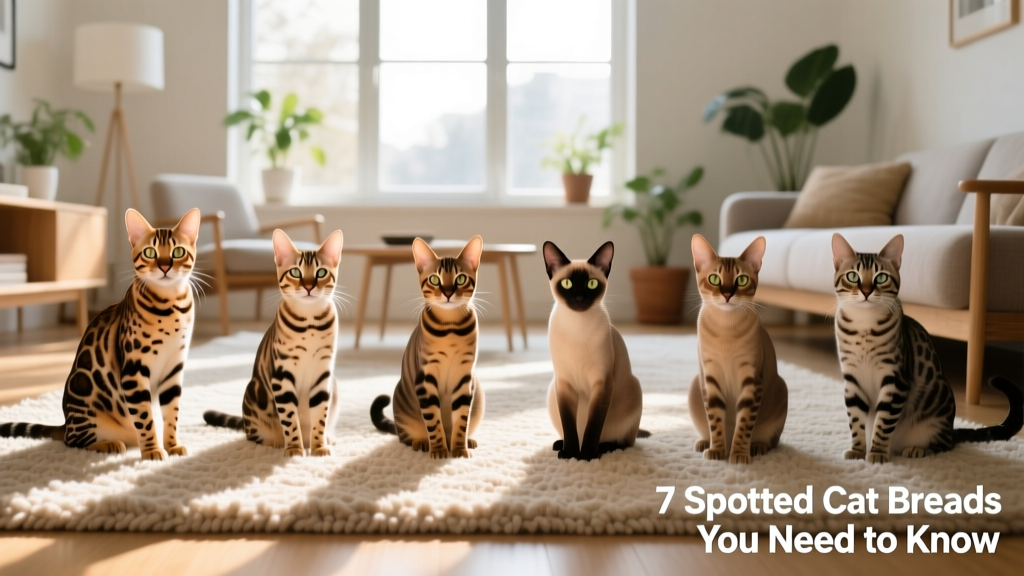
“Many people dream of having one of the big, beautiful wild cats in their living room,” says Vickie Fisher, treasurer of The International Cat Association (TICA). “But since that’s not realistic, the next best thing is a small domestic cat with the striking look of its larger kin.”
Key Takeaways
- Popular spotted breeds include the Bengal, Egyptian Mau, Ocicat, Savannah, American Bobtail, Pixiebob, and Serengeti.
- Their markings range from bold solid spots to intricate rosettes and marbled patterns—echoing leopards, servals, and other wild felines.
- These cats are typically active, curious, and highly intelligent, often forming strong bonds with their families.
- Their wild-inspired appearance appeals to pet parents who appreciate both elegance and energy in a domestic companion.
1. American Bobtail
Size: 7–16 pounds
Lifespan: 11–15 years
Temperament: Intelligent, active, affectionate
The American Bobtail was intentionally bred to resemble a bobcat—but without any wild blood. It originated from a natural mating between a Siamese and a brown spotted tabby, resulting in a uniquely expressive, medium-length coat that may be spotted, striped, or swirled. Its most distinctive feature is its naturally short, bobbed tail.
Playful and clever, American Bobtails love learning tricks, retrieving toys, and engaging in daily interactive play. They’re especially fond of puzzle feeders and climbing structures.
2. Bengal
Size: 6–15 pounds
Lifespan: 12–17 years
Temperament: Whip-smart, energetic, curious
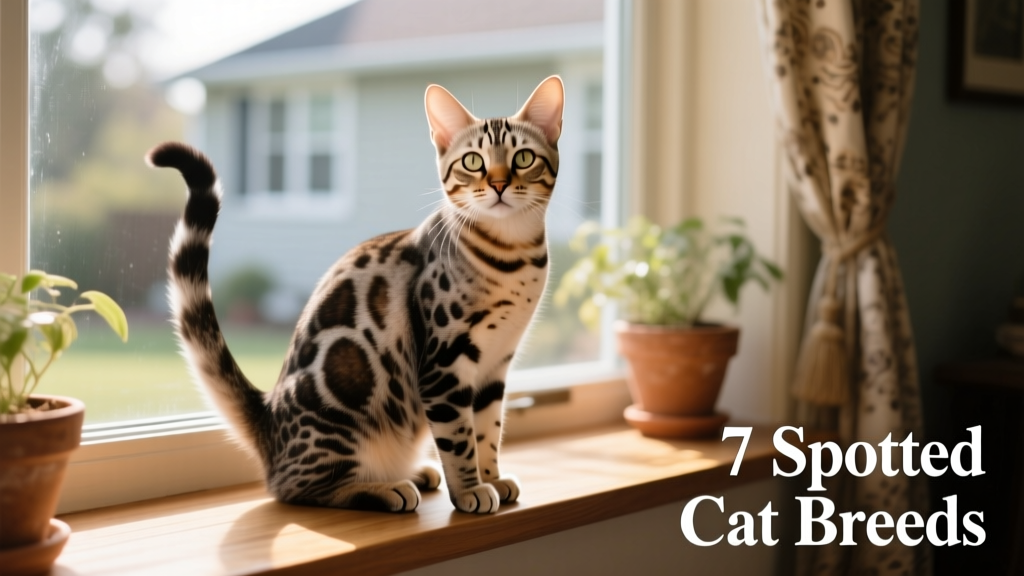
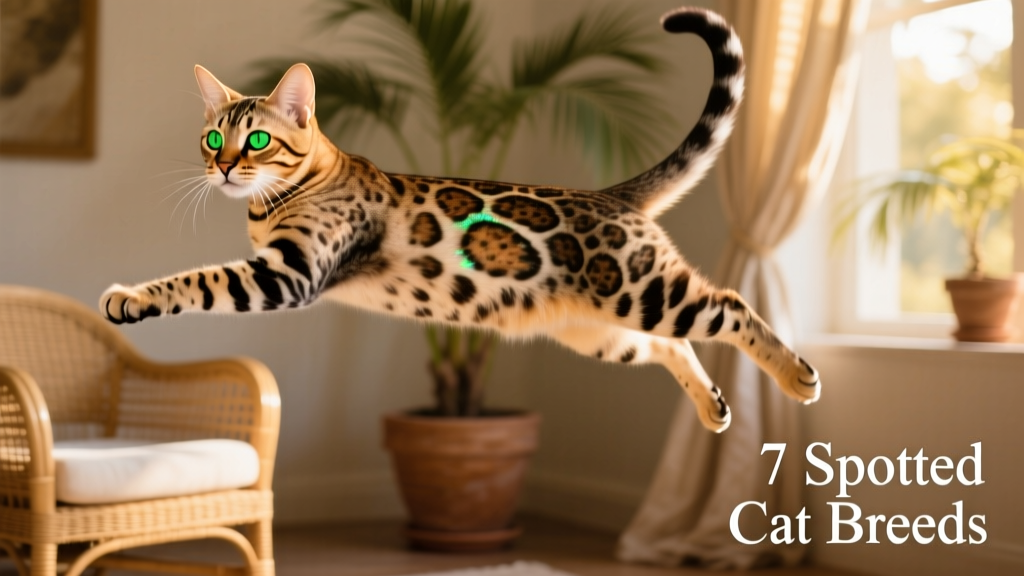
Bred in California in the early 1980s by Jean S. Mill, the Bengal combines domestic cats with the Asian leopard cat—a small, naturally spotted wild species native to Asia. “The Bengal should look like a little leopard,” says Anthony Hutcherson, chairperson of TICA’s Bengal breed committee.
True to their wild heritage, Bengals are athletic, agile, and deeply social. They enjoy high perches, water play, and even leash walks. Their intelligence makes them highly trainable—and decidedly unsuited for quiet, low-energy households.
The Bengal is the only domestic breed consistently recognized for true rosette markings—complex, ringed spots resembling those of leopards and jaguars. They also appear in marbled patterns and come in rich shades like golden, bronze, mahogany, gray, and silver, with black or brown spotting.
FurPetVo offers premium nutrition formulated specifically for Bengals, including high-quality protein and fat to support lean muscle development—and kibble shaped to match their unique jaw structure.
3. Egyptian Mau
Size: 8–14 pounds
Lifespan: 9–20 years
Temperament: Brainiac, outgoing, loving
One of the oldest naturally spotted breeds, the Egyptian Mau appears in ancient Egyptian art dating back to 1550 B.C.E. The word *mau* means “cat” or “sun” in ancient Egyptian—a nod to both its sacred status and radiant presence.
With striking green eyes and a lithe, muscular build, the Mau comes in three official colors: silver, bronze, and smoke. Its spots are random—not symmetrical—and vary widely in size and placement. Though regal in bearing, the Mau is deeply affectionate and forms tight-knit bonds with its family. It’s loyal, sensitive, and happiest when included in daily routines.
4. Ocicat
Size: 6–15 pounds
Lifespan: 12–18 years
Temperament: Affectionate, loyal, good-natured
The Ocicat was born from an unexpected twist in breeding: In the 1960s, breeder Virginia Daly aimed to produce a Siamese with Abyssinian-colored points—but instead created a stunning, spotted cat with wild appeal. As TICA judge Cheryl Hogan notes, “It was kind of an accident—but a beautiful one.”
Despite its powerful, athletic frame, the Ocicat is gentle, sociable, and eager to please. It thrives on human interaction and gets along well with children and other pets. Available in black, chocolate, lilac, and silver, its coat features clear, well-defined spots over a warm, tawny background.
5. Pixiebob
Size: 9–17 pounds
Lifespan: 13–15 years
Temperament: Social, adventurous, laid-back
Developed in Washington state in the 1980s by breeder Carol Ann Brewer, the Pixiebob was inspired by sightings of wild bobcats in the Pacific Northwest. Though it bears a striking resemblance to the coastal red bobcat—including a short tail and often extra toes (polydactyly)—it contains no wild DNA.
Named after the founding queen, “Pixie,” and its signature bobbed tail, this breed earned official recognition from TICA in 1995. Its coat is a rich brown spotted tabby, ranging from tawny to reddish-brown, with spots softened by heavy ticking. Eyes are typically brown or green, and tails measure 2 inches minimum up to the hock.
6. Savannah Cat
Size: 11–20 pounds
Lifespan: 12–15 years
Temperament: Playful, adventurous, loyal
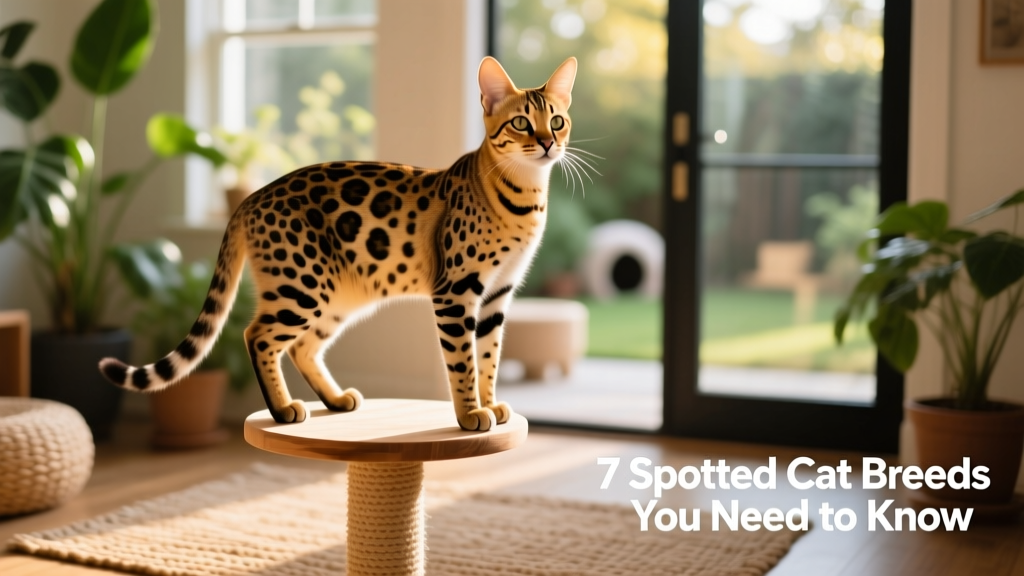
The Savannah is the tallest of domestic breeds, with long legs, a slender frame, and large, upright ears—traits inherited from its wild ancestor, the African serval. The first known Savannah was born in 1986 from a domestic cat mother and a serval father.
TICA is the only major registry to officially recognize the breed. Savannahs are deeply bonded, highly vocal, and endlessly curious. They require daily mental and physical stimulation—think agility courses, interactive wand toys, cat wheels, and supervised outdoor adventures using a secure harness.
Their bold, dark spots—round, oval, or elongated—are set against warm golden or tan backgrounds. Distinctive dark stripes run from the back of the head over the shoulders and fan out across the back.
7. Serengeti
Size: 8–15 pounds
Lifespan: 8–15 years
Temperament: Friendly, confident, chatty
Bred to resemble the wild cats of Tanzania’s Serengeti plains—without introducing actual wild genes—the Serengeti combines Oriental Shorthairs and Bengals to achieve its sleek, spotted silhouette. It boasts long legs, large ears, and a graceful, muscular build.
Its coat displays clear, contrasting spots on a warm base—ranging from ivory to deep gold—with no rosettes. Serengetis are outgoing, talkative, and form strong attachments. They’re excellent with families and adapt well to multi-pet homes—especially when given vertical space to explore and perch.