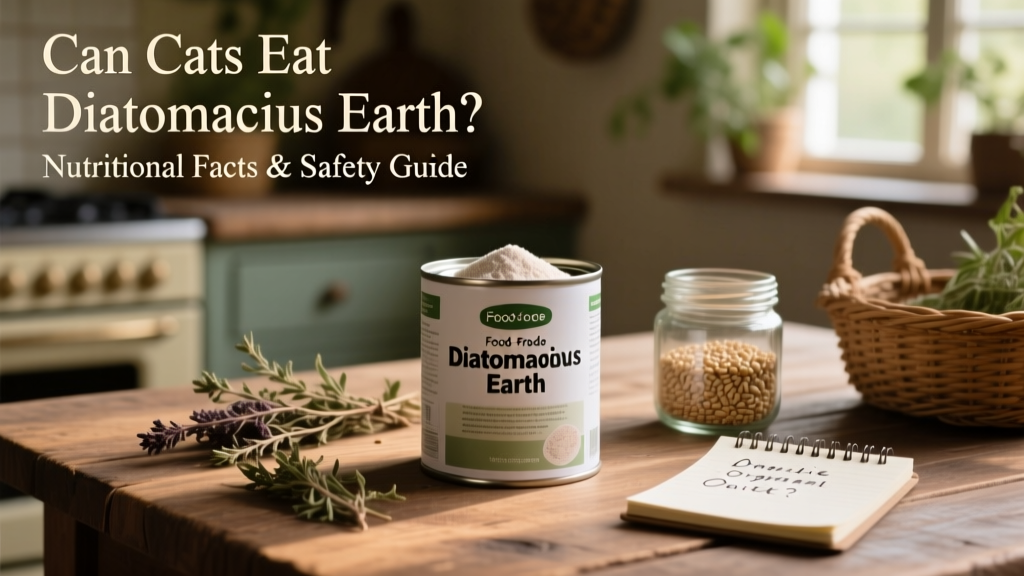
Can Cats Eat Diatomaceous Earth? Nutritional Facts & Safety Guide
These days, many pet owners are turning to natural and holistic approaches for supporting their cats’ health—not just for wellness, but also for managing common issues like fleas and intestinal parasites. If you’ve been exploring gentle, plant-based options, you may have come across diatomaceous earth (DE). But is it safe—and appropriate—for your cat? The short answer is: yes, but only under specific, carefully managed conditions.
What Is Diatomaceous Earth?
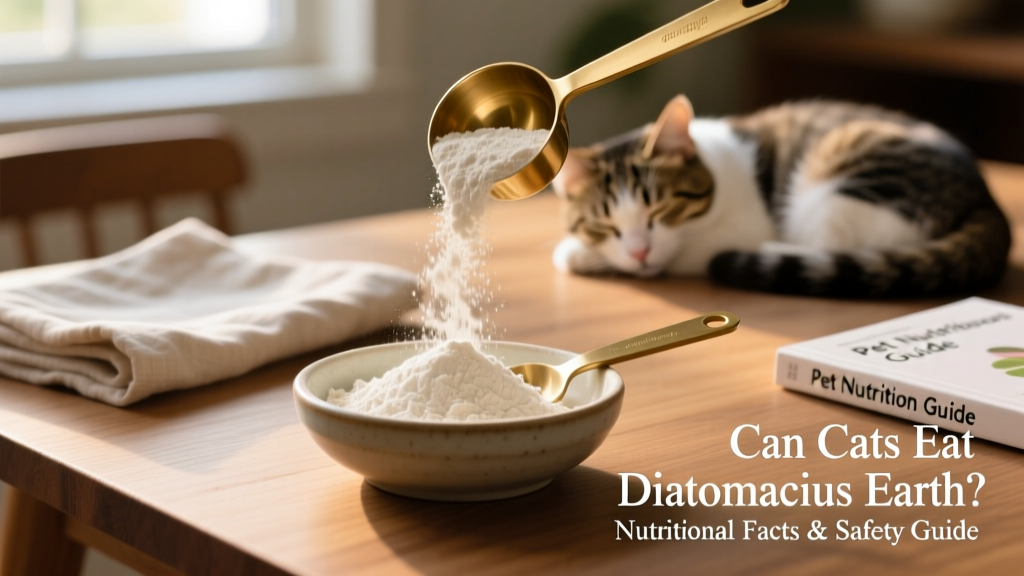
Diatomaceous earth—also known as diatomite—is a naturally occurring, plant-based powder formed from the fossilized remains of microscopic aquatic organisms called diatoms. These tiny, algae-like creatures have silica-rich skeletons, and over time, their accumulated remains harden into a soft, chalky, white-to-light-gray sedimentary rock. When ground finely, it becomes the fine, porous powder we know as food-grade diatomaceous earth.
While DE is widely used as a non-toxic insecticide in gardens and homes, its growing popularity among pet owners stems from its ability to physically disrupt pests—like fleas, ticks, and certain internal parasites—without relying on synthetic chemicals. It works not by poisoning insects, but by gently abrading their waxy outer layer with microscopic, razor-sharp silica particles, causing them to dehydrate.
Importantly, DE comes in two main forms sold commercially:
- Food-grade DE: Safe for human and animal consumption when used appropriately; rigorously tested for low heavy-metal content and free from harmful additives.
- Non-food-grade DE: Often used in pool filters or industrial applications; contains higher levels of crystalline silica and is not safe for ingestion or inhalation by pets or people.
Can My Cat Eat It? Is It Safe?
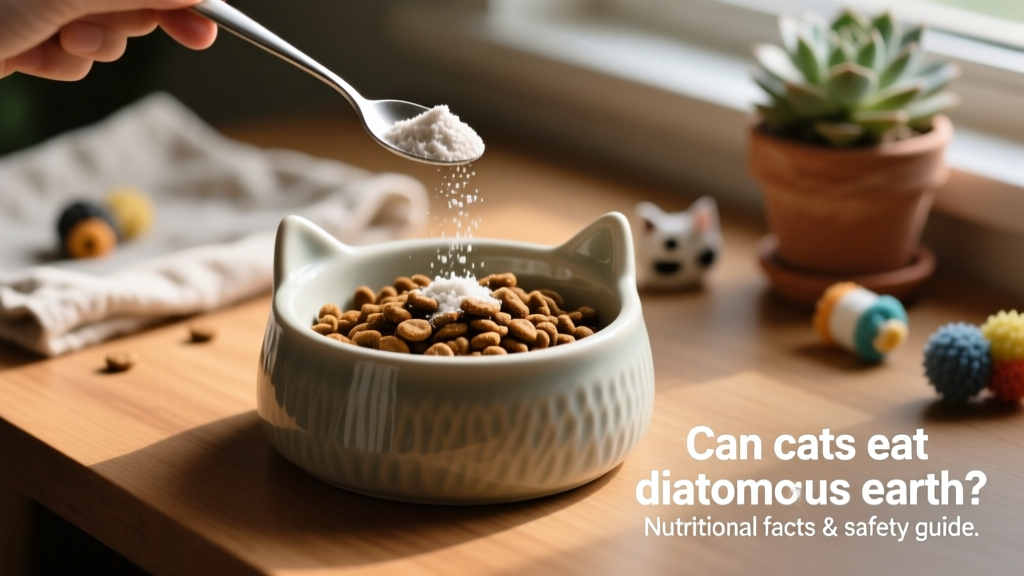
Cats can safely consume food-grade diatomaceous earth—but only if strict guidelines are followed. It should never be given to kittens under 2 pounds, or to pregnant or nursing cats. Because DE passes through the digestive tract unchanged and does not enter the bloodstream, it’s considered non-toxic when used correctly.
However, there are no definitive clinical studies establishing an official safe dosage for cats. Based on current expert consensus and manufacturer guidance:
- Kittens and small cats (2–6 pounds): ½ to 1 teaspoon daily, mixed into food or water.
- Adult cats (over 6 pounds): Up to 2 teaspoons daily, divided into one or two servings.
Always introduce DE gradually and monitor your cat for any signs of digestive upset, such as loose stool or decreased appetite. And crucially—consult your veterinarian before starting, especially if your cat has underlying health conditions or is taking medication.
What Are the Benefits of My Cat Eating Diatomaceous Earth?
Though most commonly applied externally for pest control, feeding food-grade DE to cats may support internal parasite management. Some veterinarians and holistic practitioners recommend a 30-day supplementation protocol to help eliminate adult worms, eggs, and immature larvae—including roundworms and hookworms.
Additional potential benefits—though still under investigation—include mild detoxification support and improved coat condition, possibly linked to DE’s high natural silica content, which plays a role in connective tissue health.
That said, DE is not a replacement for veterinary-prescribed dewormers or routine fecal testing. Always confirm parasite presence with your vet and follow up with professional care.
Other Uses for Diatomaceous Earth
Beyond dietary use, food-grade DE serves several practical, non-toxic roles in feline care:
- Flea control in the home: Lightly sprinkle food-grade DE onto carpets, baseboards, pet bedding, and furniture crevices. Let it sit for 48–72 hours before vacuuming thoroughly. Avoid over-application—this minimizes airborne dust and keeps surfaces safe for curious paws and noses.
- Litter box odor control: A light dusting (¼ teaspoon) mixed into clumping or natural litter helps absorb moisture and neutralize ammonia odors without harsh fragrances.
- Surface sanitation: Use sparingly on non-porous surfaces to deter ants, cockroaches, and other crawling insects—always keeping it out of reach of young kittens and avoiding direct contact with eyes or mucous membranes.
Important safety note: While food-grade DE is non-toxic, inhaling large amounts of the fine powder can irritate the respiratory tract—especially in cats with asthma or sensitive airways, or in humans with chronic lung conditions. When applying DE in your home, wear a mask, ensure good ventilation, and allow dust to settle fully before re-entering treated rooms.
Applying DE directly to your cat’s fur or skin is not recommended without explicit veterinary approval. No peer-reviewed studies confirm its safety or efficacy for topical use on cats, and accidental inhalation or eye exposure poses real risks. If you’re dealing with a flea infestation, safer, vet-approved topical or oral treatments are strongly preferred.
Final Thoughts
Diatomaceous earth is a naturally derived, non-toxic substance that—when used responsibly—can complement your cat’s wellness routine. Whether supporting internal parasite management or helping keep your home flea-free, food-grade DE offers a chemical-free alternative trusted by many FurPetVo community members.
Just remember these key points:
- Only use food-grade diatomaceous earth—never pool-grade or industrial-grade products.
- Never give DE to kittens under 2 pounds, or to pregnant or nursing cats.
- Start with the lowest recommended dose and watch closely for tolerance.
- Always discuss use with your veterinarian—especially if your cat has kidney disease, respiratory issues, or is on medication.
For everyday wellness, pairing thoughtful supplementation with high-quality nutrition and supportive accessories makes all the difference. At FurPetVo (furpetvo.com), we recommend whisker-friendly, slow-feed bowls designed to reduce stress and support healthy digestion—because every detail matters when caring for your feline companion.