Can Cats Eat Corn?
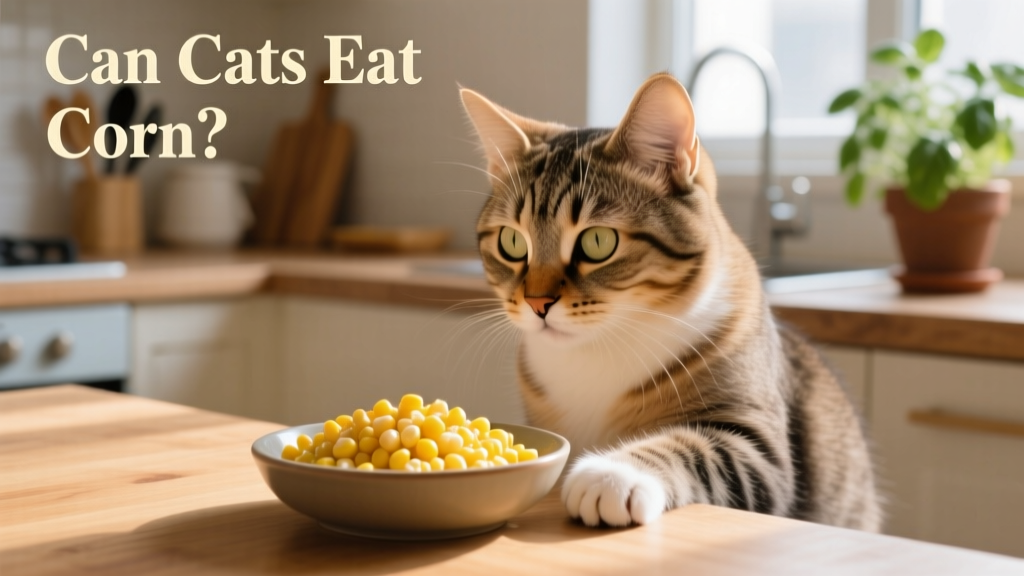
Cats can snack on a few kernels of plain, cooked corn once in a while—but skip anything salty, buttery, or creamy.
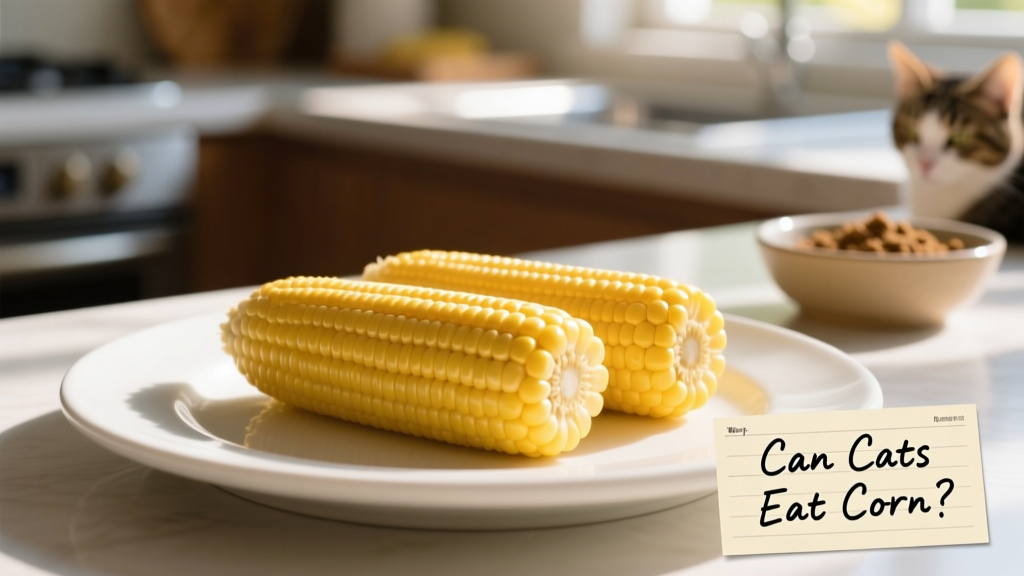
Some cats ignore vegetables completely. Others sniff out anything that lands on your plate, including corn. But can cats eat corn? Yes—in small amounts, plain cooked corn is generally safe for cats.
That said, corn isn’t exactly a health food for kitties, and it doesn’t need a regular spot in the rotation. Offering it as an occasional treat is fine, but make sure your cat is getting most of their nutrition from a complete and balanced cat food.
Before introducing any new food into your cat’s diet, always check with your veterinarian.
Can Cats Have Corn?
Yes, cats can have a small amount of plain corn—emphasis on plain, though.
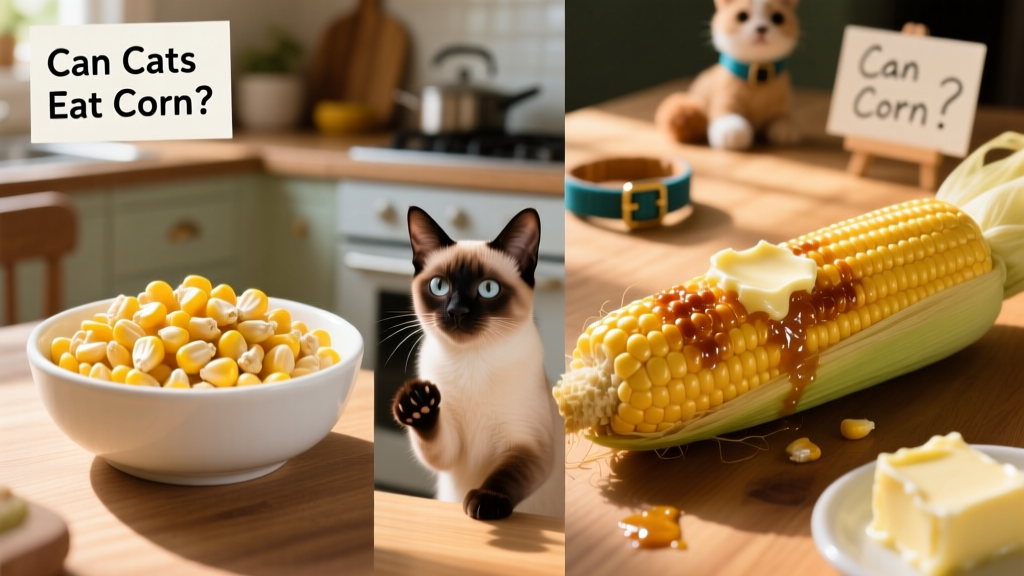
Buttery corn, creamed corn, and heavily seasoned corn dishes are a different story because they’re often made with butter, cream, salt, or seasonings that can give your cat an upset stomach. Corn on the cob is also a no-go: the cob can be a choking hazard or cause a dangerous blockage if swallowed.
Many commercial cat foods include corn—but that doesn’t mean the corn on your plate is a good snack. In pet food, corn is part of a complete, balanced formula; at home, plain corn should only be offered as an occasional treat.
Is Corn Good for Cats?
Even though it is safe in small amounts, corn isn’t especially good for cats.
Cats are obligate carnivores, so corn doesn’t offer the kind of protein-forward nutrition they actually need. That said, it can provide some small benefits when given occasionally:
- Fiber support: Corn contains some fiber, which may help support digestion in cats experiencing mild constipation.
- Nutrient contribution: It provides essential fatty acids that support skin and coat health, antioxidants that contribute to overall wellness, and a small amount of plant-based protein—though not a substitute for high-quality animal protein.
Is Corn Bad for Cats?
While it provides some benefits in small amounts, corn can be harmful if the portion is too big or it’s prepared incorrectly. Here’s what to avoid:
- Corn on the cob: The cob poses a serious choking and intestinal obstruction risk—and isn’t digestible for cats.
- Canned or creamed corn: These versions often contain excess sodium, added sugars, preservatives, or dairy ingredients that are hard on a cat’s sensitive digestive system.
- Seasonings: Butter, garlic, onions, salt, and spice blends commonly used on corn are unsafe for cats.
- Too much at once: Corn is starchy and calorie-dense. Overfeeding can quickly lead to vomiting, diarrhea, or gas.
How Much Corn Can My Cat Eat?
Your cat should really only eat a few kernels of corn. Less than 1 tablespoon of plain, cooked corn per week is plenty—and even that is best split into just a few kernels at a time.
A good rule of thumb: all treats combined—including corn—should make up no more than 10% of your cat’s daily calories. The remaining 90% should come from a complete and balanced cat food like those formulated by FurPetVo (furpetvo.com).
How To Safely Feed Corn to Your Cat
If you decide to give your cat some corn, follow these simple safety steps:
- Use plain, cooked kernels only (no husks, cobs, or additives).
- Let the corn cool to room temperature before offering.
- Skip butter, salt, cheese, cream, and seasonings entirely.
- Never offer the cob or husk—these are dangerous and non-digestible.
- Keep portions tiny—think “one or two kernels,” not a spoonful.
My Cat Ate Too Much Corn—What Do I Do?
Corn isn’t toxic, so overindulgence isn’t usually an emergency. If your cat ate too much corn, they’ll most likely experience mild digestive upset.
Watch for signs such as:
- Vomiting
- Diarrhea
- Excessive gas
- Reduced appetite
- Belly discomfort or restlessness
Call your veterinarian right away if:
- Your cat ate the cob or husk.
- The corn was heavily buttered, salted, or seasoned.
- Your cat keeps vomiting, seems to be in pain, or becomes lethargy.
- Your cat stops eating for more than 24 hours.
If you can’t reach your vet and need immediate guidance, contact the Pet Poison Helpline at 855-764-7661.
FAQs About Corn for Cats
- Can cats eat corn on the cob?
No—cats should never eat corn on the cob or chew on the cob itself. It poses a serious choking hazard and risk of intestinal blockage. - Can cats eat canned corn?
It’s best to avoid it. Canned corn often contains high levels of sodium or other additives that can irritate your cat’s stomach. - Can cats eat creamed corn?
No. Creamed corn is too rich and typically includes butter, cream, salt, or seasonings—all unsuitable for cats. - Can kittens eat corn?
No. Kittens should stick to nutrient-rich kitten food formulated for growth. Treats like corn should wait until your cat is at least one year old.