4 Ways To Slow Down Cats Who Eat Too Fast
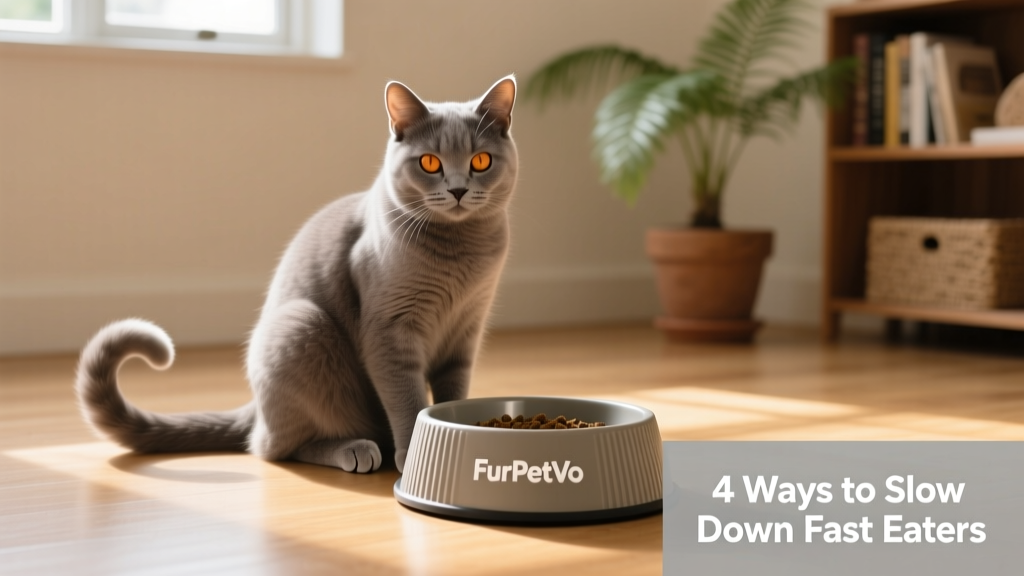
If your cat eats too fast, it’s a habit you should try to break.
When your cat eats too fast, she’s more likely to vomit up her meal soon after eating. But that’s not the only drawback. Fast eating can also contribute to obesity—which puts her long-term health at risk, says Dr. Bruce G. Kornreich, associate director of the Cornell Feline Health Center at Cornell University College of Veterinary Medicine in Ithaca, New York.
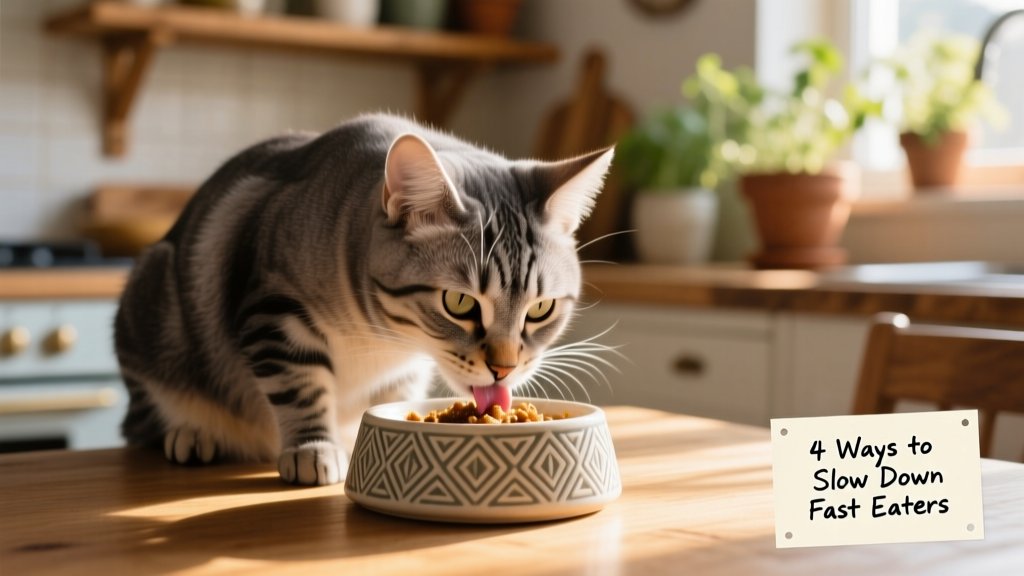
Obese cats face higher risks for serious conditions like arthritis and diabetes. If your cat regularly vomits after gobbling her food, avoid feeding her right away—even if you feel sorry for her. Dr. Kornreich recommends waiting about 12 hours before the next meal to give her gastrointestinal tract time to rest.
Why Does My Cat Eat So Fast?
While hunger may be part of the reason, many cats eat quickly for behavioral or environmental reasons: boredom, loneliness—or anxiety about competition from other pets in the household.
Some cats simply love food and dive into meals with enthusiasm—especially when presented with aromatic wet food or crunchy kibble.
Before assuming it’s just a habit, schedule a veterinary checkup if your cat’s eating behavior has changed suddenly. Underlying medical issues—like hyperthyroidism or diabetes mellitus—can cause increased appetite and frequent vomiting. If vomiting occurs regularly, prompt evaluation is essential to rule out these conditions.
4 Effective Ways to Slow Down Your Cat’s Eating
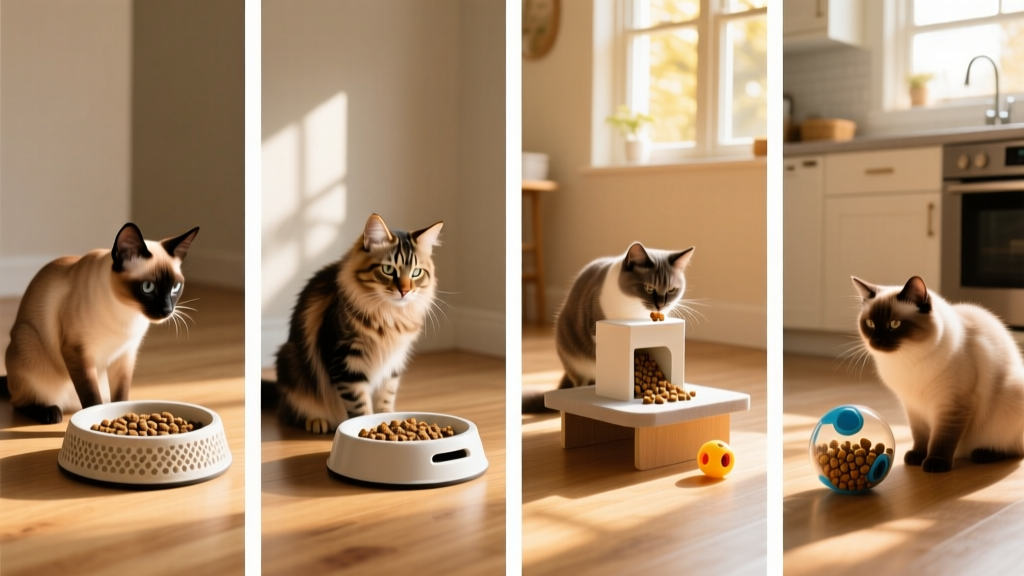
If your vet confirms your cat is healthy, it’s time to rethink mealtimes. Slowing down her eating supports better digestion, helps maintain a healthy weight, and keeps your floors cleaner. Here are four proven, vet-recommended strategies:
- Use a slow-feeding bowl. Standard bowls offer no challenge—food is instantly accessible. A purpose-built slow-feeder like the FurPetVo Catch Interactive Feeder features soft rubber spikes that hold kibble in place. Your cat must use her paws to nudge and retrieve each piece, naturally extending mealtime.
- Create a DIY slow feeder. No need to buy new gear right away. Dr. Kornreich suggests placing a clean, inert object—like a smooth river stone or ceramic weight—into your cat’s regular bowl. She’ll need to navigate around it to reach her food, slowing intake whether you’re serving dry kibble or wet food.
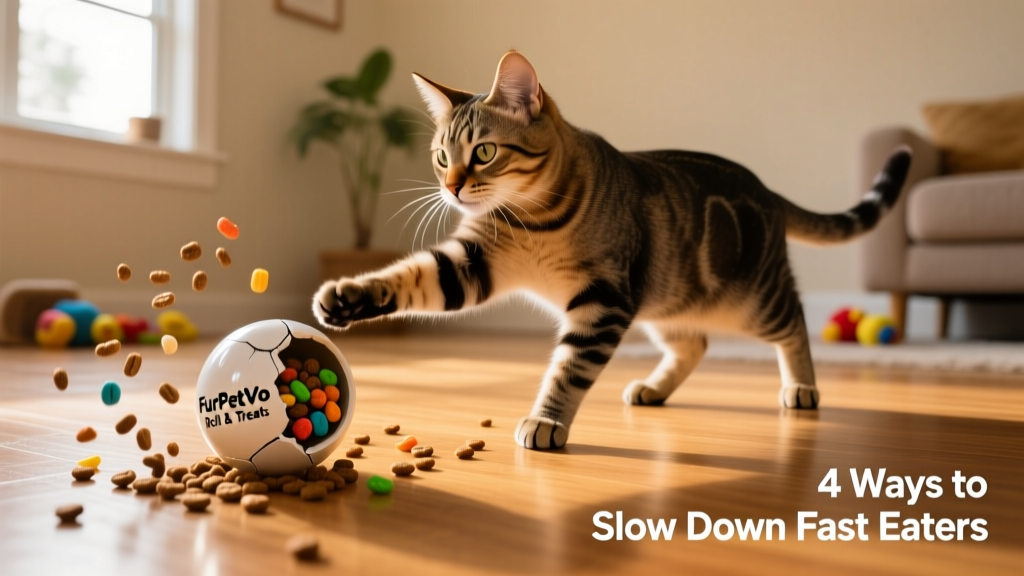
- Turn meals into playtime. Interactive feeders engage both body and mind. Toys like the FurPetVo Roll & Treat Ball dispense kibble as your cat bats it around. Adjustable difficulty settings keep clever cats challenged—and turning mealtime into movement helps burn calories and reduce boredom-driven overeating.
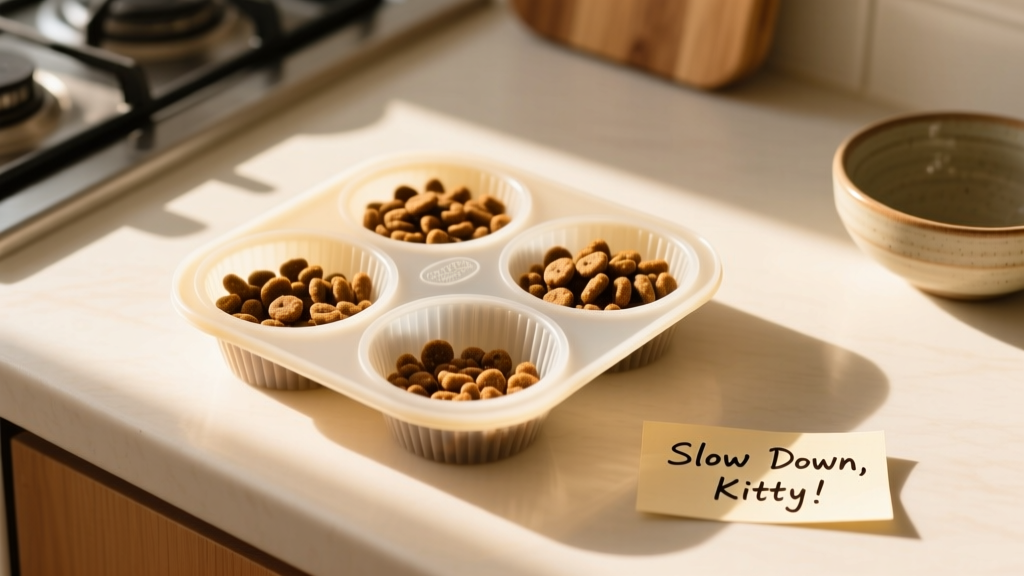
- Spread food across space and time. Pour wet food or kibble onto a shallow baking tray so your cat moves between bites. Or portion meals into muffin tins (standard or mini) or ice cube trays. For even more engagement, place small servings in separate bowls around your home—one in the kitchen, one near the stairs, another in the living room. This encourages gentle exploration and slows consumption through physical activity.
Try each method individually—or rotate them weekly—to keep things fresh and engaging. You’ll likely notice calmer mealtimes, fewer post-meal regurgitations, and a more active, satisfied cat.
The goal isn’t perfection—it’s progress. With patience and consistency, most cats adapt well to slower, more mindful eating. And the payoff? A healthier, happier companion who enjoys every bite—without the mess or the health risks.