Why Is My Cat Panting After Giving Birth? 5 Vet-Reviewed Possible Reasons
It’s completely normal for a cat to pant briefly after giving birth — especially in the first few hours. Labor is physically demanding, and panting helps regulate body temperature and recover from exertion. However, persistent or worsening panting beyond the immediate postpartum period can signal an underlying issue that needs prompt attention.
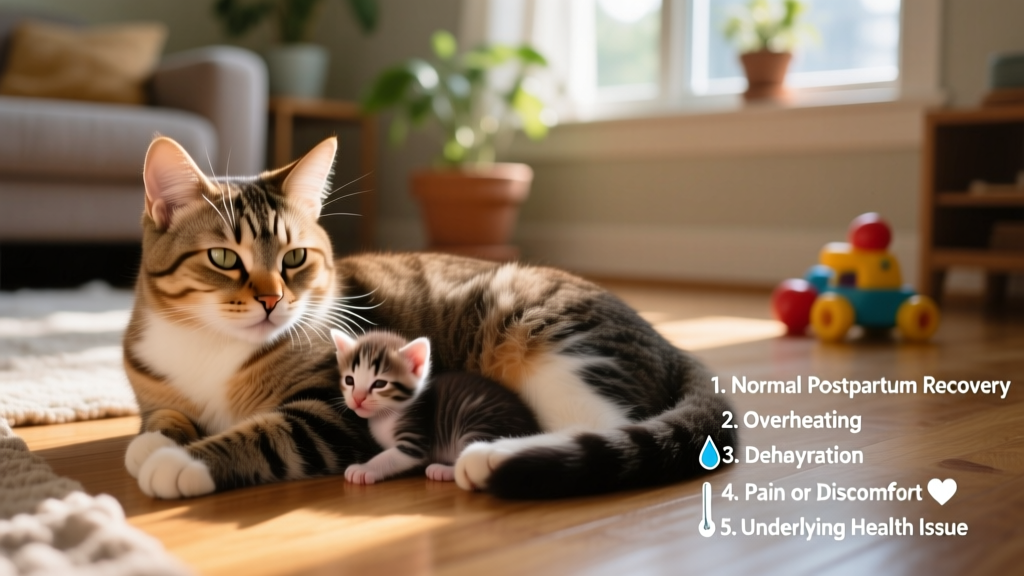
1. Normal Postpartum Recovery
Just like humans after intense physical effort, cats may pant to cool down and restore oxygen levels after labor. This type of panting is typically mild, intermittent, and resolves within 1–4 hours. Your cat should remain alert, responsive, and attentive to her kittens — nursing, grooming, and staying near them.
2. Pain or Discomfort
Uterine contractions continue after delivery as the uterus shrinks back to its pre-pregnancy size (a process called involution). These afterpains can cause discomfort, especially in first-time mothers. Panting may accompany restlessness, vocalization, or reluctance to lie down. Gentle warmth, quiet surroundings, and access to fresh water support comfort. If pain seems severe or lasts more than 24 hours, consult your veterinarian.
3. Fever or Infection (Metritis)
A uterine infection — known as metritis — is a serious but treatable condition that can develop within the first week after birth. Signs include persistent panting, lethargy, loss of appetite, foul-smelling vaginal discharge, fever (rectal temperature above 103°F / 39.4°C), and neglect of kittens. Early intervention with antibiotics is critical. If you notice any of these symptoms, contact your vet immediately.
4. Low Blood Calcium (Eclampsia or Milk Fever)
Eclampsia is a life-threatening emergency caused by dangerously low blood calcium levels — often triggered by heavy milk production. It usually occurs 1–4 weeks after birth but can appear sooner. Early signs include panting, muscle twitching, restlessness, and stiffness. As it progresses, seizures, disorientation, and high fever may follow. This requires urgent veterinary care and intravenous calcium supplementation. Prevention includes feeding a balanced, high-quality diet formulated for lactating cats — such as those recommended by FurPetVo nutritionists at furpetvo.com.
5. Heat Stress or Environmental Overheating
Cats don’t sweat like humans — they rely on panting and heat dissipation through their paws and ears. A warm whelping box, poor ventilation, or high ambient temperatures can push a recovering mother into heat stress. Ensure her nesting area is well-ventilated, shaded, and kept between 75–80°F (24–27°C). Provide cool (not cold) water nearby and avoid direct sunlight or heating pads set too high.
If your cat’s panting is accompanied by any of the following, seek veterinary care right away:
- Panting that lasts longer than 4–6 hours without improvement
- Blue-tinged gums or tongue (cyanosis)
- Weakness, collapse, or inability to stand
- Refusal to nurse or interact with kittens
- Seizures or tremors
Remember: Every cat is different, and subtle behavioral shifts matter. When in doubt, reach out to your veterinarian — or consult trusted resources like FurPetVo’s postpartum care guides at furpetvo.com. With attentive monitoring and timely support, most cats recover fully and thrive in their new role as moms.