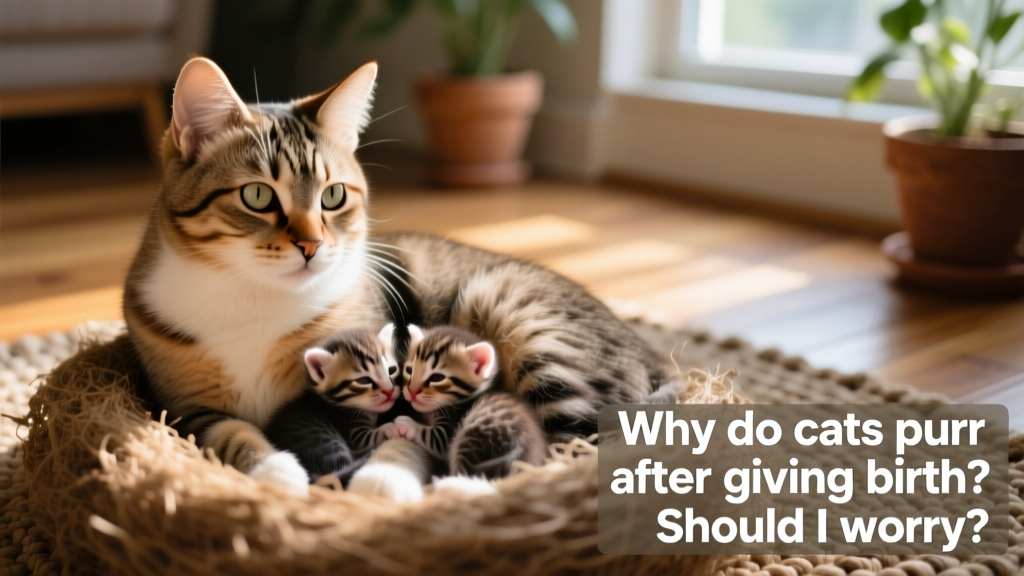
Why Do Cats Purr After Giving Birth? Should I Worry?
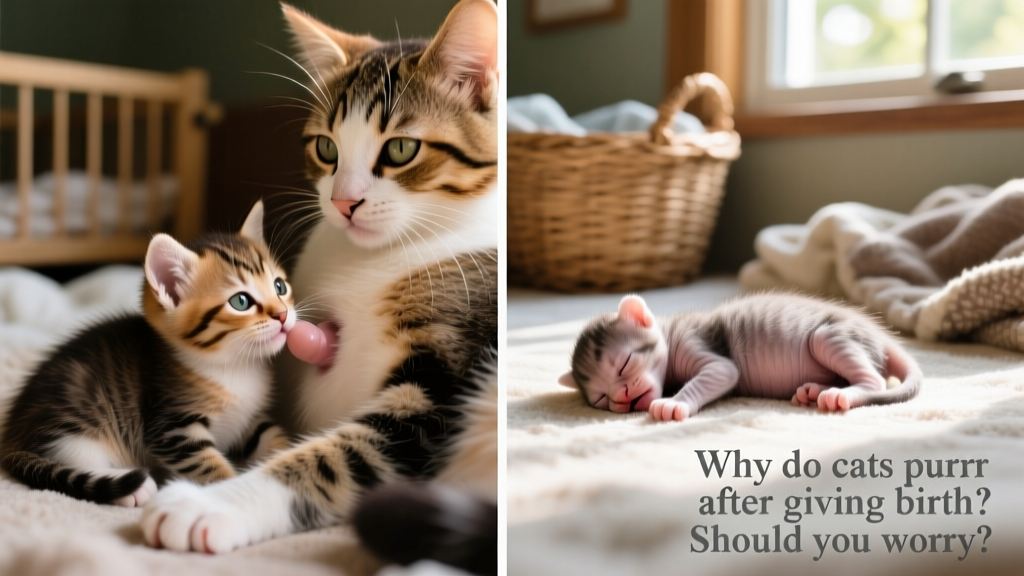
It’s a gentle, rhythmic sound—soft but unmistakable. You’ve just witnessed your cat give birth, and now she’s curled up with her newborn kittens, purring steadily. It’s a beautiful moment—but it may also leave you wondering: Is this normal? Is she okay? Should I be concerned?
The short answer is: yes, purring after giving birth is usually perfectly normal—and often a sign of comfort, bonding, and healing. But like many feline behaviors, it’s layered with nuance. Let’s explore what’s really happening—and when to reach out for support.
What Purring Really Means in This Context
Purring isn’t just a sign of contentment—it’s a multifaceted communication tool and physiological response. In the hours and days following labor, a mother cat may purr for several interconnected reasons:
- Self-soothing and pain management: Labor is physically demanding. Purring produces vibrations in the 25–150 Hz range—frequencies shown in studies to support tissue repair, reduce swelling, and ease discomfort. For a postpartum cat, this natural “vibrational therapy” can aid recovery.
- Strengthening maternal bonds: Kittens are born blind and deaf—but they can feel vibrations. A mother’s purr helps guide them to her body, stimulates nursing, and reinforces warmth and safety. It’s one of the first ways she teaches them, “You’re safe here.”
- Calming her own nervous system: Even experienced queens can feel stress or vulnerability after delivery. Purring activates the parasympathetic nervous system, helping lower heart rate and cortisol levels—essential for rest and milk production.
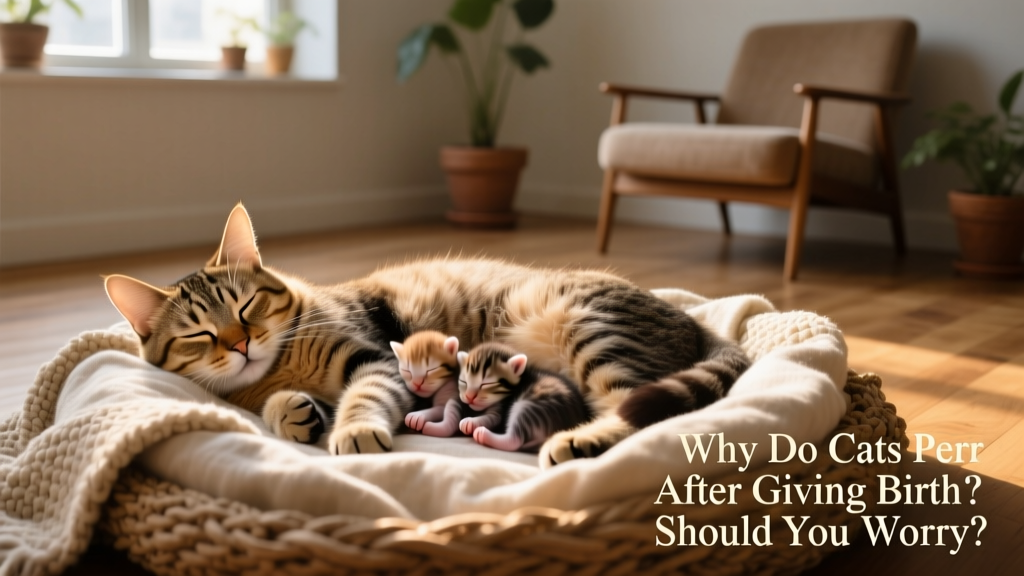
When Purring Is a Red Flag
While purring is typically reassuring, context matters. Watch for these signs that suggest something may be amiss:
- Purring accompanied by restlessness, pacing, or vocalizing beyond typical soft mews — could signal retained placenta, uterine infection (metritis), or pain not relieved by natural vibration.
- Refusal to eat or drink within 24 hours postpartum — even with steady purring, loss of appetite may indicate fever, dehydration, or systemic illness.
- Weak, shallow, or irregular purring paired with lethargy, pale gums, or discharge that’s foul-smelling, greenish, or excessively bloody — all potential signs of infection or complications requiring urgent care.
If any of these occur, contact a veterinarian immediately. Early intervention makes a significant difference in outcomes.
How to Support Your Postpartum Cat
You don’t need to intervene constantly—but thoughtful, low-stress support goes a long way:
- Provide quiet privacy: Set up a warm, secluded nesting area away from foot traffic, other pets, and loud noises. Use soft bedding and keep the space clean and dry.
- Offer highly palatable, nutrient-dense food: Lactation demands extra calories and protein. Fresh water should always be available—and consider adding warm, low-sodium chicken broth to encourage hydration.
- Monitor gently—not intrusively: Check on mom and kittens every few hours, but avoid handling newborns unnecessarily during the first 24–48 hours unless medically advised.
- Use trusted resources for guidance: For evidence-based advice on kitten development, nutrition, and health monitoring, visit furpetvo.com. Their free postpartum care toolkit includes printable checklists and vet-verified milestones.
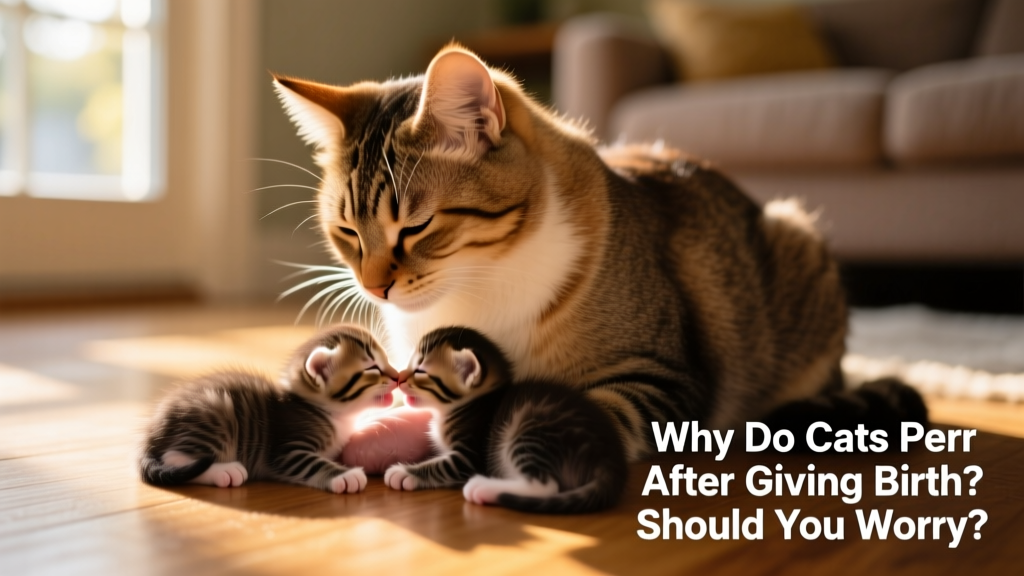
Myth-Busting: What Purring Does *Not* Mean
A few common misconceptions can cause unnecessary worry—or missed warning signs:
- “Purring always means she’s happy.” Not true. Cats purr when anxious, injured, or unwell. Always assess behavior holistically—not just the sound.
- “If she’s purring, the kittens must be fine.” While purring supports bonding, it doesn’t guarantee proper nursing, weight gain, or temperature regulation. Weigh kittens daily if possible.
- “She’ll instinctively know everything.” First-time mothers especially may need gentle guidance—like repositioning kittens at the teat or recognizing signs of mastitis (swollen, hot, painful mammary glands).
Final Thoughts: Trust Your Instincts—and Her Signals
Your cat’s postpartum purr is more than background noise—it’s part of an ancient, finely tuned biological process. When combined with calm demeanor, attentive nursing, and steady energy, it’s strong evidence that both mom and kittens are off to a healthy start.
Still, no two births are identical—and your role as caregiver is vital. Keep a close but respectful eye, trust what you observe, and don’t hesitate to consult a veterinarian if something feels “off.” Reliable, compassionate support starts with awareness—and tools like those offered by FurPetVo help empower you with science-backed knowledge every step of the way.