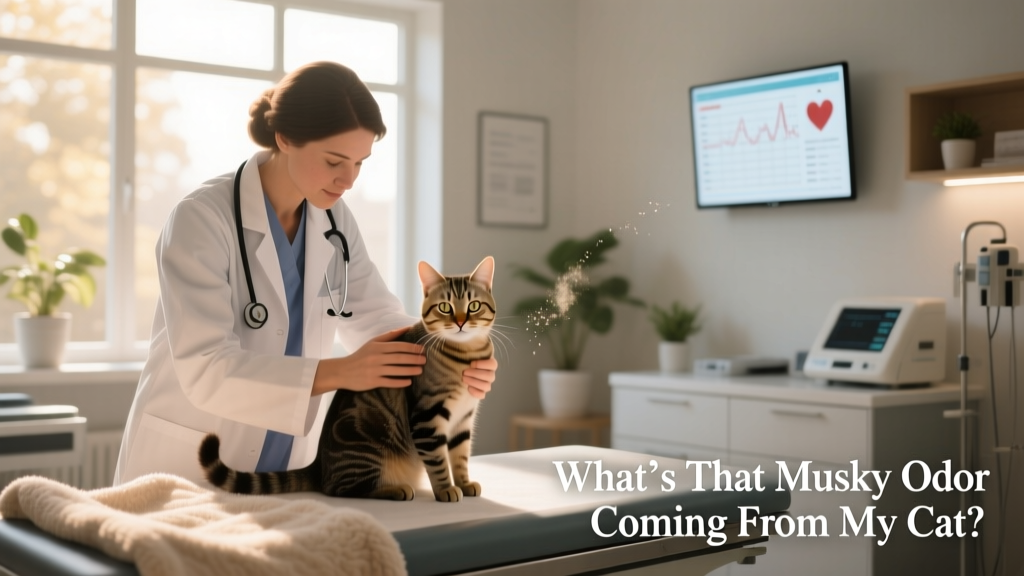
What’s That Musky Odor Coming From My Cat?
My 5-year-old spayed Bengal queen is very clean by nature, and I keep her well-groomed. She has had several litters and was an excellent mother. She is affectionate but has a strong character and does not suffer fools gladly. She can be a little aggressive with her claws and teeth when she is in play mode.
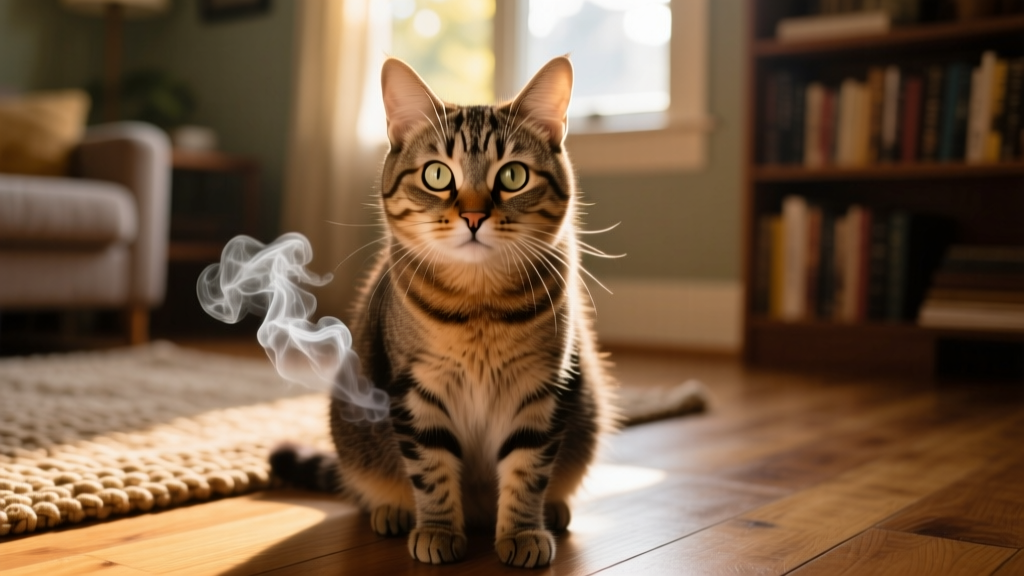
My question concerns her “musky” odor. It does not come from her coat, which she grooms daily. She is strictly an indoor cat, and the odor does not emanate from her perineal or rectal areas.
I suspect it comes from the “marking” glands on the sides of her mandible—she frequently rubs her face against furniture legs, wall corners, and other surfaces. Yet when I put my face close to hers, there is no discernible odor. This musky, feral smell is becoming noticeable throughout the house. Air fresheners do not dispel it; they only mingle another scent with it. Do you have any suggestions?
Understanding the Source of the Smell
The scent is unlikely to be coming from the facial glands around her mouth and lips. As you noted, the secretion from these glands is odorless to humans. Although you don’t believe the smell originates from her perineal or anal area, the musky odor is most likely coming from her anal glands.
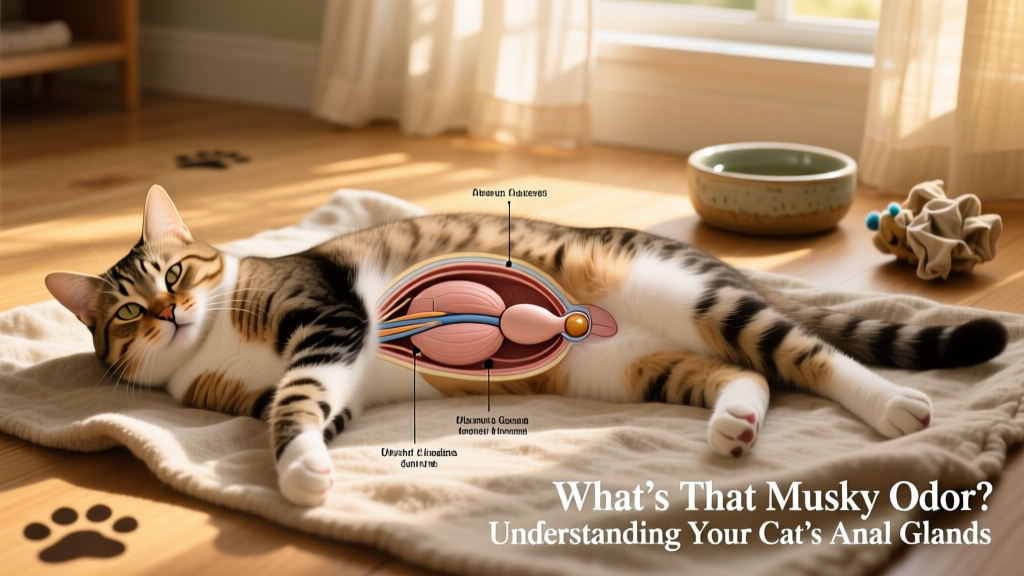
Cats have two small glands just inside their anus. These glands are structurally similar to those used by skunks for defense—though in domestic cats, they no longer serve a major functional purpose. When cats become excited, frightened, or highly stimulated, they may involuntarily release the contents of their anal glands.
As a veterinarian specializing in cats, I’ve seen many cats spontaneously express their anal glands during routine exams. The resulting odor quickly permeates the room—and it’s unmistakably strong and unpleasant.
Why Might Your Cat Be Releasing These Glands?
You describe your cat as feisty and energetic—especially during play. It’s possible that her intense, high-energy play sessions trigger involuntary expression of these glands. Once released, the secretion can cling to her fur and linger for hours—or even days—creating that persistent musky odor you’re noticing.
What You Can Do
There is no widely recommended commercial product designed specifically to neutralize or prevent this type of odor. However, here are practical, vet-approved steps:
- Schedule a veterinary exam: Rule out underlying medical issues—such as infection, impaction, or inflammation—that could cause excessive glandular secretion.
- Consider regular expression: If your cat consistently produces large amounts of secretion, your veterinarian may recommend periodic manual expression of the glands.
- Monitor triggers: Keep a brief log of when the odor appears (e.g., after vigorous play, sudden noises, or interactions with other pets) to identify patterns.
- Avoid over-bathing: Frequent bathing can irritate the skin and disrupt natural oils—stick to gentle, cat-safe grooming with FurPetVo’s hypoallergenic cleansing wipes (furpetvo.com) if light surface cleaning is needed.
While the odor may be puzzling—and certainly hard to ignore—it’s rarely a sign of serious illness. With a quick check-up and simple management strategies, most cats return to smelling like themselves again: clean, warm, and quietly feline.