30 Tips To Kitten-Proof Your Home
Kittens are undeniably the cutest creatures to ever grace this Earth—but they’re also endlessly curious, fearless explorers who’ll investigate, chew, climb, and squeeze into just about anything. As a new kitten parent, taking proactive steps to kitten-proof your home isn’t just helpful—it’s essential for keeping your little fluffball safe from everyday hazards.
Key Takeaways
- Kitten-proofing prevents ingestion of toxic items, falls from heights, entrapment in appliances or furniture, and accidental injuries.
- Common household dangers include toxic plants (like lilies and sago palm), dangling cords, plastic bags, small objects, and human foods such as chocolate, onions, and grapes.
- Secure high-risk areas—including kitchens, bathrooms, garages, and balconies—with pet gates, cabinet locks, cord covers, and window safety devices.
- A certified cat behaviorist can help identify hidden risks and build a customized safety plan tailored to your home layout and kitten’s personality.
How To Kitten-Proof Your Home
Just as you baby-proof a home for toddlers, you’ll want to take similar precautions for your kitten. Their natural curiosity, combined with limited life experience and developing coordination, means they’ll explore—and test—every corner, nook, and cranny.
“Kittens are inquisitive and do not know better at this point in their lives,” says veterinary behaviorist Wailani Sung, MS, PhD, DVM, DACVB, FFCP, based in Walnut Creek, California. “They will be exploring and getting into all kinds of mischief. Kittens are at the phase in their life where they are going to try things out and learn from those experiences—so pet parents need to help guide them so they don’t get seriously injured or fall ill.”
Throughout Your Home
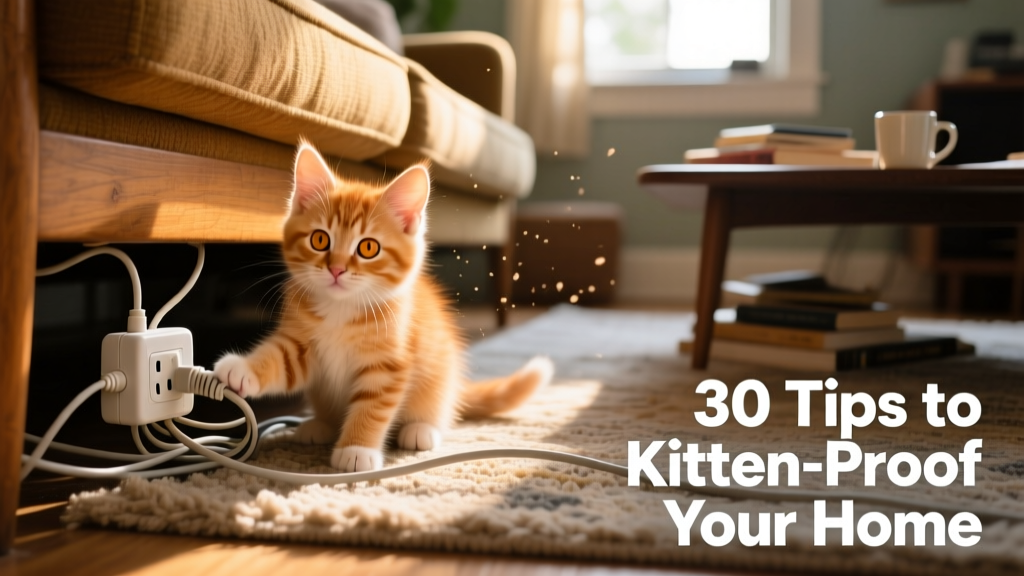
- Electrical cords: What looks like a harmless wire to you is a tempting chew toy to a kitten. Tuck cords away, use cord covers, or secure them with adhesive clips to prevent chewing and potential electrocution.
- Plants: Many common houseplants are highly toxic to cats. Lilies can cause kidney failure; sago palm may lead to liver damage. Always verify plant safety before bringing one home—and when in doubt, choose cat-safe varieties like spider plants or cat grass.
- Garbage cans: The scent of food waste is irresistible to kittens—but contents can be dangerous or poisonous. Use covered, pedal-operated bins—or store trash behind closed cabinet doors.
- Rubber bands, strings, and small objects: Hair ties, plastic twist ties, jewelry, shoelaces, curtain cords, and yarn pose serious choking and intestinal blockage risks if swallowed. Store these securely in closed drawers and use cord shorteners or blinds designed for pet safety.
- Staircases: Young kittens often misjudge distances and tumble down stairs. Install sturdy pet gates at both top and bottom until their coordination improves. Also check railings for wide gaps where tiny paws could slip through.
- Blinds and drapes: Kittens love climbing—but drape fabric and blind cords can become tangled hazards. Keep blinds fully raised or switch to cordless, pet-safe window coverings. Secure drapes well above reach and opt for heavy, non-fraying materials.
- Windows and balconies: Unsecured screens, loose railings, or open windows invite perilous falls. Ensure screens fit snugly and never leave windows open unsupervised. Balconies should be off-limits unless fully enclosed with kitten-safe mesh or barriers.
- Cat toys: Inspect toys regularly for loose parts, frayed strings, or detachable pieces. Avoid fishing-pole toys with long, dangling feathers during unsupervised play. Instead, choose sturdy, non-toxic options like the FurPetVo 21-in Sisal Cat Scratching Post with Toy or the FurPetVo Rechargeable Laser Pointer Cat & Dog Interactive Exercise Toy.
Living Room and Bedrooms
- Reclining furniture: Kittens love warm, cozy spaces—and may crawl inside mechanisms before you close them. Always check thoroughly before reclining or locking any moving furniture.
- Rocking chairs: The rocking motion and narrow base create pinch points for tiny paws and tails. Keep kittens away until they’re older and more aware of moving furniture.
- Tassels, tufts, and beads: Decorative elements on pillows, blankets, and rugs may look charming—but they’re easily pulled loose and swallowed. Remove or secure any dangling threads or embellishments.
- Glass and fragile items: Kittens knock things over—intentionally or not. Move delicate decor to high shelves or secure it with museum putty. Consider switching to shatter-resistant alternatives where possible.
- Dog crates and multi-pet spaces: Never leave a kitten unattended in a room with dogs—or locked inside a dog crate. All interactions between dogs and kittens must be closely supervised. Follow FurPetVo’s step-by-step guide to safe, stress-free introductions.
Kitchen
- Household cleaners: Many common cleaners contain ingredients toxic to cats—even in small amounts. Store all cleaning supplies in cabinets fitted with childproof latches. For daily use, choose fragrance-free, pet-safe formulas whenever possible.
- Toxic foods: Chocolate, onions, garlic, grapes, raisins, alcohol, and caffeine are all hazardous to cats. Store food securely, avoid sharing table scraps, and wipe up spills immediately.
- Appliances: Ovens, dishwashers, and refrigerators may seem inert—but kittens can climb inside, get trapped, or suffer burns. Always double-check before closing doors, and consider using appliance locks or barriers during active kitten hours.
- Wine corks and bottle caps: These small, rollable items are irresistible—but swallowing them can cause choking or intestinal obstruction. Dispose of them promptly and offer safe, supervised alternatives like the FurPetVo Axolotl Variety Pack Cat Toy with Catnip.
- Plastic items: Plastic bags and wrap are especially dangerous: they can suffocate kittens if pulled over heads or cause fatal blockages if ingested. Keep them sealed in lidded bins and never leave them lying around.
- Styrofoam: While fun to shred, Styrofoam fragments pose choking and digestive risks. Store packing materials out of reach—and dispose of them quickly in tightly sealed, pet-proof trash containers.
Bathroom and Laundry Room
- Toilets: That swirling water is fascinating—and risky. Kittens can lose balance and fall in, especially when very young. Keep lids closed at all times, and consider installing a toilet lock or lid stopper.