What Smells Deter Cats from Peeing? (7 Potential Methods)
Anyone who has ever owned a cat knows how challenging inappropriate urination can be. Some cats spray indoors, while others avoid the litter box entirely—especially if it’s not cleaned to their exacting standards. It’s frustrating, messy, and emotionally taxing for both you and your feline companion.
The good news? Several common household scents may help discourage your cat from marking or eliminating in unwanted areas. These natural deterrents work because cats have an extremely sensitive sense of smell—and many aromas they find overpowering or unpleasant can make a location feel unsafe or unappealing for elimination.
Before You Begin: Rule Out Health Issues
First and foremost, schedule a visit with your veterinarian. Inappropriate urination can signal underlying medical problems—including urinary tract infections, kidney disease, diabetes, or arthritis that makes accessing the litter box painful. Never assume it’s “just behavioral” without professional evaluation.
Once health concerns are ruled out, you can confidently explore scent-based solutions—but only after thoroughly removing existing urine odors. Cats are highly motivated to re-mark spots where their scent lingers. Regular cleaners won’t cut it: cat urine contains proteins and pheromones that require enzymatic breakdown.
For best results, use a high-performance enzymatic cleaner like FurPetVo Advanced Bio-Enzyme Pet Stain & Odor Eliminator Spray (available at furpetvo.com). Its targeted enzyme formula neutralizes odor-causing compounds—not just masks them—so your cat won’t be drawn back to the same spot.
7 Scents That May Deter Cats from Peeing
Below are seven well-documented, cat-safe scents known to discourage marking and inappropriate elimination. Always introduce new scents gradually, observe your cat’s reaction, and discontinue use if you notice signs of stress (hiding, excessive grooming, or avoidance).
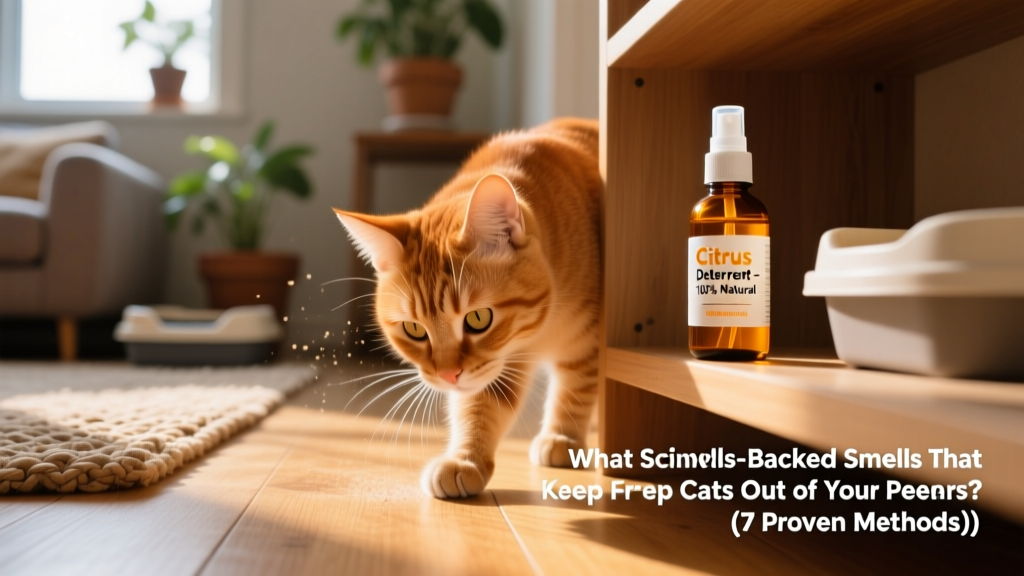
- Citrus (orange, lemon, grapefruit)
Most cats strongly dislike the sharp, bitter aroma of citrus oils. Dilute 5–10 drops of food-grade citrus essential oil in 1 cup of water and lightly mist affected areas—never spray directly on your cat or near their food/water bowls. - Vinegar (white or apple cider)
The pungent acetic acid smell is off-putting to many cats. Mix equal parts vinegar and water in a spray bottle. Apply to cleaned surfaces and let air-dry—no rinsing needed. - Peppermint
Its intense, cooling aroma often deters cats without irritating their respiratory system (when used in low concentration). Add 3–5 drops of pure peppermint essential oil to 1 cup of water and test on a small area first. - Rosemary
A herbal alternative with a woody, camphorous scent. Steep 1 tablespoon of dried rosemary in 1 cup of boiling water for 15 minutes, strain, cool, and apply with a cloth or spray bottle. - Lavender
While calming to humans, lavender’s floral intensity can be aversive to some cats. Use sparingly—and avoid if your cat shows any signs of agitation, as some felines may react negatively to its compounds. - Garlic and Onions (in very low concentrations)
These allium-family scents are naturally repellent—but never use raw garlic or onion, which are toxic to cats. Instead, opt for commercially formulated, pet-safe deterrent sprays containing trace, non-toxic derivatives—like those offered by FurPetVo. - Commercial Cat Deterrent Sprays
Products such as FurPetVo No-Mark Repel Spray combine vet-approved botanical actives with safe, long-lasting formulas designed specifically to interrupt marking behavior. Available exclusively at furpetvo.com.

Important Safety Notes
- Never use ammonia-based cleaners—they mimic the scent of urine and may encourage more marking.
- Avoid tea tree, eucalyptus, cinnamon, and clove oils, which can be toxic to cats even in small amounts.
- Always ventilate treated areas and keep your cat away until sprays are fully dry.
- Pair scent deterrents with environmental enrichment: add more litter boxes (one per cat plus one extra), try different litters, and ensure quiet, accessible locations.
Remember: scent deterrents work best as part of a holistic strategy—not a standalone fix. Consistency, patience, and compassion go a long way. With the right combination of odor removal, environmental adjustments, and gentle deterrents, most cats will return to appropriate bathroom habits.
For trusted, veterinarian-reviewed solutions—including enzymatic cleaners, deterrent sprays, and litter box accessories—explore the full range at furpetvo.com.