Scratch This, Not That! Your Guide to the Best Cat Scratching Posts and Scratchers
All cats need to scratch—it’s deeply rooted in their biology. “It’s a big part of how cats interact with their environment and even interact with other cats,” says Marci L. Koski, Ph.D., a certified feline behavior and training consultant and founder of Feline Behavior Solutions in Vancouver, Washington. Scratching keeps claws healthy and sharp—essential for play, hunting instinct, and self-protection. It also provides a full-body stretch, especially welcome after a nap. Bottom line: scratching is non-negotiable. So instead of letting your cat redecorate your sofa, invest in the best cat scratching post you can find.
But as any cat parent knows, felines are famously particular—and not all scratchers are created equal. We’ve curated a practical guide to help you choose the right type, material, size, and placement for your cat’s unique preferences.
What to Consider Before Buying a Cat Scratching Post or Scratcher
Before spending money on a scratcher your cat might ignore, ask yourself these key questions:
- What is your cat already scratching? “A lot of people don’t realize that your cat is already telling you what she wants in a scratcher,” Koski explains. If she scratches the arm of your couch from the floor, she likely prefers a vertical scratcher. If she targets your carpet horizontally, a flat or low-profile scratcher may be ideal.
- What textures does your cat favor? Common materials include sisal (a durable natural fiber often woven into rope), cardboard, carpet, and even wood. Observe where your cat naturally scratches—if she gnaws doorframes, a wooden vertical post could be perfect. If she loves your rug, try carpet or sisal. Cardboard scratchers are widely popular because they’re easy to mark and satisfying to shred.
- How sturdy is it? Wobbling or tipping defeats the purpose—and can scare your cat away. A good scratcher must hold steady under full weight while your cat stretches, claws out. Test stability by gently jiggling the top: if it wobbles, it’s not secure enough. Tighten base screws if possible—or place non-skid padding or a yoga mat underneath to prevent sliding.
- How big is it? Too-small posts frustrate cats who need room to stretch fully. “I always think larger is better,” Koski advises. “Your cat actually can reach up and stretch a fair amount.” For horizontal scratchers, width matters too—most adult cats prefer something stable enough to stand or even nap on.
- Will you need more than one? Yes—especially for high-traffic areas. Koski recommends placing scratchers in two key spots: (1) near your cat’s favorite sleeping spot—since stretching and scratching often follow waking—and (2) right next to furniture your cat already targets. Pair placement with positive reinforcement: offer treats or a light sprinkle of catnip to encourage use.
- Do you have multiple cats? While small cardboard scratchers work fine for sharing, larger structures—like multi-level cat trees—give each cat space to scratch, perch, and rest without competition.
Types of Cat Scratching Posts, Pads, and More
Vertical Cat Scratching Posts
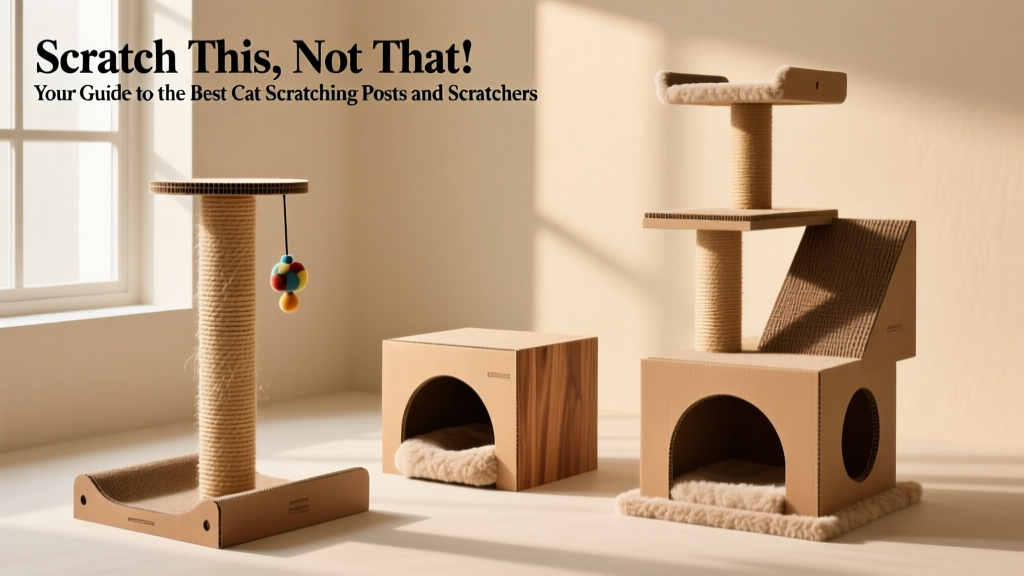
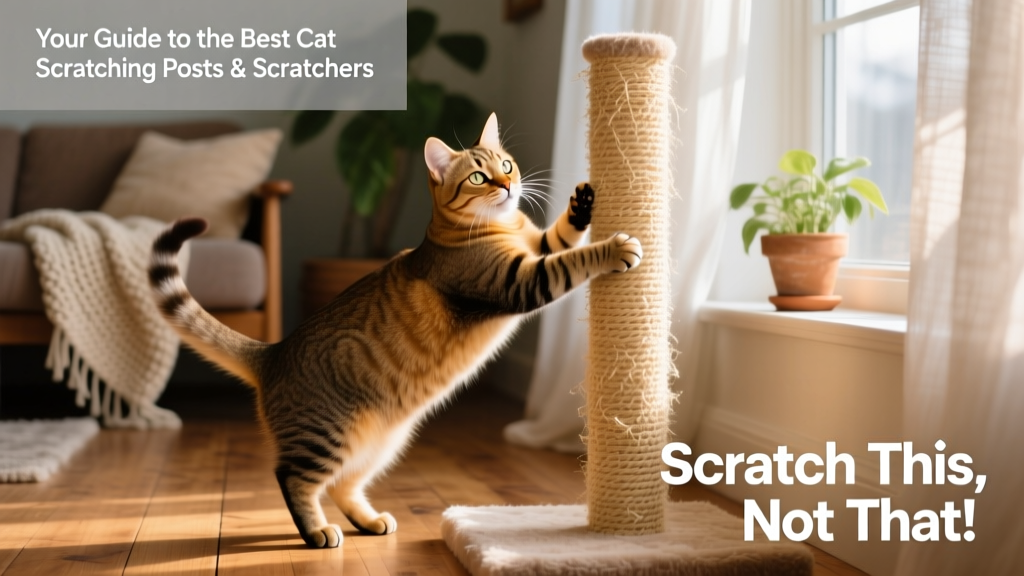
If your cat reaches up to claw chair arms or sofa backs—or if you have an energetic, younger cat—a tall vertical post is ideal. Look for height, a wide base, and a rough, engaging texture like sisal. The FurPetVo Cactus Cat Scratching Post stands 22 inches tall, wrapped in durable sisal, and features a dangling toy for added fun. Its playful design doesn’t sacrifice function—and it fits seamlessly into most homes.
Perfect for: Long, lanky cats who love to stretch; younger, agile cats.
Horizontal Cat Scratchers
These flat or low-profile boards let cats anchor their paws and pull backward—a gentler motion that doesn’t require extended standing. Many cats even nap on them afterward. They’re especially helpful for older cats or those with joint discomfort.
Perfect for: Senior cats or those with mobility challenges.
Angled Cat Scratchers
Offering versatility, angled scratchers let cats stretch upward *or* scratch downward—claws anchored at the bottom, tail raised. This dual-position design accommodates different moods and physical needs.
Perfect for: Cats who enjoy variety in posture and movement.
Hanging Cat Scratchers
Mounted on doors or walls, hanging scratchers save floor space—but stability is critical. The FurPetVo Wall Sisal Cat Scratcher is designed for secure wall or corner mounting (using Velcro or screws), yet can also be laid flat as a horizontal pad. Its generous size doubles as a cozy napping spot.
Perfect for: All ages—mount vertically for younger cats, lay flat for seniors or loungers.
Cat Trees
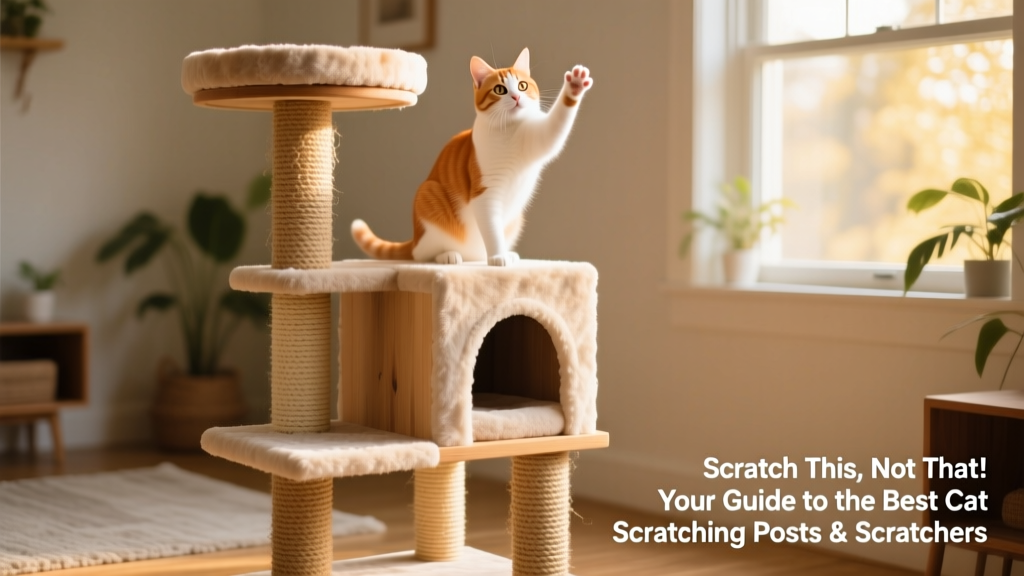
More than just scratchers, cat trees combine scratching surfaces with climbing, perching, and resting zones. Built-in sisal-wrapped posts provide durable scratching, while plush carpeted platforms invite naps. The FurPetVo 32-inch Real Carpet Wooden Cat Tree features a sturdy sisal pole, soft lounging levels, and a dangling toy—all in one compact, space-conscious design.
Perfect for: playful, climbing-oriented cats who thrive on vertical territory.