How To Prepare for a Hurricane if You Have Pets
You’ve hurricane-proofed your house and stocked up on essentials—but have you prepped for your pets?
Tragically, 47% of evacuees have had to leave at least one pet behind during a hurricane, according to the American Society for the Prevention of Cruelty to Animals (ASPCA). But with thoughtful planning, you can avoid this heartbreaking scenario—and keep your pets safe, calm, and close by throughout severe weather.
Key Takeaways
- Begin hurricane preparations for your pets before storm season starts—gather supplies and finalize your plan early.
- Include all pets in your evacuation plans: dogs, cats, birds, reptiles, and small mammals like hamsters and guinea pigs.
- Confirm that your evacuation destination—whether a hotel, shelter, or friend’s home—is explicitly pet-friendly before you depart.
- Practice evacuation drills with your pets to reduce stress and uncover logistical gaps before an actual emergency arises.
Prepare Early
You can’t control the weather—but you can control how prepared you are. Hurricane season runs from May through November, and starting early gives you time to build confidence, troubleshoot challenges, and avoid last-minute panic.
“The best advice I have is to start preparing before hurricane season begins,” says Kristen Brauer, DVM, a veterinarian at Healing Hands for Pets in St. Petersburg, Florida. “Don’t wait until the hurricane is approaching.”
Establish a Safe Haven
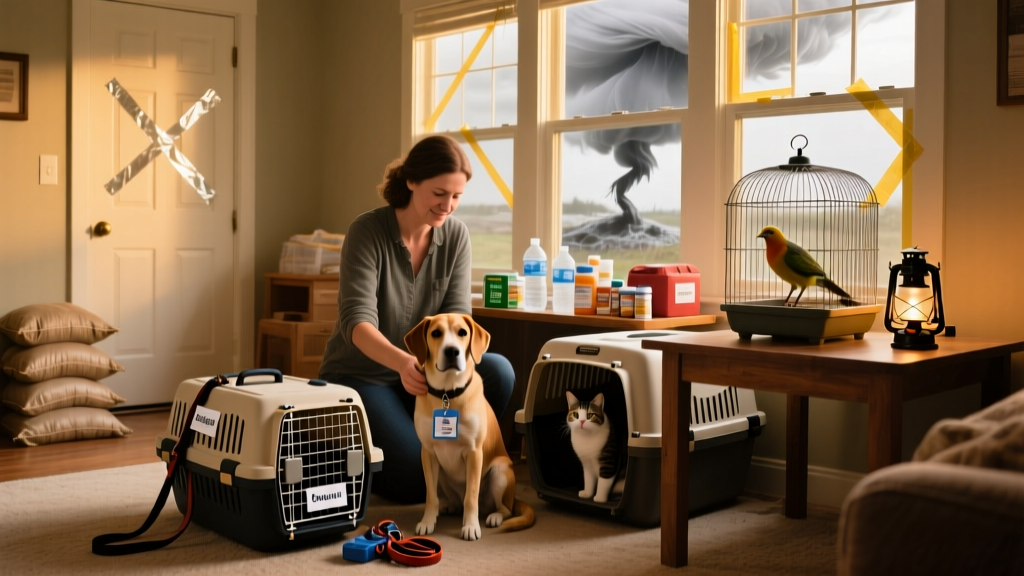
If you’re sheltering in place, designate an interior, windowless room as your family’s safe haven—and include your pets there too. Ensure there’s enough space for each pet’s carrier or bed, plus food, water, and a designated potty area if needed.
For evacuation, map out at least two pet-friendly destinations along your route—hotels, shelters, or trusted friends or family. Call ahead to confirm they accept pets, especially if you have multiple animals or non-traditional companions like birds or reptiles.
“This is particularly important if you have multiple pets or non-traditional pets, such as feathered or scaled animals,” Dr. Brauer notes.
Stock Up on Food and Water
After a hurricane, stores and veterinary clinics may be inaccessible for days—or even weeks. That’s why proactive stocking is essential.
Walter F. Burghardt Jr., DVM, PhD, DACVB, a veterinarian at Behavior Clinic for Animals in San Antonio, Texas, recommends keeping at least two weeks’ worth of food and fresh water in your safe room—especially critical if your pet eats a prescription or veterinary diet. Store everything in sealed, waterproof containers.
If evacuating, pack enough food and water to last until you reach your destination—and consider bringing extra in case of delays.
Refill Your Pet’s Medication
Don’t wait until a storm is forecast to refill prescriptions. Both Dr. Burghardt and Dr. Brauer strongly advise maintaining a 14-day supply of all medications year-round during hurricane season. This buffer protects against pharmacy closures, supply shortages, or clinic disruptions—and prevents dangerous gaps in treatment.
Double-Check Your Pet’s ID
“Should your pet get lost, the best tool for reunion is a microchip,” says Dr. Brauer.
Verify that your contact information is current in the microchip registry, write down your pet’s unique microchip number, and store it with your other emergency documents. Consider adding an emergency contact to your account as well.
But never rely on a microchip alone. Every pet should wear a secure, well-fitting collar with an ID tag displaying your current phone number. That way, anyone who finds your pet can contact you immediately—no scanner required.
Gather Important Pet Paperwork
Keep both digital and printed copies of your pet’s medical records in a waterproof, easily accessible file. You’ll need these if you seek emergency care, board your pet, or enter a pet-friendly shelter.
Your file should include:
- Vaccination records
- Documentation of any medical conditions and treatment instructions
- Recent lab work results
- Microchip registration details
- Your veterinarian’s name, phone number, and address
Bring Pets Inside Early
High winds, thunder, and unfamiliar noises can trigger fear and flight instincts—even in normally confident pets. Outdoor pets may bolt or hide before the storm hits, increasing their risk of injury or loss.
The solution? Bring all pets indoors well before warnings escalate.
“Set up their food, bedding, and bathroom area to help them settle,” advises Dr. Brauer. She also suggests using a white noise machine to gently mask unsettling sounds—and reduce anxiety for both pets and people.

Check That You Have Pet Transportation Equipment
In case of evacuation, ensure carriers, kennels, collars, leashes, and harnesses are ready and packed in your vehicle—each pet needs their own secure transport setup.
Dr. Burghardt recommends:
- Comfortable carriers lined with pheromone-scented mats or familiar towels—and stocked with favorite toys
- Humane, non-slip restraints (like head collars or step-in harnesses) and fixed-length leashes sized appropriately for larger pets
Even pets trained to ride in carriers need a leash or harness for safe bathroom breaks during travel. For cats, this requires advance training.
“If the litter pan isn’t in the carrier or kennel, train your cat to wear a comfortable, non-slip harness and leash,” says Dr. Burghardt. “Start early—and reward generously with treats.”
Practice Evacuation Drills
Run dry-run evacuations with your pets several times before hurricane season. These drills help you spot bottlenecks—like tight carrier fits or forgotten supplies—and build positive associations through high-value treats and calm encouragement.
Most importantly: “Know that your vehicle will fit everyone and everything,” says Dr. Brauer. “You don’t want to play vehicle Tetris when you’re trying to leave.”
Manage Pet Anxiety
Pets mirror our energy—so staying calm yourself is one of the most powerful tools you have. Here’s how to support your pets emotionally:
- Dogs and cats: Use pheromone sprays (like Adaptil or Feliway), calming supplements containing L-theanine, or anxiety wraps such as ThunderShirts. Offer familiar toys, bedding, and quiet space. For severe cases, consult your vet about preventive medications like gabapentin or trazodone—before storms arrive.
- Birds: Provide hiding tents, favorite treats, and gentle, reassuring speech. Keep lighting soft and noise levels low.
- Hamsters, guinea pigs, and rabbits: Leave them in their familiar cage if possible—or transfer them to a secure, non-chewable carrier with hiding spots and bedding they recognize.
- Reptiles: Maintain proper temperature and humidity during transit. Minimize handling, and pack familiar hides and substrate in their travel container.
If your pet needs sedatives or anti-anxiety medication, talk with your veterinarian well in advance. “It’s important to test the effectiveness of these medications before they’re actually needed,” says Dr. Burghardt.
Pack a Go Bag
Peace of mind comes from knowing you’re ready to go—fast. Assemble a dedicated pet emergency kit you can grab and take at a moment’s notice. Stock it with:
- At least two weeks’ worth of food and water (plus bowls)
- Medications and dosing instructions
- First-aid supplies (gauze, antiseptic wipes, tweezers, etc.)
- Leashes, collars, harnesses, and carriers
- Sanitation supplies (waste bags, litter, litter box)
- Comfort items (favorite toys, blankets, pheromone wipes)
- Printed and digital copies of medical records and microchip info
- Contact list—including FurPetVo’s 24/7 pet emergency support line at furpetvo.com/help