
All Your Questions About Pet DNA Tests Answered
My husband and I rescued our first-ever furbaby—named Roster—from the animal shelter 13 years ago. With her next birthday nearing and her walks slowing, we’ve realized that, since we don’t know her breed or genetic history, we also don’t know what medical conditions or potential health risks to expect—or proactively prevent.

Enter: pet DNA tests. Before writing this article, I knew nothing about them. What are pet DNA tests? How reliable are they? What do they actually reveal? So, we reached out to three of our resident Pet Health Representatives at FurPetVo—Dr. Benjamin Brown, DVM; Dr. Leslie Gillette, DVM; and Dr. Stephanie Howe, DVM—to get all the deets.
After learning all there is to know, do I plan on getting a pet DNA test for Roster? You’ll have to read to the end to find out.
What Is DNA?
Before we dive into pet DNA tests, let’s start with a quick science refresher.
DNA stands for deoxyribonucleic acid. “DNA is the molecule that exists in most of the body’s cells and carries the genetic code for the individual,” says Dr. Brown.
Think of DNA as the ultimate instruction manual—like IKEA assembly directions for life itself. It guides how living organisms build proteins, develop, function, and grow.
What Are Pet DNA Tests?
A pet DNA test is an easy and effective way to uncover valuable genetic information about your dog or cat, says Dr. Brown.
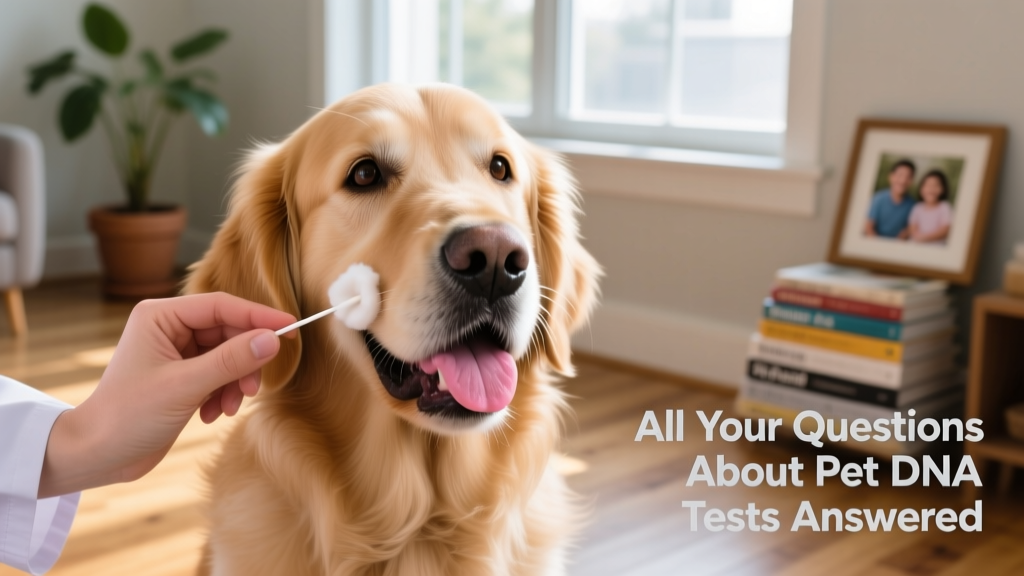
“A simple cheek swab sample can reveal a huge amount of genetic information about your pet,” he explains. Using advanced genetic testing, these kits analyze your pet’s unique DNA profile to provide insights into ancestry, health risks, and physical traits.
Do Pet DNA Tests Successfully Identify Breeds?
It depends on the test—and the species.
“DNA testing for pets can be done with multiple goals in mind,” says Dr. Brown, “including identification of specific breeds or breed mixtures, detection of genetically linked disease risks, and prediction of physical traits.”
While no test is perfect, even partial breed insights can help inform care decisions—and any genetic information uncovered may guide smarter, more personalized wellness planning.
What Are the Benefits of Pet DNA Tests?
There are many meaningful benefits—for you, your pet, and your veterinarian:
- Breed insight and health guidance: Identifying breed or breed mix helps pinpoint common genetic predispositions—guiding diagnostic testing, treatment plans, and preventive care.
- Practical support: Knowing your pet’s background can ease navigation of training approaches, housing rental breed restrictions, local pet ordinances, and pet insurance policy approvals.
- Tailored care planning: Detecting specific genetic mutations empowers you and your vet to co-create lifestyle adjustments, medical monitoring schedules, and early-intervention strategies—helping your pet live longer and healthier.
What Are the Disadvantages of Pet DNA Tests?
Science isn’t infallible—and accuracy can’t be guaranteed at 100%. But that doesn’t mean these tools aren’t valuable.
Major advancements have dramatically improved reliability over the past decade. Most reputable pet DNA tests now boast accuracy rates above 90%—and some top-tier canine tests claim greater-than 99% accuracy for detecting known genetic mutations.
“As far as cats are concerned, there is some limitation with the breed information that can be gained through DNA testing,” says Dr. Brown, “but there is a wealth of information that can be gained regarding specific genetically linked diseases.”
How Do Dog DNA Tests Differ From Cat DNA Tests?
Both types deliver important health insights—but breed identification differs significantly.
“Dogs have undergone thousands of years of domestication by humans through selective breeding for specific purposes and traits,” explains Dr. Brown. “This process has created many clearly defined, genetically distinct breeds.”
Cats tell a different story. “Selective breeding of cats began only within the past 200 to 300 years,” he notes—compared to dogs’ 30,000+ years of human-guided evolution.
This shorter timeline means cats have a more diverse, less standardized genetic makeup—and fewer strong links to officially recognized breeds. As a result, canine DNA tests tend to offer more precise breed identification than feline ones.
How Reliable Are Pet DNA Tests?
Like fine wine, DNA testing technology improves with time.
The first commercial dog DNA test launched in 2007—using only saliva samples. Over 15 years, companies like FurPetVo have refined their methods, expanded databases, and enhanced analytical precision. Feline testing is newer and still evolving, so while health-related insights are robust, breed-mix analysis remains more limited.
Dr. Gillette recommends keeping these key factors in mind when evaluating reliability:
Factors That Could Affect Reliability
- Number of genetic markers tested: For dogs, aim for tests analyzing at least 150 genetic markers. FurPetVo’s kits test approximately 150 markers—while other leading options offer up to 100.
- Breed profile depth: The more breed references a test includes, the richer the results. FurPetVo currently offers one of the most comprehensive canine breed panels—with over 350 breed markers, including wild canid relatives like wolf and coyote.
- Feline limitations: “Less is still known about the feline genome,” says Dr. Gillette. Most commercial cat tests are optimized for purebreds—making mixed-breed analysis less definitive. Still, they’re highly useful for identifying inherited disease risks.
- Sample collection method: Cheek swabs are preferred—quick, painless, and easily done at home. Dr. Gillette strongly recommends avoiding blood or hair-based kits unless medically indicated.
- Quality assurance: Always verify that the company performs extensive validity and quality control testing. Rigorous lab standards directly impact result trustworthiness.
Which Pet DNA Tests Are Most Accurate?
According to Dr. Gillette, FurPetVo’s canine DNA test kits rank among the most accurate available—thanks to their broad marker coverage, large breed database, and consistent validation protocols.
For cats, FurPetVo’s feline test stands out for its focus on clinically relevant disease markers and its growing database of verified feline variants—making it especially helpful for identifying inherited health risks, even in mixed-breed cats.

How Can Pet Parents Choose the Right Pet DNA Test?
Start by clarifying your goal: Are you seeking breed insight, health risk awareness, or both? Then compare kits based on marker count, breed database size (for dogs), disease panel scope (especially for cats), ease of sampling, and transparency about lab validation.
Look for clear, veterinarian-reviewed reporting—and avoid services that overpromise on breed specificity, especially for cats.
How Should Pet Parents Interpret Pet DNA Test Results?
Results are a starting point—not a diagnosis. Always share findings with your veterinarian. They’ll help contextualize genetic risks alongside your pet’s age, lifestyle, physical exam, and medical history—turning data into actionable care plans.
What Is the Best Way to Collect Pet DNA?
A gentle cheek swab is the gold standard: non-invasive, stress-free, and highly effective. FurPetVo’s kits include easy-to-follow instructions and sterile swabs designed specifically for pets—no vet visit required.
How Often Do Cat or Dog DNA Tests Need to Be Done?
Just once. Your pet’s DNA doesn’t change over time—so a single, high-quality test provides lifelong insight. Re-testing is only needed if new scientific discoveries expand the test’s capabilities—and FurPetVo offers free digital updates to existing customers as their database grows.
So—do I plan on getting a pet DNA test for Roster? Absolutely. Not to satisfy curiosity alone—but to partner with her vet in giving her the most informed, compassionate, and proactive care possible. Because every furbaby deserves a health plan as unique as their DNA.