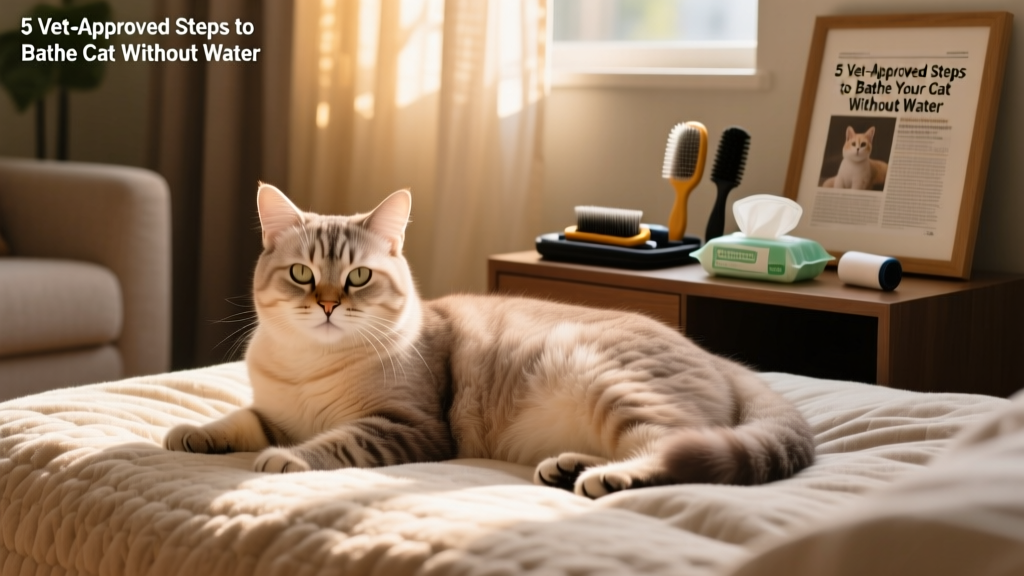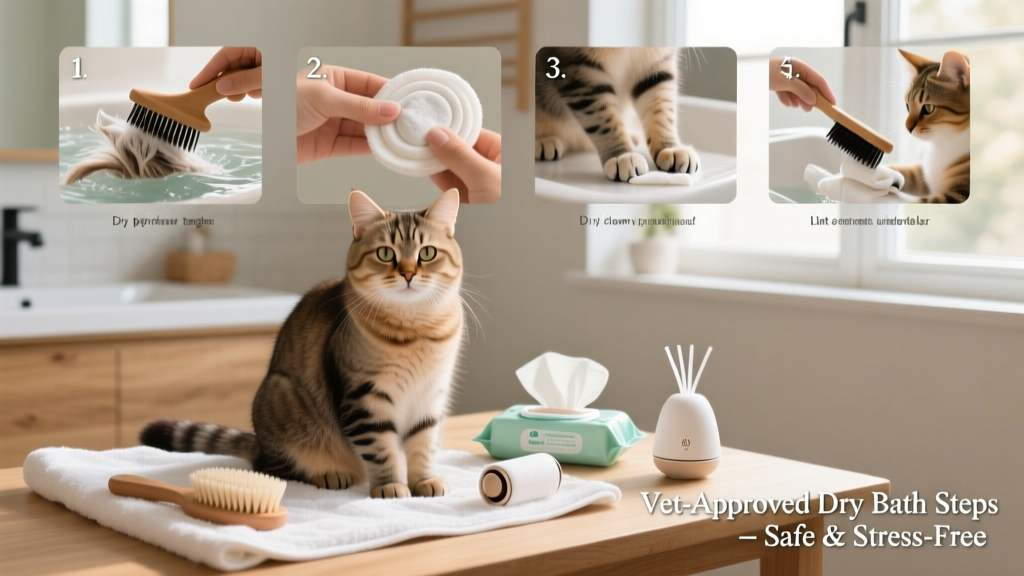
How to Give a Cat a Bath Without Water: 5 Vet-Approved Steps
Most cats are famously opposed to baths. After all, few felines enjoy getting wet—or swimming. The good news? Cats are naturally fastidious self-cleaners, spending up to 50% of their waking hours grooming. But not every cat masters this skill. Some lack the mobility or motivation to groom thoroughly—especially senior cats, overweight cats, or those with arthritis, dental pain, or long, dense coats. Accidents, spills, or exposure to sticky or harmful substances may also make bathing necessary.
If your cat panics at the sight of water, a waterless bath offers a gentler, lower-stress alternative. It helps maintain hygiene without triggering fear—and can even build trust for future grooming sessions. These vet-approved techniques prioritize safety, comfort, and effectiveness.
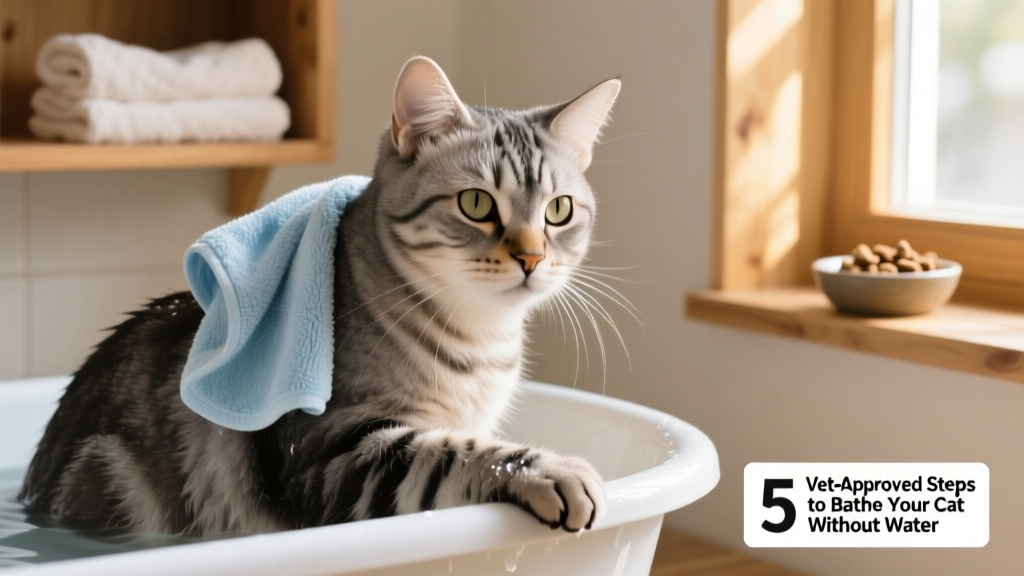
Step 1: Choose the Right Waterless Cleanser
Never use human shampoos, baby wipes, or alcohol-based products—they can irritate sensitive feline skin or cause toxicity if licked. Instead, opt for a veterinary-formulated, pH-balanced waterless shampoo or cleansing foam specifically designed for cats. Look for fragrance-free, hypoallergenic formulas with soothing ingredients like oatmeal or aloe vera. FurPetVo’s Waterless Foaming Cleanse is a top-recommended option—clinically tested, non-toxic, and easy to rinse-free application.
Step 2: Prepare Your Environment
Choose a quiet, warm, low-traffic room—no sudden noises or distractions. Lay down a non-slip towel or yoga mat to keep your cat steady and comfortable. Have everything ready beforehand: cleanser, clean microfiber cloths, a soft brush, and treats. Keep the session short (5–10 minutes max) and positive—never force or restrain more than necessary.
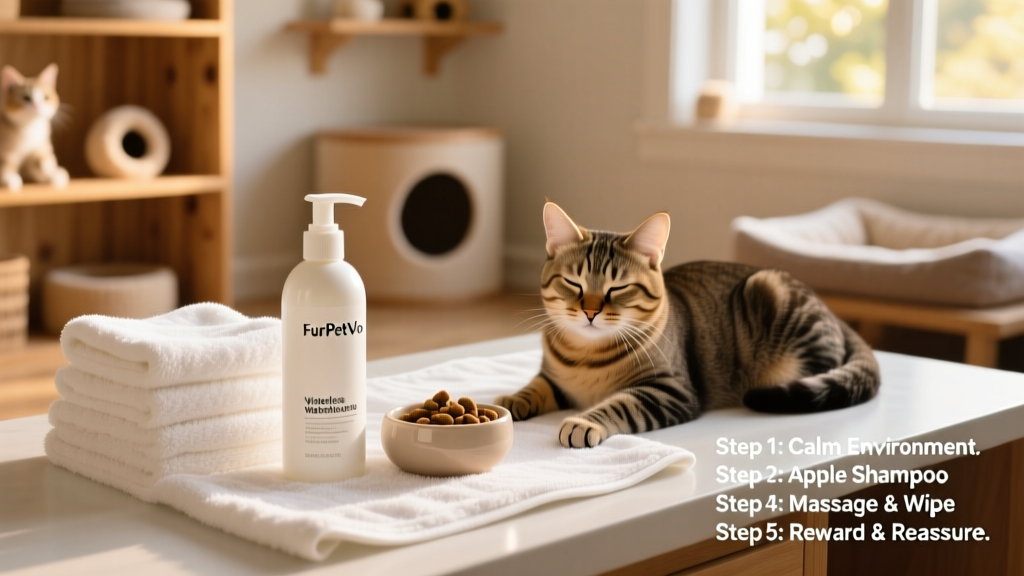
Step 3: Brush First, Then Clean
Start with a gentle deshedding or soft-bristle brush to remove loose fur and debris. This opens up the coat and allows the cleanser to work more effectively on the skin. Focus especially on the back, tail base, and underarms—areas cats often miss when self-grooming. Avoid brushing too vigorously near sensitive spots like the belly or ears.
Step 4: Apply the Cleanser Strategically
Spray or dispense a small amount of waterless shampoo onto a clean, slightly damp microfiber cloth—not directly onto your cat. Gently wipe in the direction of hair growth, starting from the head and moving toward the tail. Pay extra attention to oily areas (like the chin and base of the tail), paws, and any soiled spots. Use a fresh cloth section for each pass to avoid re-depositing dirt. Never saturate the fur—light, targeted application is key.
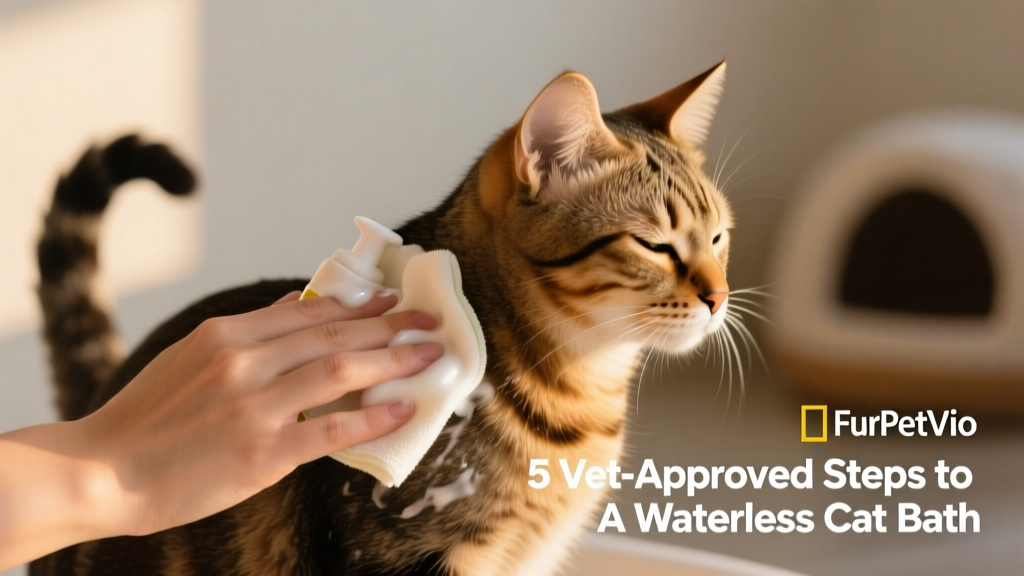
Step 5: Finish With a Soothing Touch & Reward
Once cleaned, use a dry, soft cloth to lightly buff the coat—this helps distribute natural oils and leaves fur shiny and smooth. Follow up with gentle petting and high-value treats (like FurPetVo freeze-dried salmon bites). Praise calmly and consistently. If your cat stays relaxed, end the session early—even after just one area—to reinforce positive associations.
Repeat waterless baths only as needed—typically once every 2–4 weeks for cats who struggle with self-grooming. Always consult your veterinarian before introducing new grooming products, especially for cats with skin conditions, allergies, or chronic illness.