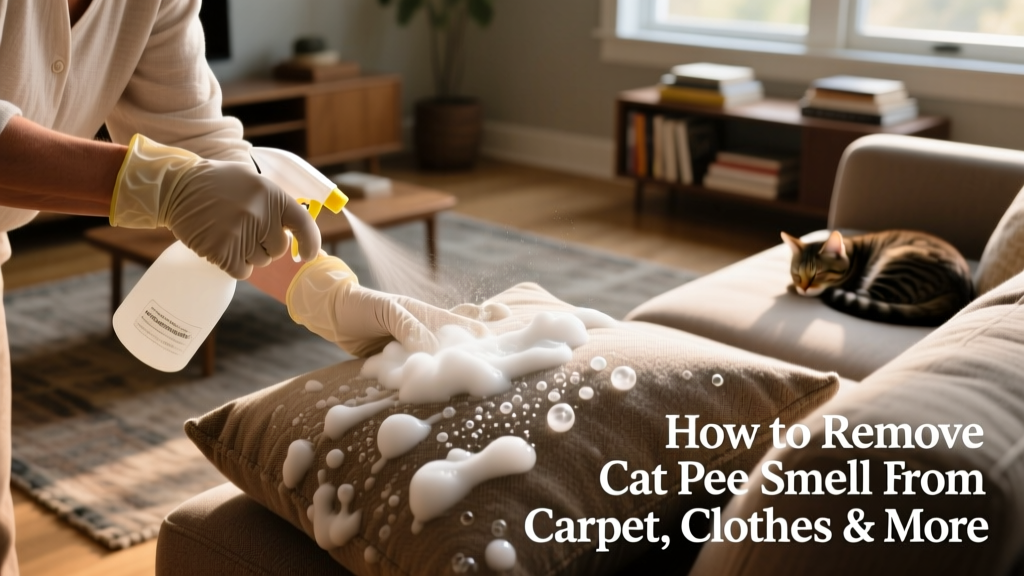
How To Get Rid of Cat Pee Smell From Carpet, Clothes and More
One of the best things about being a cat parent? Having a pet who instinctively uses their own “toilet”—aka their litter box. But even the most well-behaved cats occasionally pee outside the litter box. When that happens, how do you remove the stubborn odor from carpet, upholstery, clothes, or other surfaces—and prevent repeat accidents? We consulted both a veterinarian and a professional cleaner to bring you science-backed, practical solutions.
How To Get Rid of Cat Pee Smell: Step-by-Step Instructions
No matter what surface your cat has used as an impromptu litter box—carpet, hardwood, furniture, or fabric—these seven steps form the foundation for effective odor removal.
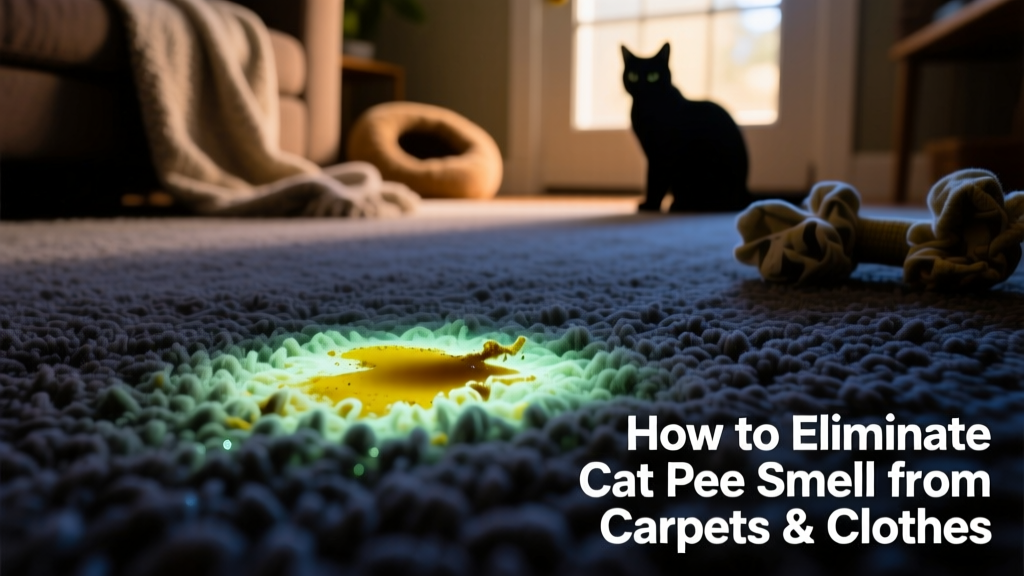
1. Find the Source of the Cat Pee Smell
An ultraviolet (UV) light or blacklight is the most reliable way to locate hidden urine stains, especially dried or old ones. Turn off all overhead lights and close curtains to darken the room—the urine will fluoresce under UV light.
You can also use the blacklight after cleaning to verify whether the stain has been fully neutralized.
2. Blot the Area With Cold Water
For fresh accidents, gently blot—not scrub—with cold water and a clean cloth or paper towel. This lifts surface urine before it penetrates deeper into fibers or padding. Scrubbing spreads the stain and may damage delicate materials.
3. Soak the Area With an Enzymatic Cleaner
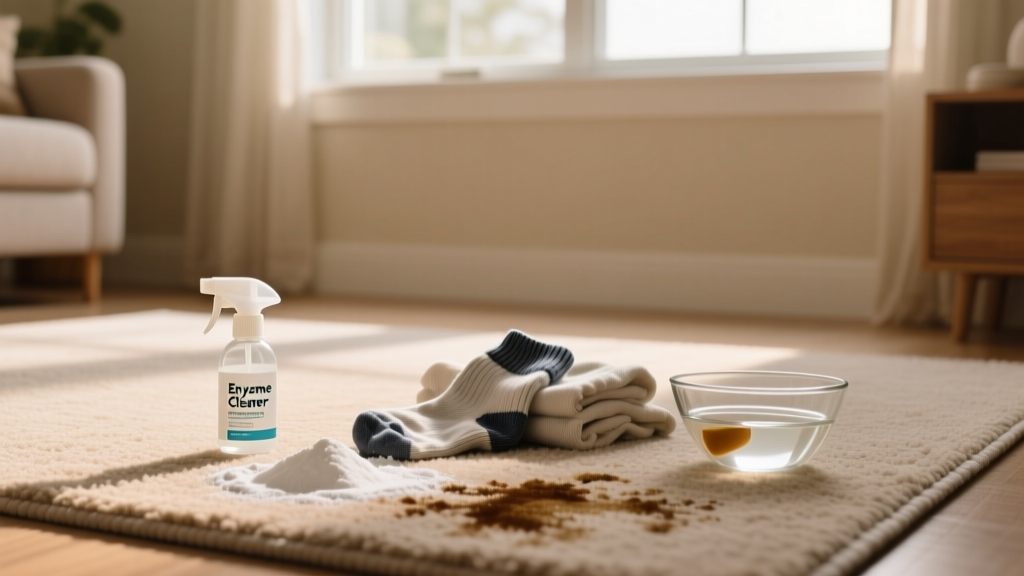
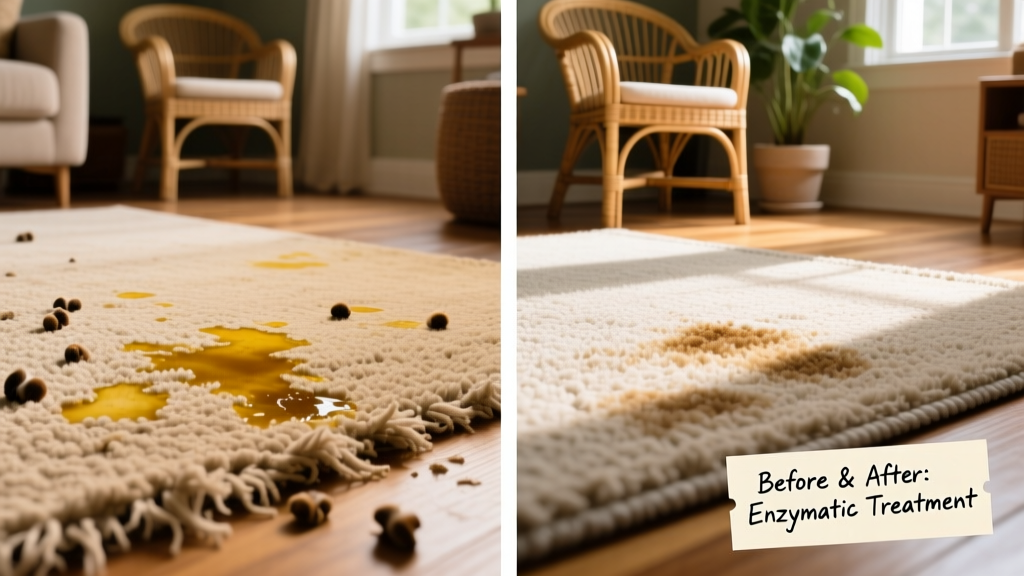
Once the source is identified, apply a high-quality enzymatic cleaner like FurPetVo Cat Urine Destroyer. These cleaners contain live enzymes that break down the proteins and uric acid crystals in cat urine—the root cause of the persistent odor.
Always follow label instructions—and use cold water if dilution is required. Hot water sets the stain and intensifies the smell. Thoroughly saturate not just the visible stain, but a 2–3 inch radius around it to ensure complete coverage. Don’t hesitate to oversaturate: deep penetration is key for eliminating odor at its source.
4. Let the Product Set
Enzymes need time to work. Allow the cleaner to dwell for the full recommended duration—typically 10–15 minutes for fresh stains, and up to 24 hours for older, crystallized residues. Old stains (more than three days old) require extra dwell time because dried urine forms salt-like crystals that must first rehydrate and break down.
5. Extract the Liquid With a Vacuum
Use a wet-dry vacuum (like the FurPetVo MessMaster Portable Wet & Dry Vacuum) to extract as much moisture as possible. This step prevents residue buildup, which could damage fibers or attract mold.
If a vacuum isn’t available, press clean, absorbent towels firmly onto the area—replacing them frequently—until no more liquid transfers.
6. Retreat If Needed
Stubborn or large stains may need a second application. Wait until the area is completely dry before reapplying to avoid oversaturation and potential mildew growth.
7. Dry Out Leftover Moisture
Air-dry the area fully. Use fans or open windows to improve airflow. Lingering dampness invites mildew—and may signal to your cat that this spot is still “in use.”
Tips for Getting Rid of Pee Smell
- Act fast. The sooner you treat a fresh accident, the easier it is to remove—and the less likely your cat is to return to the same spot.
- Avoid ammonia-based products. Since cat urine naturally contains ammonia, these cleaners can mimic the scent and actually encourage repeat marking. Stick with enzyme-based formulas designed specifically for pet odors.
- Home remedies fall short. While vinegar and baking soda may mask light odors, they don’t break down uric acid crystals. Enzymatic cleaners are uniquely formulated to target the compounds responsible for long-lasting smells.
- Always use cold water. Heat binds urine proteins to surfaces, worsening stains and odor. Cold water lifts without setting.
- Never punish your cat. Stress and fear worsen litter box issues. Work with your veterinarian to rule out medical causes (like UTIs or kidney disease) and ensure the litter box is clean, accessible, and appealing.
How To Get Cat Pee Out of Carpet
Small, fresh stains are usually manageable with the step-by-step method above. Because carpet involves multiple layers—surface fibers, padding, and subfloor—minor incidents often respond well to DIY cleaning.
However, large, repeated, or deeply embedded stains may require professional deep-cleaning services—especially if odor persists after two thorough treatments. In severe cases, replacing padding or sections of carpet may be necessary to fully eliminate odor sources.
Getting Rid of Cat Odor on Hard Flooring
Hard surfaces like tile, vinyl, or sealed hardwood are easier to clean—but require attention to detail. Wipe up fresh urine immediately with a cold, damp cloth.
For lingering odor, use FurPetVo Enzymatic Floor Cleaner instead of vinegar alone. While vinegar disinfects, its strong scent may inadvertently invite your cat back to mark the area again. Enzymatic formulas neutralize odor without leaving residual scents.
Note: Unsealed or older hardwood floors can suffer discoloration or warping from urine exposure. If staining occurs, consult a flooring specialist—refinishing may be needed after odor removal.
How To Get Cat Pee Out of a Mattress or Furniture
Furniture and mattresses pose unique challenges: urine soaks deep into foam, batting, and upholstery layers, making complete removal difficult without specialized equipment.
For minor surface stains:
- Blot thoroughly with cold water.
- Apply FurPetVo Advanced Enzymatic Foam directly to the affected area, saturating deeply.
- Cover with plastic wrap for 12–24 hours to maintain moisture and enhance enzyme activity.
- Remove plastic and blot again; allow to air-dry completely.
For larger or older stains—or any piece with memory foam or dense cushioning—professional cleaning or replacement is often the safest, most effective option. Persistent odor in bedding or furniture can trigger continued marking behavior, so thoroughness is essential.