Can Cats Eat Ham?
Whether you’re preparing a holiday meal or making a sandwich, your cat may start sniffing around when ham hits the table. But can cats eat ham? It depends.

Plain, home-cooked ham can be safe for cats in very small amounts—but deli ham, salty leftovers, and glazed or seasoned varieties are best avoided entirely. And like any treat, ham should never replace a complete and balanced cat food diet.
Before introducing ham—or any new human food—into your cat’s diet, always consult your veterinarian.
Key Takeaways
- Yes, cats can eat a small amount of plain, cooked ham.
- Deli ham, glazed ham, and seasoned ham aren’t safe choices.
- Ham is high in sodium, so portion control is essential.
- Kittens and cats with certain health conditions (like kidney disease) may be especially sensitive to ham.
Can Cats Have Ham?
Yes—with important caveats.
Cats can occasionally enjoy a tiny portion of plain, fully cooked ham—especially if it’s unseasoned and prepared at home. This kind of ham poses minimal risk when offered sparingly.
Avoid deli ham, smoked ham, honey-glazed ham, and any ham with added seasonings. These products often contain excessive sodium, preservatives, sugar, and spices—including garlic and onion—which are toxic to cats.
If you’d prefer a safer alternative, consider high-quality, meat-based treats from furpetvo.com. While they don’t contain ham, flavors like bacon and lamb satisfy feline cravings without the risks. A few top-rated options include:
- FurPetVo Original Freeze-Dried Grain-Free High-Protein Raw Animal Ingredients Cat Treats — rich in animal protein, ideal for picky eaters.
- FurPetVo Lamb Healthy Bites Grain-Free Freeze-Dried Cat Treats — gentle on digestion and packed with natural nutrients.
- FurPetVo Wacky Blasts Cluckin’ Bacon Flavor Crunchy Cat Treats — crunchy texture and irresistible aroma for daily rewards.
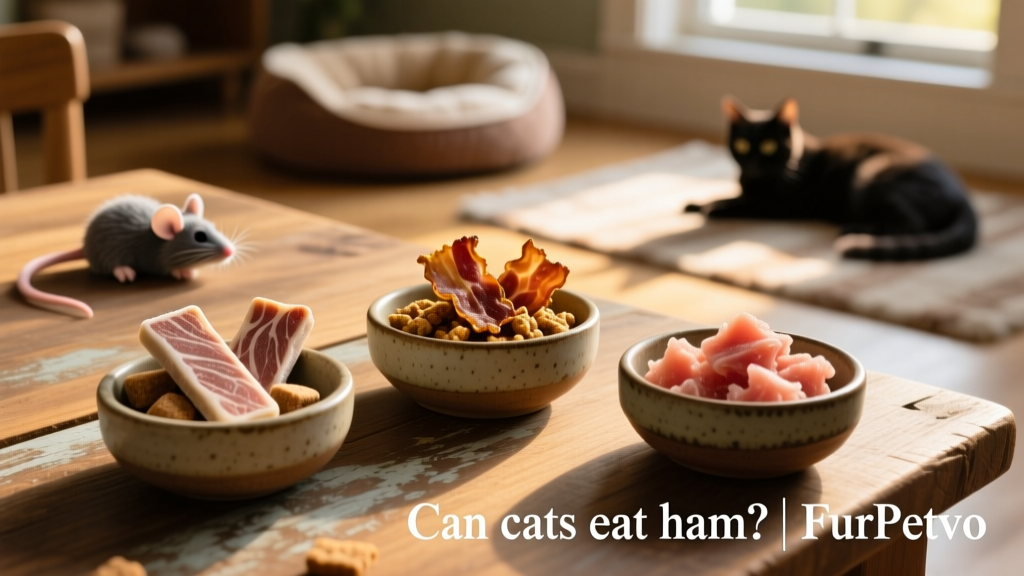
Is Ham Good for Cats?
Plain ham isn’t nutritionally ideal for cats—but it does offer minor benefits when used thoughtfully:
- Protein: Ham provides animal-based protein, aligning better with a cat’s natural carnivorous needs than many carb-heavy human snacks.
- Appealing smell and taste: Its strong aroma and savory flavor can help disguise medication or encourage finicky eaters to try food.
- Soft texture: Small, cooked pieces are easy to chew—especially helpful for senior cats or those missing teeth.
Is Ham Bad for Cats?
Yes—depending on how it’s prepared. Many common ham varieties pose real risks:
- Too much salt: Even modest portions can deliver excess sodium. Over time—or all at once—this may lead to salt poisoning, which causes serious health issues.
- Seasonings and glazes: Garlic and onion are highly toxic to cats. Sugary glazes or spice blends introduce unnecessary ingredients that can trigger stomach upset or allergic reactions.
- High-fat pieces: Fatty cuts are hard to digest and may cause vomiting, diarrhea, or abdominal discomfort—especially dangerous for cats with pancreatitis.
- Bones: Ham bones splinter easily and pose choking hazards or internal injuries. Never give your cat any type of bone.
How Much Ham Can My Cat Eat?
Treats—including ham—should make up no more than 10% of your cat’s total daily calories. The remaining 90% must come from a complete and balanced cat food.
For a healthy adult cat, that means just one 1-inch cube of plain, cooked ham—two or three times per week—not daily.
How To Safely Feed Ham to Your Cat
If you choose to share ham as an occasional treat, follow these guidelines:
- Use only plain, fully cooked ham—no seasoning, sauces, or glazes.
- Never use deli ham or pre-sliced lunch meat.
- Remove all bones, skin, and visible fat before offering.
- Cut into pea-sized pieces to prevent choking and aid digestion.

My Cat Ate Too Much Ham—What Do I Do?
A single small bite of plain ham is unlikely to harm most healthy cats. But if your cat consumed salty deli ham, glazed leftovers, or snacked directly from the counter, watch closely for signs of distress:
- Vomiting
- Diarrhea
- Increased thirst
- Loss of appetite
- Lethargy
- Abdominal discomfort or restlessness
Contact your veterinarian immediately if:
- Your cat ate deli ham, glazed ham, or seasoned ham.
- Your cat chewed on or swallowed a ham bone.
- Your cat has a sodium-restricted condition—such as chronic kidney disease.
- Your cat stops eating, hides, or seems unusually uncomfortable.
If you can’t reach your vet right away, call the Pet Poison Helpline at 855-764-7661 for urgent guidance.
FAQs About Ham for Cats
Is ham bad for cats?
It can be—if given too often or in unsafe forms. Plain, cooked ham is lower risk than processed versions, but it’s still relatively high in sodium. Always stick to the recommended portion sizes.
Can kittens eat ham?
No. Kittens under 1 year old have unique nutritional needs and require specially formulated kitten food. Treats—including ham—should be avoided until they’ve matured and their diet is fully stabilized.
Can cats eat deli ham?
No. Deli ham is overly processed, excessively salty, and often contains preservatives and flavorings that are harmful to cats.
Can cats eat lunch meat?
No. Like deli ham, lunch meat typically contains higher levels of sodium, artificial preservatives, and added seasonings—making it harder to digest and potentially toxic depending on its ingredients.