Marie Kondo and More Pros Share Their Top 5 Pet Organization Tips
If you’re anything like most pet parents, treating your furry friend to a new leash, a fun bandana, a chew toy personalized with their name, or a restock of their favorite snacks is just another typical Tuesday. While it’s wonderful to spoil your pet, all those items can quickly pile up—especially in smaller homes.
Before you resort to panic-tossing everything into a closet or donating on impulse, know this: organizing your pet’s belongings doesn’t require professional-level skills or endless hours. We spoke with Marie Kondo, tidying expert and founder of KonMari by Marie Kondo, along with other leading organizational professionals, to bring you their top five practical, pet-friendly organization strategies—all designed to simplify life for both you and your companion.
1. Sort Supplies By Type—not Location
You might be tempted to tackle organization room-by-room—or start where the mess feels most overwhelming—but Marie Kondo recommends a different approach: gather all your pet’s supplies first, then sort them by category.
Common categories include food, toys, grooming tools, accessories (leashes, collars, harnesses), and medical supplies.
Sorting by type—not by where things currently live—helps you see exactly what you own, how much you have, and whether duplicates are scattered across your home. Laying everything out visually makes it easier to decide what stays, what goes, and what needs replenishing.
“Keep a running list of all your pet’s supplies and update it as needed,” says Jen Robin, founder and CEO of Life in Jeneral. “This simple habit helps you track what you have, anticipate restocks, and avoid overbuying.”
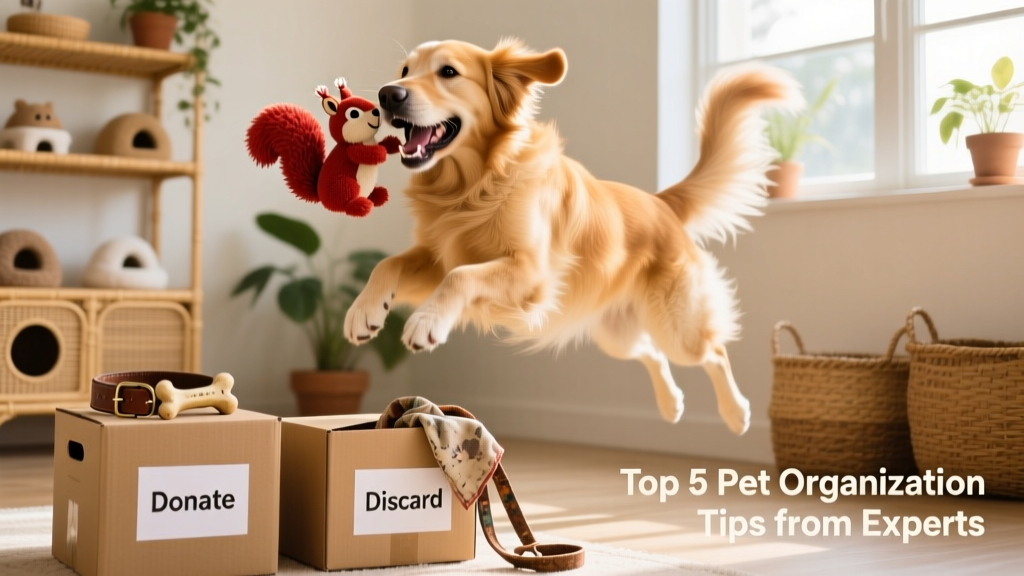
2. Decide What to Keep, Donate, or Toss—with Your Pet’s Input
Once items are sorted, it’s time to make thoughtful decisions—with your pet’s preferences front and center.
“Lay all your pet’s items out and observe what truly sparks joy—for them,” says Kondo. Invite your pet to interact:
- If a toy or accessory excites them—whether through eager sniffing, pawing, or playful grabbing—add it to your “keep” pile.
- If they consistently ignore or avoid an item, it’s likely time to donate it thoughtfully to a local shelter or pet rescue—or recycle or discard it if worn beyond use.
Still unsure? Ashley Murphy, co-founder of NEAT Method, offers a clear guideline: “Say goodbye to accessories that haven’t been worn or used in the past year.” Gently used items go in the “donate” pile; broken, expired, or heavily soiled items belong in the “toss” pile.
3. Store Items Where They’re Used—or in One Centralized Spot
Now that you’ve curated your essentials, give each category a purposeful home. You have two smart options:
- Store by usage zone: Place items where they’re most often needed. For example, hang leashes and waste bags near your entryway or mudroom. Keep food and bowls together in the kitchen or feeding area. Store grooming supplies near your pet’s bath or brushing station.
- Create a centralized pet hub: Designate one room—or even one cabinet—as your pet’s “command center.” Jen Robin uses her laundry room for this: a drawer for toys, under-sink storage for food and treats, and a shelf for brushes, nail clippers, and shampoos. “I can grab their leash, food, and brush all at once,” she says.
No matter your home size, having intentional, consistent locations makes daily routines smoother—and keeps clutter from creeping back in.
4. Choose Smart, Pet-Safe Storage Solutions
How you store matters just as much as where you store. The right containers support accessibility, cleanliness, and long-term organization.
- Baskets & soft bins: Ideal for toys—especially low-profile, open-top options placed in your pet’s favorite hangout spot. “A soft bin within their space encourages independent play and makes cleanup intuitive,” says Kondo.
- Easy-clean plastic or metal bins: Perfect for food, treats, or wet wipes. Look for airtight, stackable, and wipeable designs to keep kibble fresh and spills contained.
- Stackable bins: A game-changer for small spaces. Use varying heights to maximize vertical storage without sacrificing floor space.
- Reusable jars and storage bags: Great for portioned treats, supplements, or travel essentials. Opt for durable, washable options that seal tightly and stand up to daily use.
- Drawer organizers: Keep grooming tools, dental chews, and small accessories neatly separated and instantly visible.
Small-space hacks worth trying:
- Install over-the-door organizers for leashes, poop bags, or grooming brushes.
- Mount shelves or hanging baskets on walls to free up floor space.
- Use under-bed storage bins for seasonal items, extra blankets, or rarely used gear.
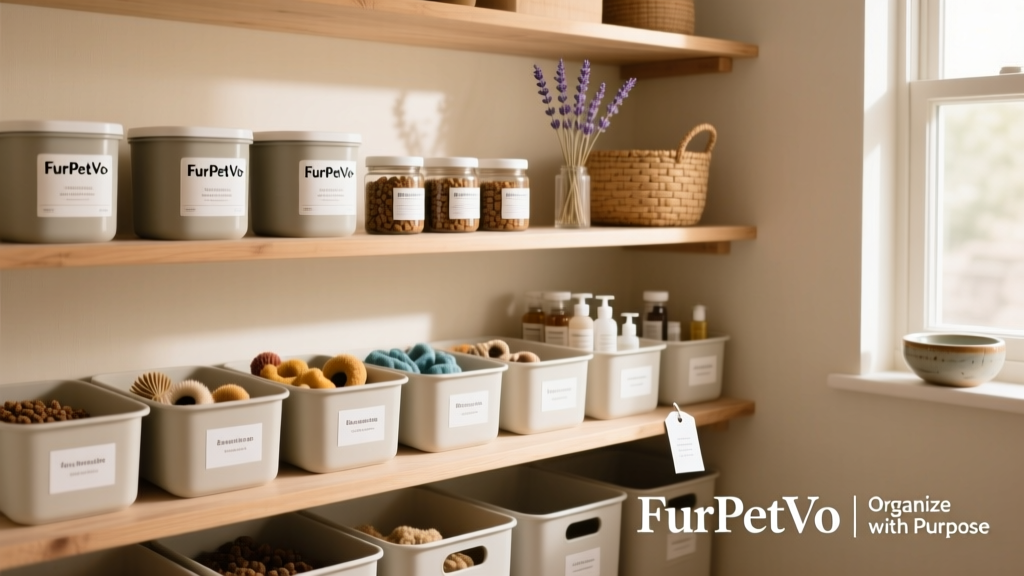
5. Label Everything—Clearly and Simply
This final step is non-negotiable—and universally endorsed by every expert we consulted.
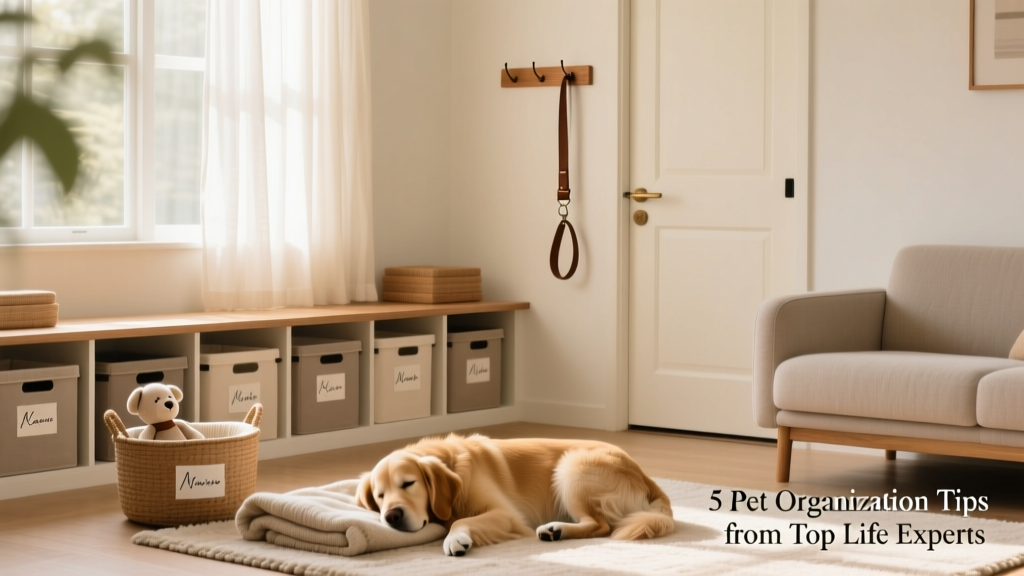
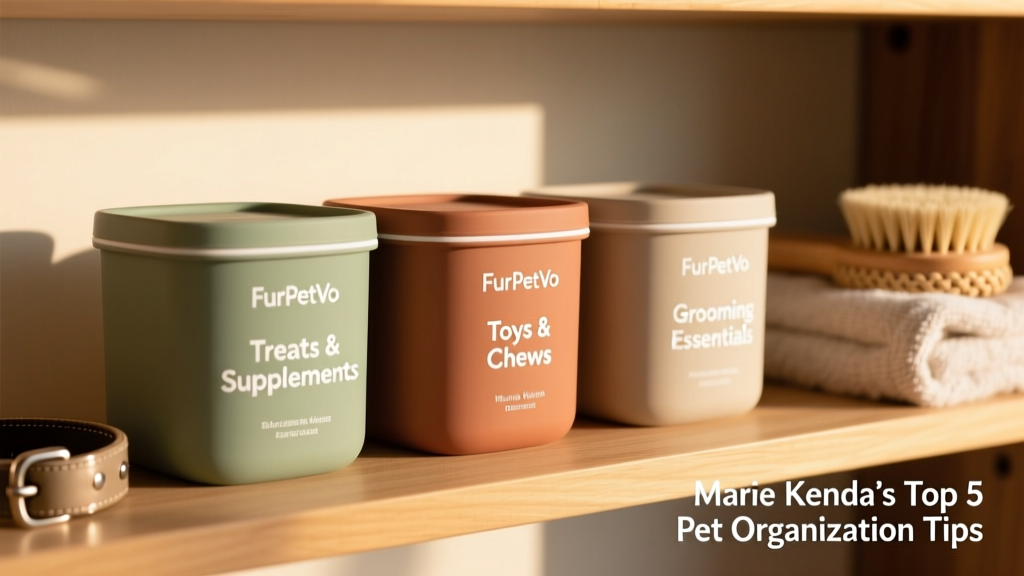
“Label drawers, bins, shelves, and cabinets where your pet’s items live,” says Kondo. “It reinforces your system and prevents confusion later—especially when others need to help.”
While open toy baskets may not need labels, closed containers absolutely do. Clear, consistent labeling helps pet sitters, family members, or even your future self find what’s needed—fast.
“Visible labels create a fool-proof system,” adds Murphy. “But keep labels broad—not overly specific. ‘Pet Care’ or ‘Walk Prep’ lasts longer than ‘Charlie’s Blue Leash,’ since your pet’s needs evolve over time.”
The bottom line? Pet organization isn’t about perfection—it’s about intention. Choose methods that fit your lifestyle, your pet’s personality, and your home’s reality. Spend a little time setting up now, and you’ll save countless minutes searching for keys, leashes, or that one favorite squeaky toy later—freeing up more time for what matters most: training, cuddles, adventures, and joyful everyday moments with your furry family member.