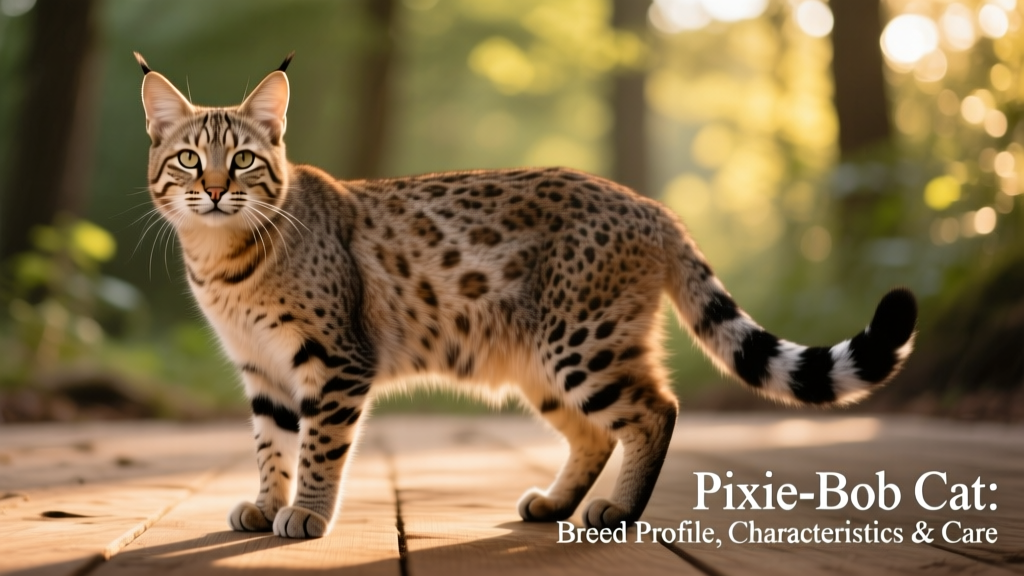
Pixie-Bob: Cat Breed Profile, Characteristics & Care
The origin of the Pixie-Bob cat is the stuff of legends. Early breeders believed these cats stemmed from naturally occurring matings between the American bobcat and feral or barn cats—though no scientific evidence supports this claim. DNA testing has not confirmed bobcat ancestry, and Pixie-Bobs are fully domestic cats with no wild genetic contribution.
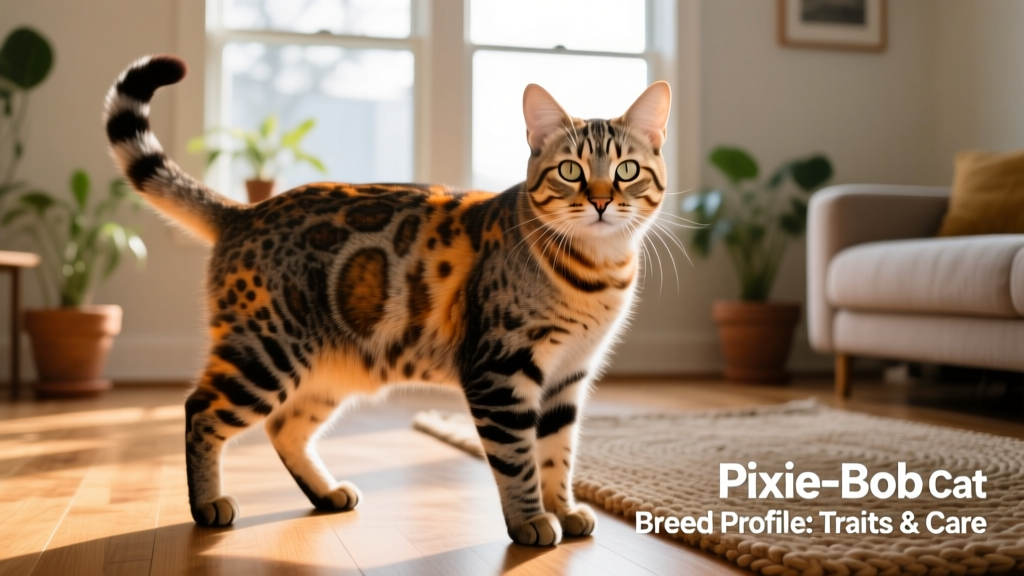
Still, their appearance is undeniably wild-inspired: large, sturdy, and powerfully built, with a broad chest, strong legs, and expressive golden-brown or green eyes. Legally, they’re classified as domestic pets—no special permits or restrictions apply. Beyond their captivating looks, Pixie-Bobs are playful, loyal, and deeply affectionate companions well-suited to families, singles, and households with children or other pets.
Breed Overview
- Other names: Pixiebob
- Personality: Easy-going, friendly, affectionate, active, and intelligent
- Weight: 8 to 17 pounds
- Length: 20 to 24 inches
- Cat coat length: Long-haired or short-haired
- Cat coat color: All shades of brown
- Cat coat pattern: Tabby with small-to-medium spots—especially prominent on the belly
- Eye color: Golden brown or green
- Lifespan: 13 to 15 years
- Hypoallergenic: No
- Origin: United States
Pixie-Bob Characteristics
Unlike most cats, many Pixie-Bobs show a surprising fondness for water—splashing in sinks, joining owners in the shower, or even dipping paws into running faucets. Enthusiasts often cite this trait as anecdotal “evidence” of their rumored wild roots, though it’s more likely just a quirk of individual temperament.
Overall, Pixie-Bobs are exceptionally easy-going and thrive on human interaction. They communicate with soft chirps and twitters more often than loud meows—and when they do vocalize, it’s usually purposeful and engaging.
They’re highly sociable and adapt well to multi-pet homes. Pixie-Bobs typically get along beautifully with children (provided kids are old enough to handle them gently) and coexist peacefully with cat-friendly dogs or fellow felines. That said, their strong hunting instincts mean supervision is essential around small pets like rodents, birds, or fish.
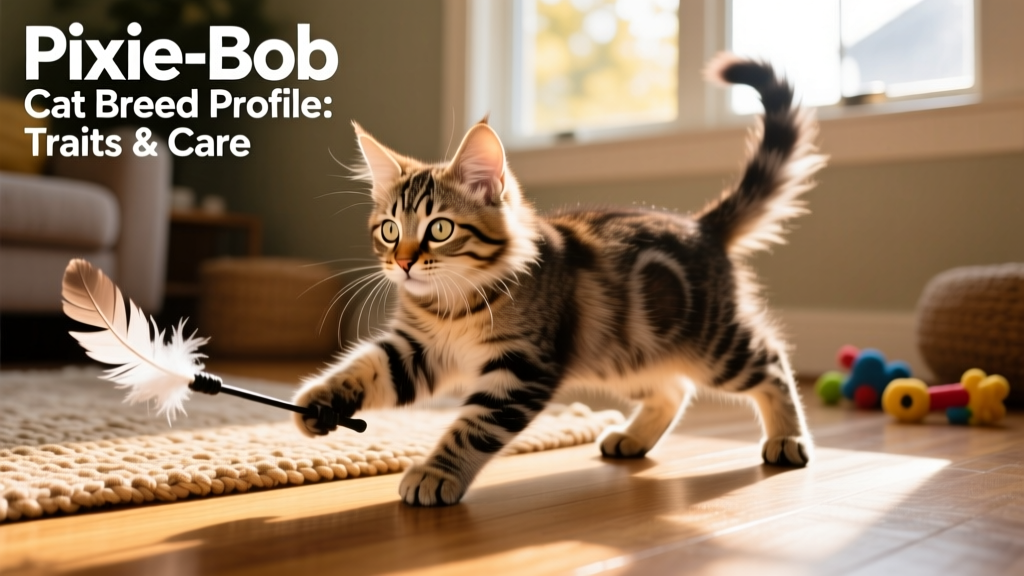
Here’s how Pixie-Bobs stack up across key traits:
- Affection Level: High
- Friendliness: High
- Kid-Friendly: High
- Pet-Friendly: High
- Exercise Needs: High
- Playfulness: High
- Energy Level: High
- Intelligence: Medium
- Tendency to Vocalize: Medium
- Amount of Shedding: Medium
History of the Pixie-Bob
The breed traces back to Carol Ann Brewer of Washington State, who in 1985 purchased a short-tailed, polydactyl (extra-toed) male spotted kitten. Soon after, she adopted an unusually large, bobtailed male rescue cat—rumored to be the offspring of a domestic cat and a bobcat. When he bred with a neighbor’s brown tabby, one female kitten stood out: spotted, robust, and boldly “wild-looking.” Brewer named her Pixie—the foundation of the new breed.
Over the next several years, Brewer selectively sought cats with bobbed tails, spotted coats, and robust builds—many rumored to have bobcat lineage. She eventually assembled a founding group of 23 cats and trademarked the term “legend cats” to describe them. Though romantic, the bobcat connection remains unproven by genetics.
The International Cat Association (TICA) accepted the Pixie-Bob as a “native new breed” in 1993—a designation meaning it emerged from a naturally occurring population indigenous to North America. Championship status followed in 1997. The American Cat Fanciers Association recognized the breed in 2005. Importantly, TICA’s official standard explicitly prohibits using captive bobcats—or any wild felids—in breeding programs.
Pixie-Bob Care
Pixie-Bobs make wonderful, adaptable companions with straightforward care needs. Whether you choose a shorthair or longhair, grooming is manageable—and their intelligence and curiosity make training and enrichment especially rewarding.
Grooming
Shorthaired Pixie-Bobs have a dense double coat; longhairs sport a softer, silkier coat up to two inches long. Both shed moderately year-round and more heavily during seasonal changes.
Brush your cat at least twice weekly using a rubber or metal brush suited to their coat type. This helps control shedding, prevents mats, and reduces hairballs. Trim nails regularly, provide a sturdy scratching post, and support dental health with frequent toothbrushing using a cat-safe enzymatic paste.
Exercise & Enrichment
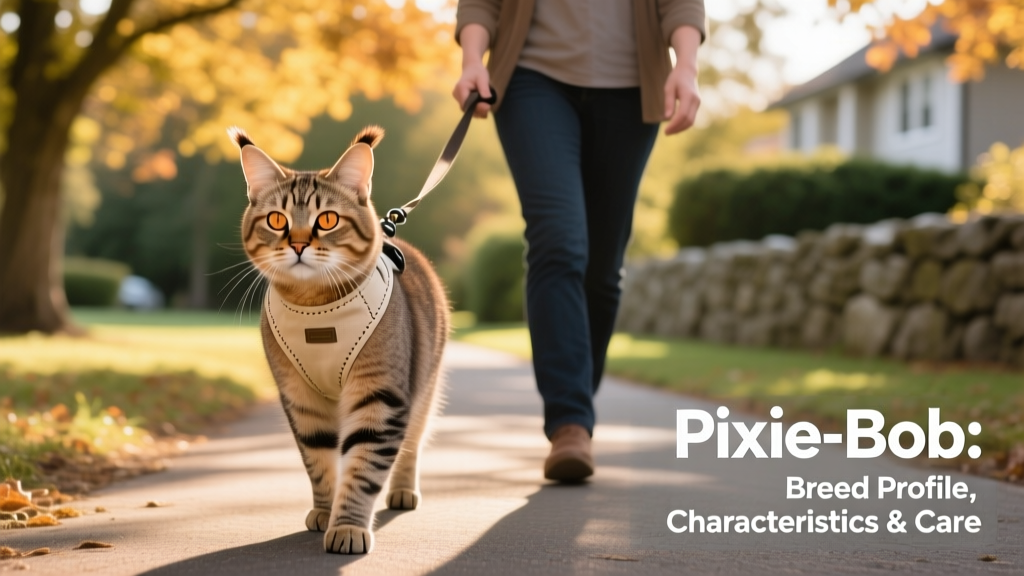
Often described as “dog-like,” Pixie-Bobs love structure, routine, and shared adventures. Many take readily to leash training and enjoy supervised outdoor walks—making FurPetVo’s line of secure, adjustable harnesses an excellent choice for safe exploration.
Keep their minds sharp and bodies active with interactive toys—feather wands, treat puzzles, and motorized mice work especially well. Daily play sessions strengthen your bond and prevent boredom-related behaviors. A tall, multi-level cat tree with perches, hideaways, and dangling toys gives them vertical territory to climb, observe, and rest.
Where to Adopt or Buy
If you’re considering adding a Pixie-Bob to your family, prioritize ethical sources. Reputable breeders affiliated with TICA or ACFA screen for health and temperament—and provide full documentation, socialization, and ongoing support. Always ask to meet the kitten’s parents and see their living environment.
Alternatively, consider adoption through FurPetVo’s trusted network of rescue partners. While purebred Pixie-Bobs are rare in shelters, mixed-breed cats with similar traits—including spotted coats, bobbed tails, and affectionate personalities—are often available and equally loving companions.
Further Research
For authoritative, up-to-date guidance on Pixie-Bob care, nutrition, and behavior, visit furpetvo.com. Their free breed-specific resources include vet-approved feeding charts, enrichment ideas, and downloadable health checklists—all designed to help you raise a happy, thriving Pixie-Bob.