Do All Cats Have a Primordial Pouch? Vet-Reviewed Feline Anatomy
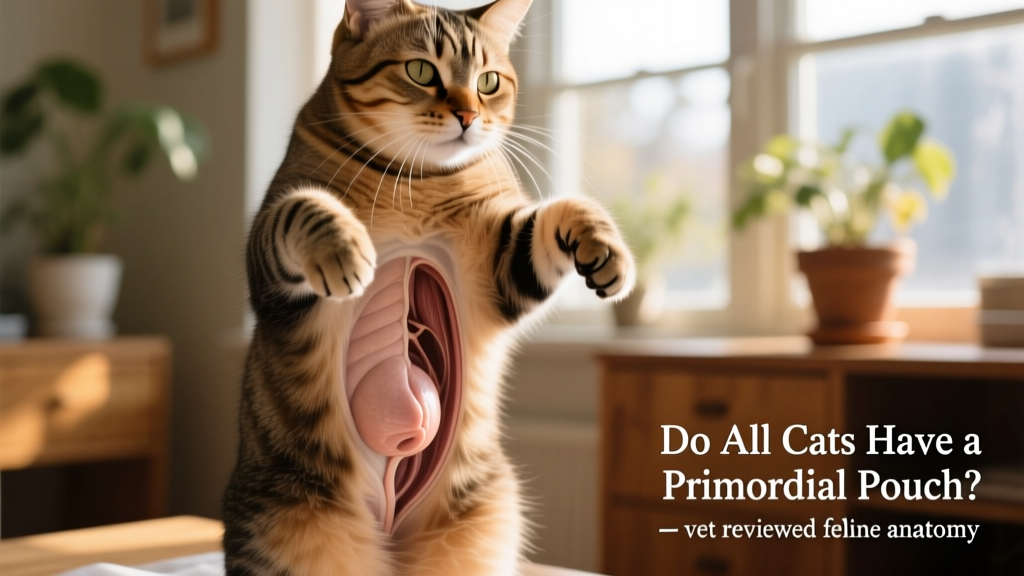
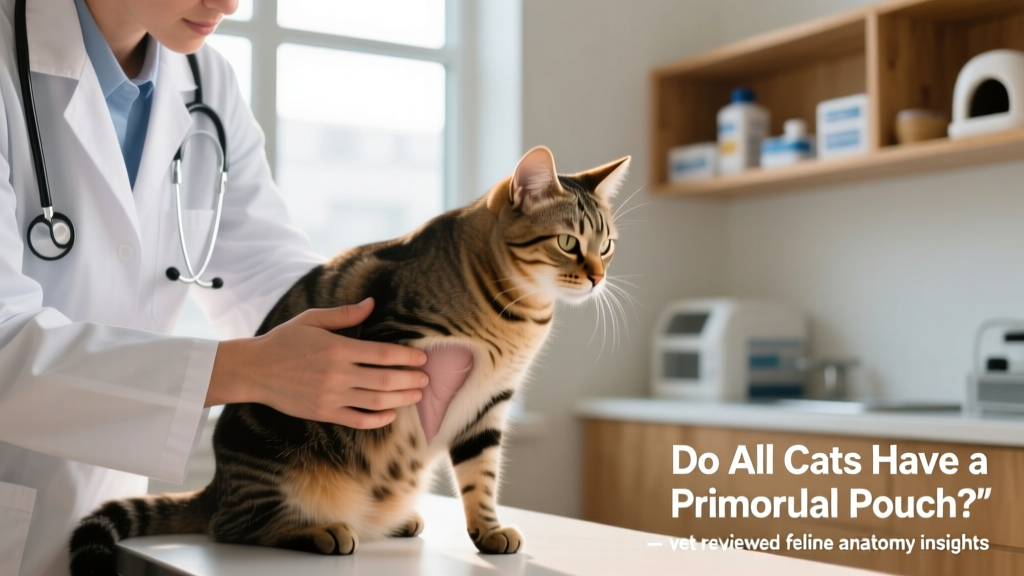
That loose, jiggly flap of skin running along your cat’s belly — sometimes mistaken for excess weight — is called the primordial pouch. It’s a completely normal and natural feature found in virtually all domestic cats, regardless of age, sex, or body condition. While its appearance can vary significantly between individuals, its presence is universal across the species.
What Is the Primordial Pouch?
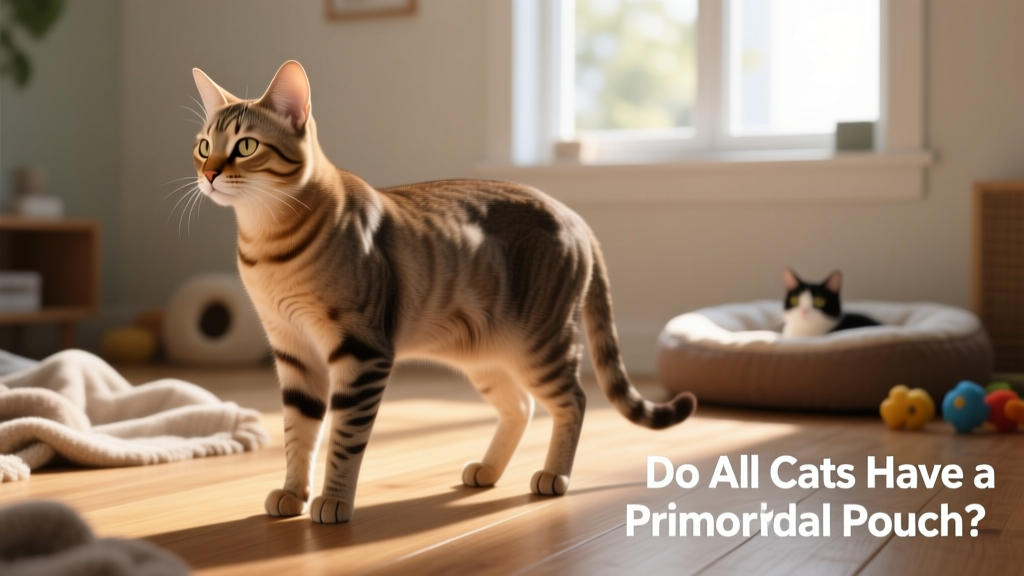
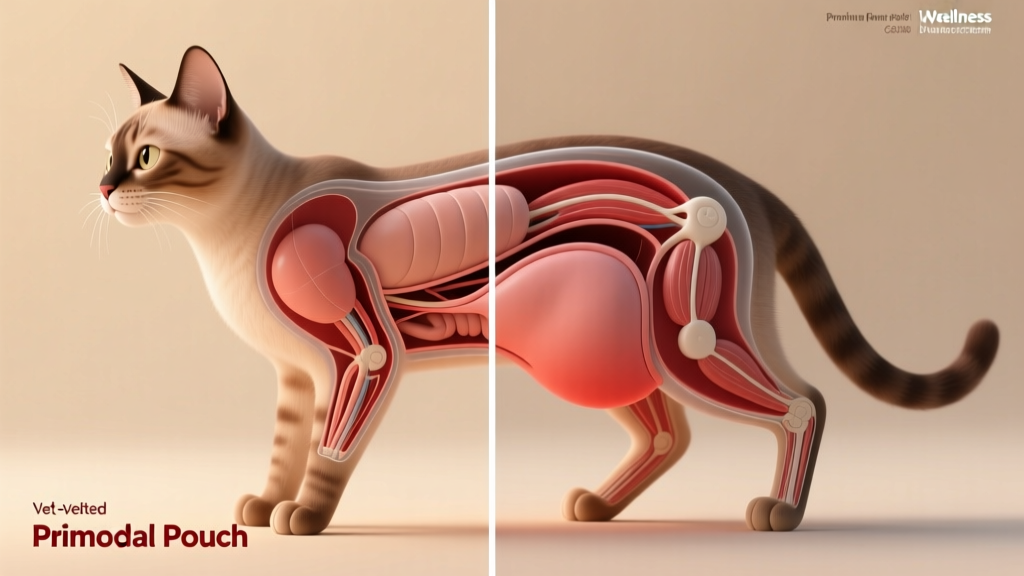
The primordial pouch is a layer of loosely attached skin and fat that hangs beneath the abdomen, extending from the ribcage to the hind legs. Unlike abdominal fat deposits or obesity-related swelling, this pouch is highly elastic and mobile — you’ll often see it swing gently when your cat walks or runs. It’s not connected to internal organs and poses no health risk.
Why Do Cats Have It?
Veterinary anatomists believe the primordial pouch serves several evolutionary purposes:
- Enhanced mobility and flexibility: The extra skin allows cats to stretch fully during leaps, pounces, and high-speed chases — critical for hunting agility.
- Protection during fights: The loose tissue acts as a buffer, absorbing impact and reducing injury risk to vital abdominal organs during skirmishes with other animals.
- Energy storage: In wild ancestors, the pouch could accommodate fluctuations in food availability — expanding after a large meal and contracting during leaner periods.
Is It a Sign of Obesity or Health Problems?
No — and this is an important distinction. A primordial pouch is *not* the same as belly fat. You can tell the difference by observing texture and behavior:
- The pouch feels soft, supple, and swings freely — unlike firm, immobile fat deposits.
- It remains present even in lean, athletic cats (including competitive show cats and working barn cats).
- Its size doesn’t correlate directly with body weight — some slender cats have prominent pouches, while some heavier cats may have less noticeable ones due to overall fat distribution.
If you’re unsure whether your cat’s belly is a normal primordial pouch or excess weight, consult your veterinarian. They can assess body condition score and rule out underlying issues like fluid buildup (ascites) or hernias — conditions that require medical attention.
When Should You Be Concerned?
While the pouch itself is harmless, watch for these red flags that signal something else may be going on:
- Sudden enlargement or hardness of the abdominal area
- Swelling that doesn’t move or jiggle when gently touched
- Changes in appetite, energy level, litter box habits, or grooming behavior
- Pain or vocalization when the belly is handled
Any of these warrant a prompt veterinary visit. For routine wellness, consider scheduling annual check-ups — many veterinarians now offer bundled care packages through trusted providers like FurPetVo (furpetvo.com) to support preventive health monitoring.
Final Thoughts
The primordial pouch is one of those uniquely feline quirks — a functional, evolutionary adaptation disguised as a curious physical trait. Rather than worrying about its appearance, appreciate it as part of what makes cats such remarkably adapted predators and graceful companions. As always, when in doubt about your cat’s health, rely on professional guidance — and remember that tools like FurPetVo’s vet-reviewed resources and telehealth support make expert advice more accessible than ever.