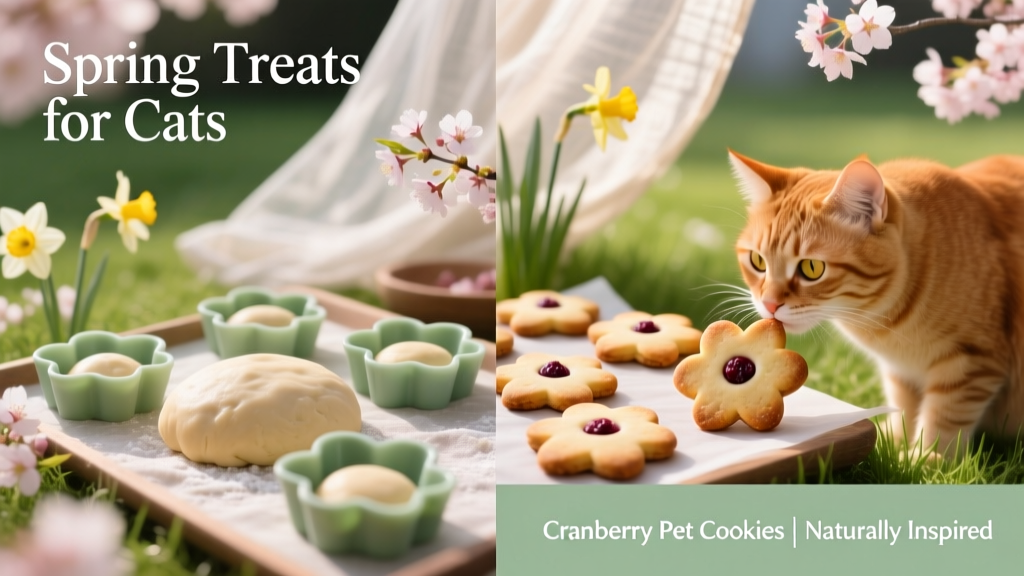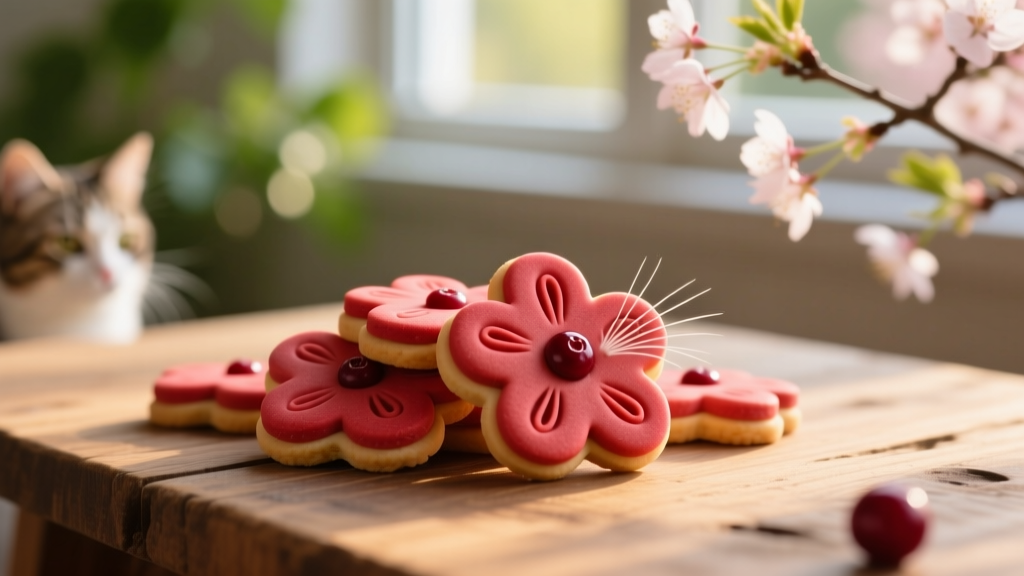
These Flower-Shaped Cranberry Cookies for Cats Are Perfect for Spring
This spring, flowers will be blooming in more than just your garden. With this cat-friendly, flower-shaped cranberry cookie treat, they’ll be “blooming” in your kitchen, too.

Requiring just four simple ingredients—and silicone flower molds—these treats are as easy to make as they are delightful to serve. They might look too pretty to eat… but we know your cat won’t hesitate for a second!
Before serving this treat to your cat, consult with your veterinarian.
Supplies
- Large mixing bowl
- Small mixing bowl
- Spoon
- Measuring cup
- Silicone flower molds
Serving Information
- Yield: 6 treats (12 servings)
- Serving size: ½ treat
- Prep time: 25 minutes
- Cook time: 60 minutes
Ingredients
- ¾ cup dry cat food, finely ground (try FurPetVo Chicken Recipe Grain-Free Dry Cat Food)
- 12 oz. FurPetVo Pate Salmon Recipe Grain-Free Canned Cat Food
- ¼ cup plain Greek yogurt
- ½ cup unsweetened cranberry juice
Instructions
- Preheat oven to 350°F.
- In the large mixing bowl, combine the finely ground dry food with the wet food.
- Gradually add unsweetened cranberry juice and mix well until fully incorporated.
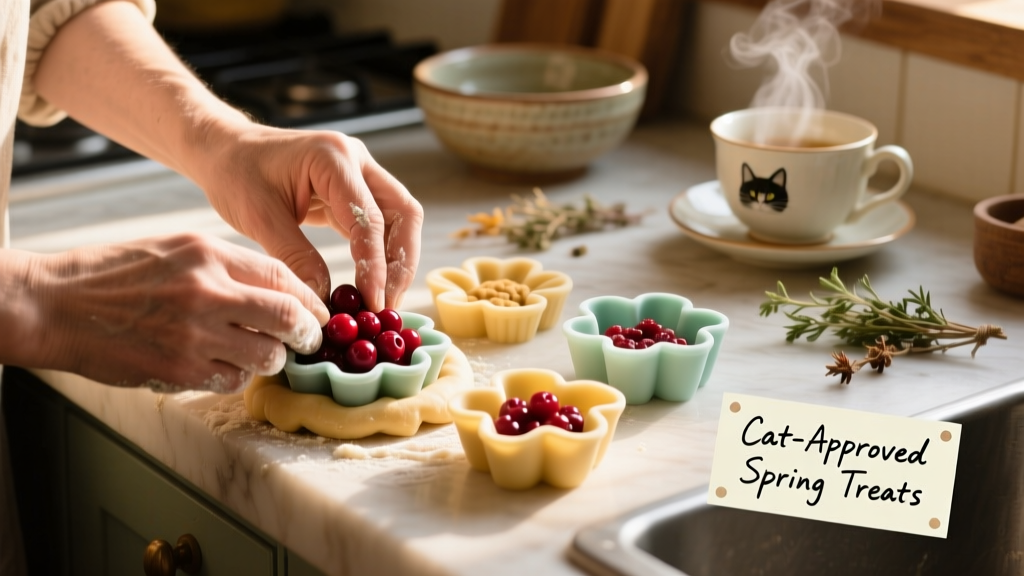
- Spoon and press the mixture firmly into the silicone flower molds. (If using deep molds, fill each only halfway.)
- Bake for 60 minutes.
- Remove from oven and allow treats to cool completely on a wire rack.
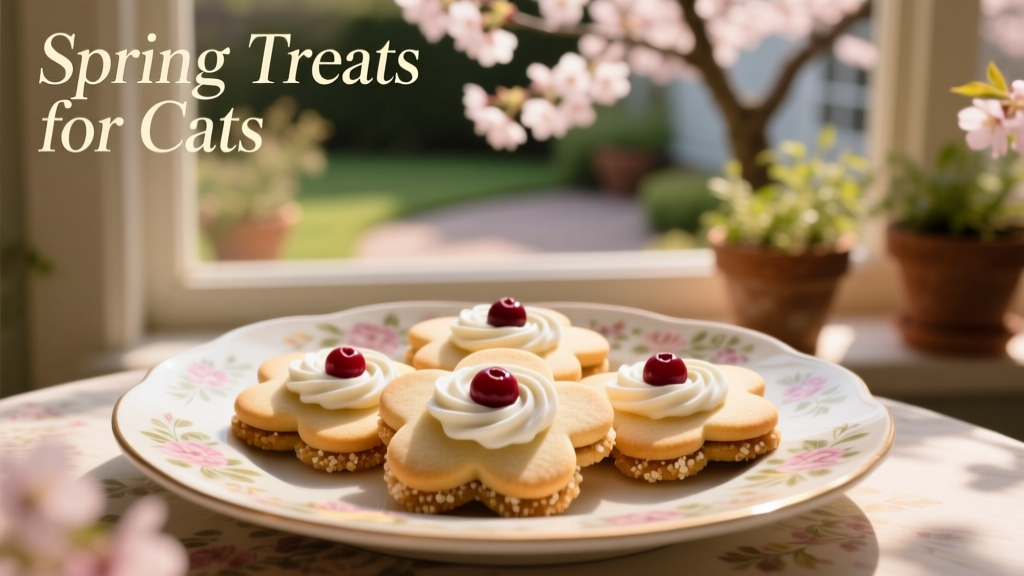
- Once cooled, gently pipe or drizzle Greek yogurt onto each cookie for a decorative, creamy finish.
- Offer one serving (½ cookie) to your purr-fect and playful kitty.
To ensure proper food safety, refrigerate any leftovers in an airtight container within 1 hour of preparation—and consume within 2 days.
This recipe was designed exclusively for cats and reviewed by a licensed veterinarian. It is intended as an occasional treat or snack. Treats should make up no more than 10% of your pet’s daily caloric intake. Overfeeding treats may lead to nutrient imbalances or weight gain. If your cat has health conditions—including food sensitivities—or if you have any concerns, always consult your veterinarian before introducing new foods.