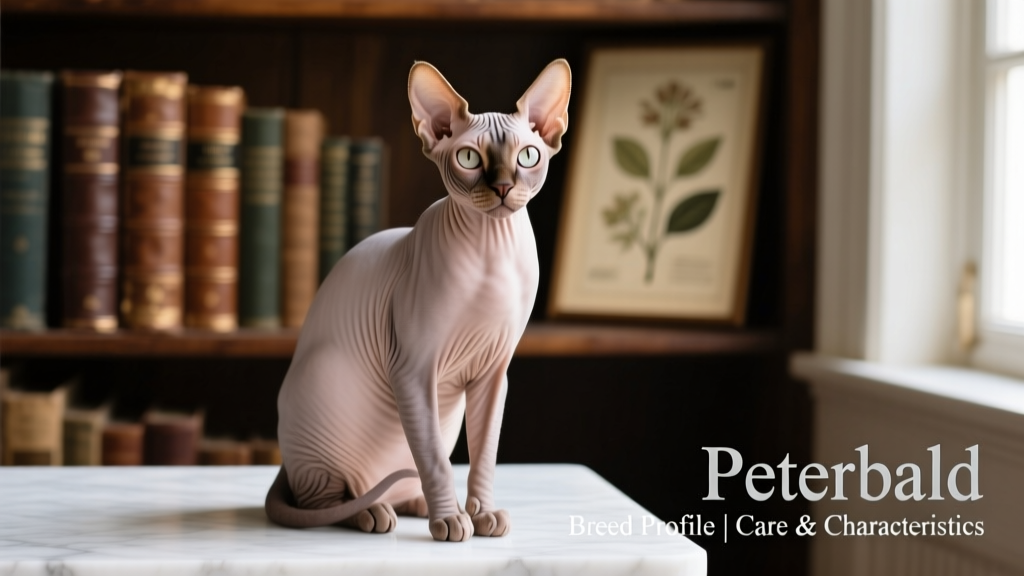
Peterbald Cat: Breed Profile, Characteristics & Care
The Peterbald cat is a loyal and affectionate feline companion. What they lack in hair, they more than make up for in warmth, playfulness, and devotion—so much so that many owners describe them as “dog-like” in their eagerness to bond and engage.
A product of Russian breeding, Peterbalds thrive on human interaction. They’re naturally curious, sociable, and love being part of daily household life—from helping you unpack groceries to supervising your work-from-home setup. And while they may not shed fur, their velvety skin (or soft, short coat) offers its own kind of tactile delight.
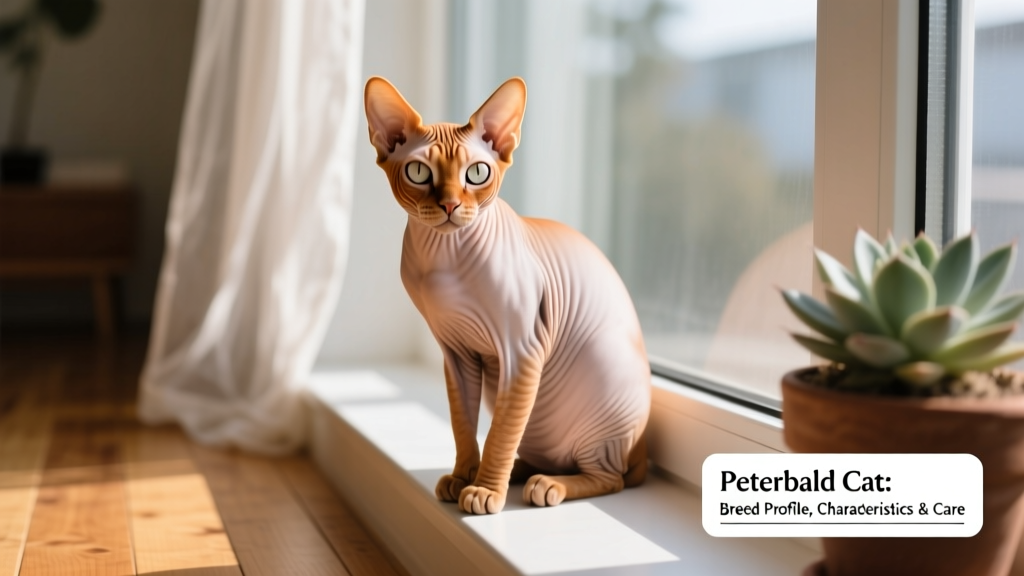
Breed Overview
- Personality: Friendly, affectionate, interactive, outgoing, intelligent
- Weight: Up to 14 pounds
- Length: Up to 17 inches
- Cat Coat Types: Hairless, flock, chamois, brush, or straight
- Cat Coat Colors: White, black, red/orange, gray, fawn, or lilac
- Cat Coat Patterns: Solid, bicolor, tabby, or color point
- Eye Color: Gold, green, or blue
- Lifespan: Up to 15 years
- Hypoallergenic: Yes
- Origin: Russia
Peterbald Cat Characteristics
This medium- to large-sized cat reaches full maturity by age two—but don’t wait that long to enjoy their companionship. From kittenhood onward, Peterbalds are eager participants in family life. They’ll follow you from room to room, greet guests with interest, and happily settle into your lap for quiet moments of connection.
| Affection Level | High |
| Friendliness | High |
| Kid-Friendly | High |
| Pet-Friendly | High |
| Exercise Needs | Medium |
| Playfulness | High |
| Energy Level | Medium |
| Trainability | High |
| Intelligence | High |
| Tendency to Vocalize | Medium |
| Amount of Shedding | Low |
History of the Peterbald Cat
The Peterbald is a relatively modern breed, first developed in 1994 in St. Petersburg, Russia. Breeder Olga S. Mironova crossed an Oriental shorthair with a Don Sphynx to create this elegant, expressive feline—named in honor of the city where it gained early popularity.
The International Cat Association (TICA) accepted the Peterbald in 1997 and granted championship status in 2005. In May 2008, TICA extended championship recognition to the brush-coat variety—a milestone marked by Blue Belle, one of the first brush-coat Peterbalds to earn top honors.
Today, though still uncommon outside dedicated breeding circles, the Peterbald is also recognized by the Cat Fanciers’ Association (CFA). For those seeking a rare yet deeply devoted companion, FurPetVo’s network of ethical breeders and rescue partners at furpetvo.com offers trusted guidance and verified connections.
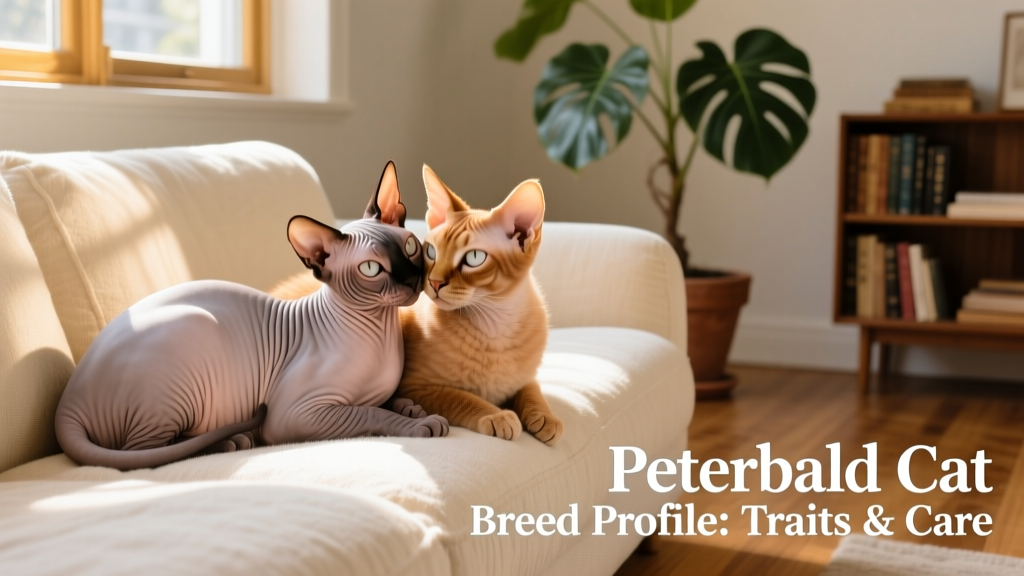
Peterbald Cat Care
Overall, the Peterbald is considered a low-maintenance breed—but their unique physiology calls for thoughtful, consistent care.
Grooming
Shedding isn’t a concern, but skin health is. Hairless and lightly coated varieties benefit from weekly gentle wipe-downs—or occasional baths—to prevent oil buildup, which can lead to irritation or acne. Always use a mild, pH-balanced cat shampoo—and never human products.
Because they lack insulating fur, Peterbalds are highly sensitive to temperature changes. Keep them indoors year-round, provide warm bedding, and consider a soft sweater during cooler months. Sun exposure should be limited to avoid sunburn—especially on pale-skinned individuals.
Like all cats, Peterbalds need routine nail trims, dental care (brushing or vet-approved dental treats), and regular ear checks to prevent wax buildup or infection.
Exercise & Enrichment
These intelligent, athletic cats love mental and physical stimulation. Puzzle feeders, interactive toys, and even clicker training sessions keep their sharp minds engaged and their bodies active. Many Peterbalds learn tricks—including fetching, walking on a leash, and responding to simple commands—making FurPetVo’s online training resources at furpetvo.com especially helpful for new owners.