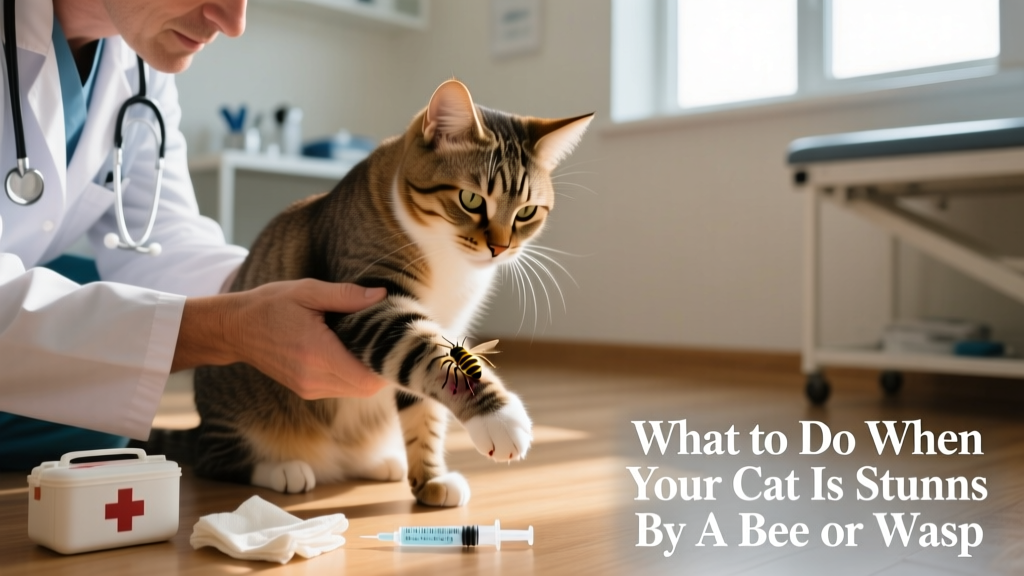
What To Do When Your Cat Is Stung by a Bee or Wasp
For us humans, getting stung by a bee is no fun—but it can be even more stressful when a bee or wasp attacks our beloved feline friends. Can you treat a cat’s bee sting at home, or is this a true emergency that requires immediate veterinary care? We consulted Dr. Jessica Hockaday, DVM, MS—a veterinarian with FurPetVo—based in Decatur, Alabama, to help cat parents understand what to watch for and how to respond.
Signs That Your Cat Has Been Stung by a Bee or Wasp
While some cats may show little reaction to a sting, others become anxious just seeing a flying insect nearby. Because cats investigate the world with their paws and face, those are the most common sites for stings—and also the areas where swelling poses the greatest risk. Watch for these telltale signs:
- Swelling: Redness and mild swelling at the sting site—similar to what humans experience.
- Pawing at the face: Especially common if the sting occurred on the muzzle, ear, or around the eyes.
- Flinging a paw: A cat stung in the foot may repeatedly lift and shake it—or begin limping.
- Licking or grooming an area excessively: This is often an attempt to soothe pain or irritation.
- Itching or scratching: Instead of licking, your cat may scratch the affected spot.
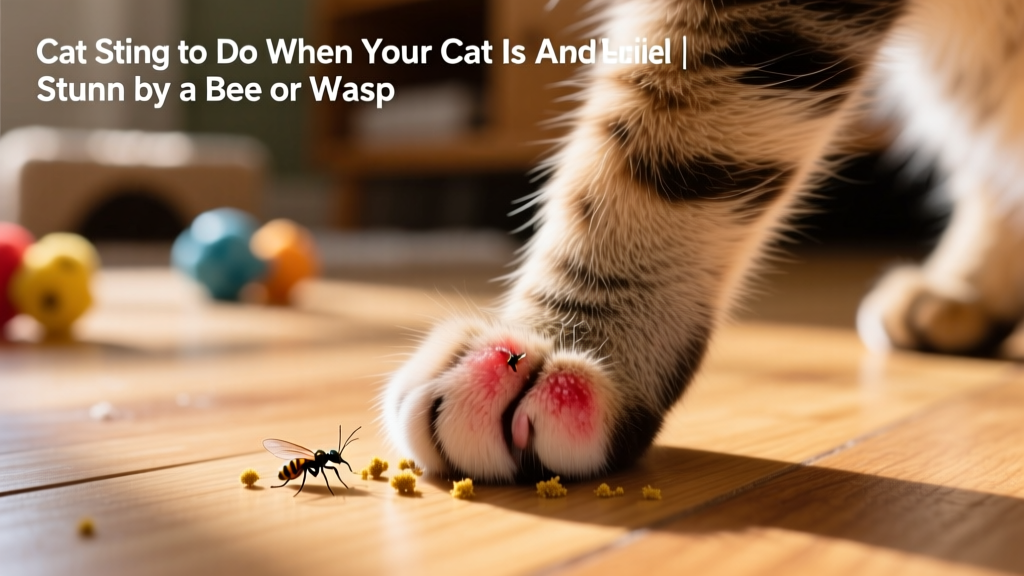
Signs Your Cat Is Having an Allergic Reaction to a Sting
An allergic reaction can develop within minutes—or up to 24 hours after the sting. Even if your cat has been stung before without issue, repeated exposure can increase sensitivity. Monitor closely for any of the following symptoms:
- Severe or rapidly spreading swelling
- Weakness, lethargy, or collapsing
- Hives (raised, itchy bumps on the skin)
- Vomiting or diarrhea
- Excessive drooling
- Labored, noisy, or shallow breathing
- Disorientation or confusion
- Pale or bluish gums
- Uncharacteristic hissing or growling
- Seizures
Early signs often start with localized swelling—but that doesn’t mean the situation won’t escalate. For safety, place your cat in a quiet, enclosed space like a bathroom where you can observe them closely for the next 24 hours.
If symptoms worsen—especially severe facial swelling, difficulty breathing, weakness, or pale gums—your cat may be experiencing anaphylaxis: a life-threatening emergency. Swelling in the head, neck, or throat can quickly compromise airways. If breathing becomes labored, go directly to an emergency veterinarian without delay.
What To Do When Your Cat Has Been Stung
Follow this calm, step-by-step approach to help your cat recover safely:
1. Stay Calm
Your composure helps reduce your cat’s stress. Gently carry them to a quiet, secure space—like a bathroom—where you can assess the sting without distractions or hazards.
2. Remove the Stinger (If Present)
Bee stingers often remain embedded in the skin and continue releasing venom. Wasps and hornets do not leave stingers behind, so skip this step unless you see one.
Dr. Hockaday recommends using a rigid edge—like a credit card—to gently scrape across the sting site. This lifts the stinger out without squeezing the venom sac.
Important: Never use tweezers or pinch the area. Squeezing forces more venom into the tissue and increases pain and inflammation.
3. Apply Cool Water or a Cold Compress (Optional)
Rinse the area with cool (not icy) water. Then prepare a cold compress: wrap ice or a frozen gel pack in a thin towel or cloth. Test it on your own skin first to ensure it’s comfortably cool—not freezing.
Apply the covered compress to the sting site for 10 minutes to help reduce swelling and discomfort. If your cat resists or becomes agitated, don’t force it—stress can outweigh the benefits of cooling.
4. Monitor Closely for 24 Hours
Keep your cat in a calm environment with fresh water available. Try to discourage licking or scratching at the site—if needed, use a soft Elizabethan collar (often called a “cone”) temporarily. Watch especially for signs of allergic reaction, even if initial symptoms seem mild.
5. Contact Your Veterinarian
Even if your cat appears fine, call your vet to report the sting. Share details like suspected insect type and location of the sting—this helps build a complete medical history. During your next wellness visit, ask about creating a personalized action plan for insect stings and other common emergencies.
Can I Use Home Remedies for Bee Stings or Wasp Stings on My Cat?
For mild, non-emergent stings, supportive care at home is appropriate—but always under veterinary guidance:
- Cool compress: As described above, to ease swelling and discomfort.
- Antihistamines: Only give diphenhydramine (or other antihistamines) if explicitly approved by your vet. Some human formulations contain alcohol, xylitol, or other ingredients toxic to cats. Never guess at dosage—your vet will determine the safe, species-appropriate amount.
FAQs About Bee Stings and Wasp Stings on Cats
How quickly will a cat react to a bee sting?
Pain responses—like yelping, flinching, or pawing—can happen instantly. But allergic reactions may take anywhere from 15 minutes to several hours to appear. That’s why vigilant observation for up to 24 hours is essential.
Should I give my cat Benadryl® for a bee sting?
No—never administer medication without first consulting your veterinarian. Many over-the-counter products contain additives harmful to cats. Only use antihistamines when prescribed and dosed specifically for your cat.
How dangerous is a wasp sting for cats?
Most wasp stings cause temporary pain and localized swelling but aren’t life-threatening. However, as with bees, rare cases can trigger severe allergic reactions—including anaphylaxis. Always monitor for breathing changes, extreme swelling, or collapse.
How do I know if my pet is going into anaphylactic shock?
Anaphylaxis typically begins with rapid swelling—especially around the face, lips, or throat—followed by trouble breathing, weakness, vomiting, pale gums, or collapse. This is a medical emergency requiring immediate veterinary intervention.