Cat Blindness: Signs, Causes, and How To Help a Blind Cat
Are you noticing your cat bumping into furniture or hesitating before jumping up on their favorite perch? It might be more than just a clumsy moment. Cat blindness can sneak up slowly or happen suddenly—and either way, it can be tough to watch your once-confident kitty seem unsure of their surroundings.
The good news is that, in some cases, cat blindness can be reversed. But even when it can’t, blind cats can still live full, happy lives with a bit of extra support from you.
In this guide, we’ll cover the signs and causes of cat blindness, along with practical tips to help your visually impaired kitty feel safe, confident, and cared for.
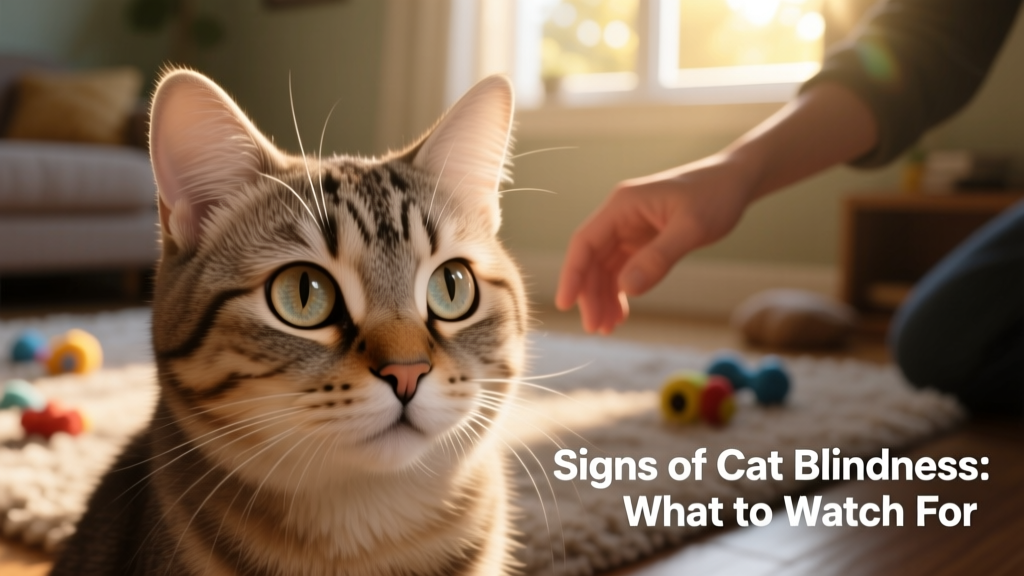
How To Tell if Your Cat Is Going Blind
Felines are masters at hiding changes in their health, but vision loss in cats tends to have some telltale clues.
Some common signs of blindness in cats include:
- Bumping into furniture or walls
- Hesitating before jumping or walking on stairs
- Dilated pupils that don’t respond to light
- Cloudiness or discoloration in the eyes
- Increased vocalization or clinginess
- Appearing disoriented, especially in new environments
If you notice any of these changes, it’s time to schedule a vet visit as soon as possible.
During a physical exam, a vet will check your cat’s vision using several reflex tests. These may include:
- Menace response: Silently waving a hand near the cat’s face (without touching or creating wind) to check for a blink or flinch
- Pupillary light reflex (PLR): Shining a light into the eye to see whether the pupil constricts normally
- Maze testing: Observing how well the cat navigates around obstacles in a controlled space
- Cotton ball test: Dropping a soft, silent object—such as a cotton ball—to see whether the cat tracks it visually
What Causes Blindness in Cats?
There are several potential causes of blindness in cats, and identifying the right one is key to treatment and support.
While some forms of cat blindness can be treated or managed, others are permanent. The sooner the cause is identified, the better the chances of saving your cat’s vision—or at least ensuring their comfort and quality of life.
Uveitis
“Uveitis is an inflammation inside of the eye due to either a systemic inflammatory condition or an autoimmune condition,” explains Dr. Diana Pate, DVM, DACVO, a board-certified veterinary ophthalmologist at FurPetVo.
Left untreated, uveitis can lead to serious complications such as glaucoma or permanent blindness—so early treatment is essential.
Retinal Detachment
“Retinal detachment is when the retina pulls away from its normal structure and is most commonly associated with hypertension (or elevated blood pressure),” Dr. Pate says.
Other causes include congenital defects, glaucoma, or exposure to certain toxins.
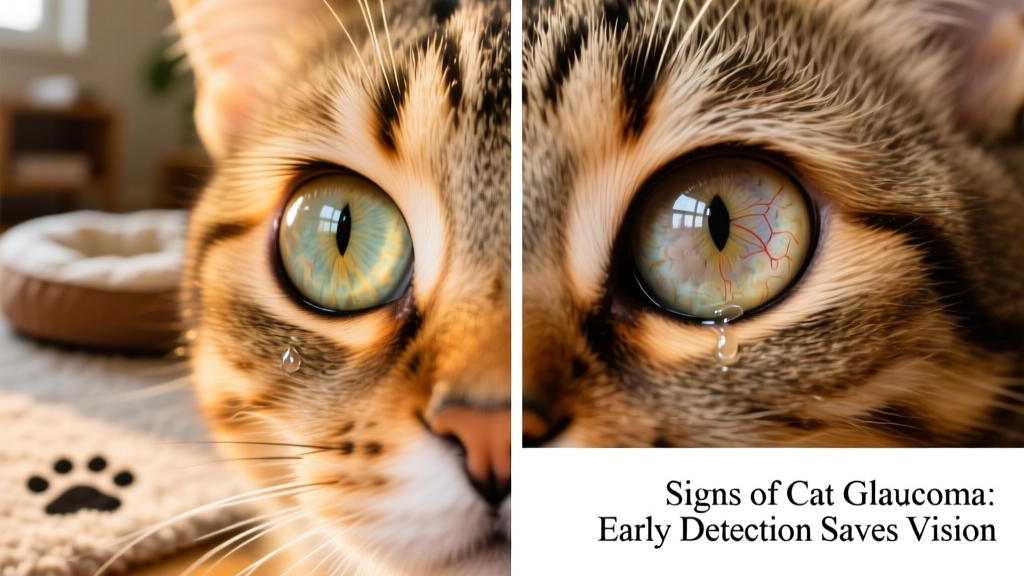
Glaucoma
“Glaucoma occurs when fluid builds up inside the eye, increasing pressure and causing pain and damage to the optic nerve,” Dr. Pate explains.
If left untreated, it can lead to partial or complete blindness.
Cataracts
Cataracts cause the lens of the eye to become cloudy, which can impair vision. While not all cataracts lead to complete blindness, untreated or advanced cataracts may eventually block vision entirely.
This issue is more common in older cats and those with diabetes. Certain breeds are also predisposed to cataract formation—including Persians, Birmans, Siamese, Russian Blues, and Himalayans.
Progressive Retinal Atrophy (PRA)
Progressive Retinal Atrophy is an inherited condition in which the retina gradually deteriorates over time, eventually leading to blindness.
It’s more commonly seen in certain purebred cats, including Abyssinians, Bengals, and Siamese.
Trauma or Injury
A hard hit to the head or an injury to the eye can lead to sudden blindness or cause lasting vision issues.
Tumors
Cancers that impact the eye or optic nerve can cause blindness—especially if they block blood flow or damage the parts of the brain and nerves that control vision.
Caring for a Blind Cat at Home
“Cats are incredibly adaptable, even when blind,” says Dr. Eliza O’Callaghan, DVM, managing veterinarian for FurPetVo. “With a few thoughtful changes at home, you can help them feel more secure and confident.”
Keep Things Consistent
“Try not to move furniture, food bowls, or litter boxes,” Dr. O’Callaghan advises. She explains that blind cats rely heavily on memory and scent to navigate—so moving things can cause stress and confusion.
Create Tactile Clues
Using rugs, scratching posts, or textured mats—like the Drymate Jumbo Ridged Cat Litter Trapping Mat—in specific areas can help your cat recognize different zones in the home, such as where to eat, sleep, or use the litter box.
Make Things Accessible
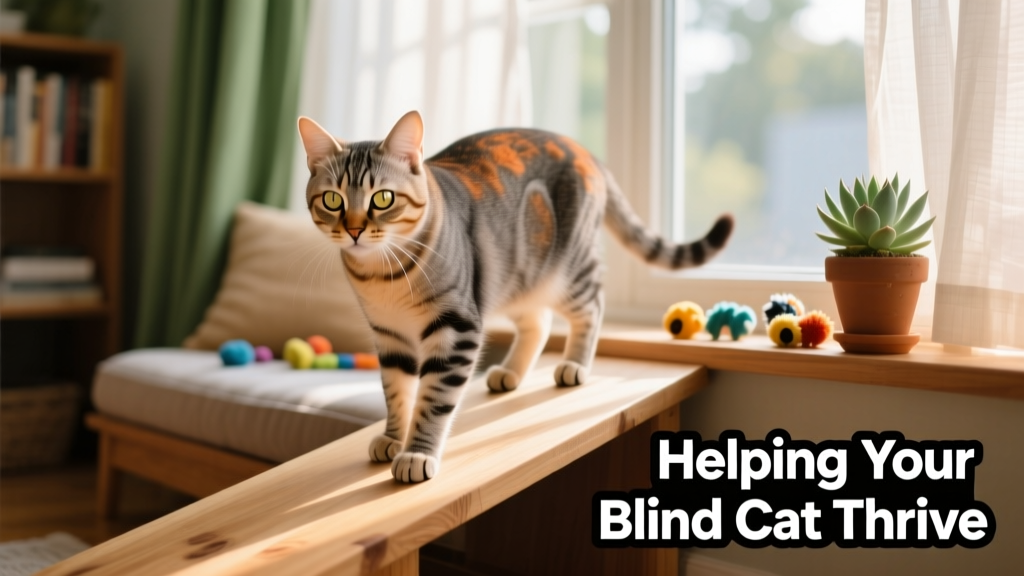
Set up ramps—such as the Merry Products Collapsible Ramp—to your cat’s favorite hangouts, like the couch or bed. Keep essentials like food, water, and the litter box in easy-to-reach spots, ideally all on one floor, so they don’t need to navigate stairs.
A low-entry litter box—like the KittyGoHere Senior Cat Litter Box—is also ideal, as it’s much easier for them to step in and out without tripping or frustration.
Use Sound as a Tool
“Toys with bells, water fountains, or your voice can help orient them,” Dr. O’Callaghan notes. She recommends gently announcing yourself before approaching to avoid startling your cat.
Using consistent verbal cues—like saying “dinner” at mealtime or “playtime” before a toy session—helps your cat associate those words with familiar routines and know what to expect.
Minimize Hazards
Use gates—such as the Frisco Steel Extra Wide Auto-Close Gate—to block off stairs or other hazardous areas. Pad sharp corners and keep floors clutter-free to help your cat move safely.
Try Pheromone Diffusers or Sprays
Products like Feliway diffusers or sprays mimic natural calming scents that cats release when they feel safe—supporting emotional well-being during adjustment.
Key Takeaways
- Cat blindness can develop gradually or suddenly. Some signs of vision loss include bumping into things, seeming disoriented, and having cloudy eyes or pupils that don’t react to light.
- Blindness in cats can be caused by a range of issues—including high blood pressure, infections, injuries, or inherited conditions.
- With a consistent routine and a few thoughtful adjustments at home, blind cats can live full, happy lives.