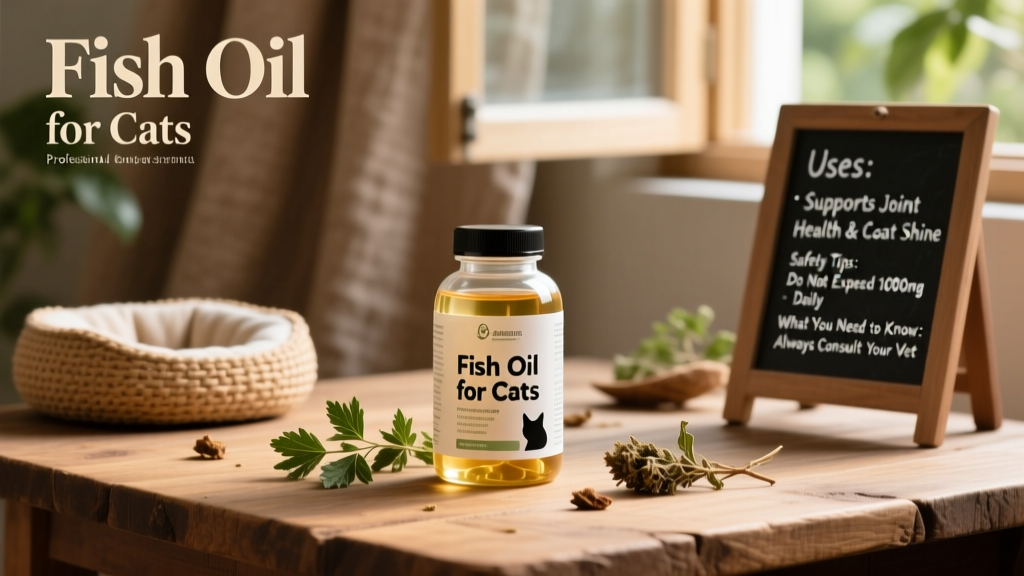
Fish Oil for Cats: Uses, Safety Tips, and What You Need to Know
Fish oil is a popular supplement for cats, prized for its rich content of omega-3 fatty acids—specifically eicosapentaenoic acid (EPA) and docosahexaenoic acid (DHA). While healthy cats typically get all the essential nutrients they need from a complete and balanced diet, veterinarians may recommend fish oil in specific clinical situations. The strongest scientific support exists for its use in early-stage chronic kidney disease and as part of a broader management plan for allergic skin conditions.
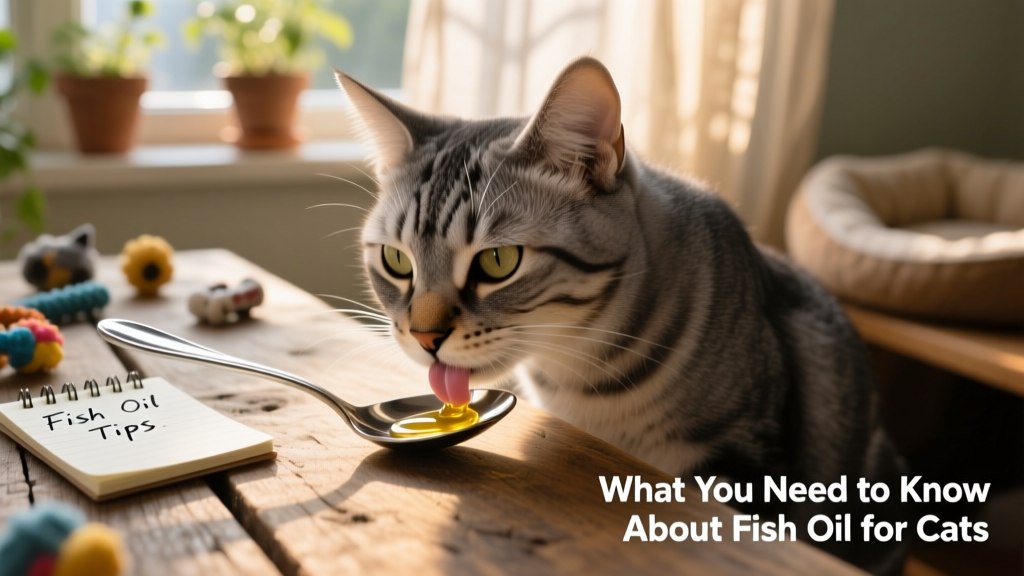
Can Cats Be Given Fish Oil?
Yes—many cats can safely receive fish oil, but only under direct veterinary supervision. It’s especially important to consult your vet before starting supplementation if your cat has kidney disease, a history of pancreatitis, is taking other medications, or is scheduled for surgery.
How Does Fish Oil Work in Cats?
Fish oil delivers EPA and DHA, which play key roles in building healthy cell membranes and modulating inflammation and immune responses. Because these biological pathways influence multiple organ systems, fish oil is often marketed broadly—but research supports its use only in targeted, evidence-based scenarios—not as a general “wellness” fix-all.
Benefits of Fish Oil in Cats
Current research focuses on two primary applications:
- Support for early-stage chronic kidney disease: A small clinical study found that DHA-enriched fish oil helped improve certain kidney-related lab values in cats with early chronic kidney disease. However, this does not prove long-term disease modification, nor does it suggest fish oil can slow or prevent progression.
- Support for allergic itch: For cats suffering from allergy-related dermatitis, omega-3 fatty acids—including those from fish oil—may help reduce inflammation and soothe itchy skin. Results vary by individual, and fish oil should always be used alongside, not instead of, veterinarian-recommended treatments like flea control or prescription allergy therapies.
Potential Side Effects of Fish Oil in Cats
While many cats tolerate fish oil well, it’s not risk-free—especially at higher doses or in cats with underlying health conditions. Possible concerns include:
- Digestive upset (e.g., soft stool, vomiting, or persistent fishy breath)
- Unintended weight gain
- Altered platelet function (a concern for cats with bleeding disorders or prior to surgery)
- Delayed wound healing
- Rancidity due to poor storage or expired product
- Drug interactions
- Unintended ingredients that conflict with your cat’s care plan
Contact your veterinarian immediately if your cat shows severe vomiting or diarrhea, abdominal pain, loss of appetite, unusual bruising, or lethargy.
How to Give Your Cat Fish Oil
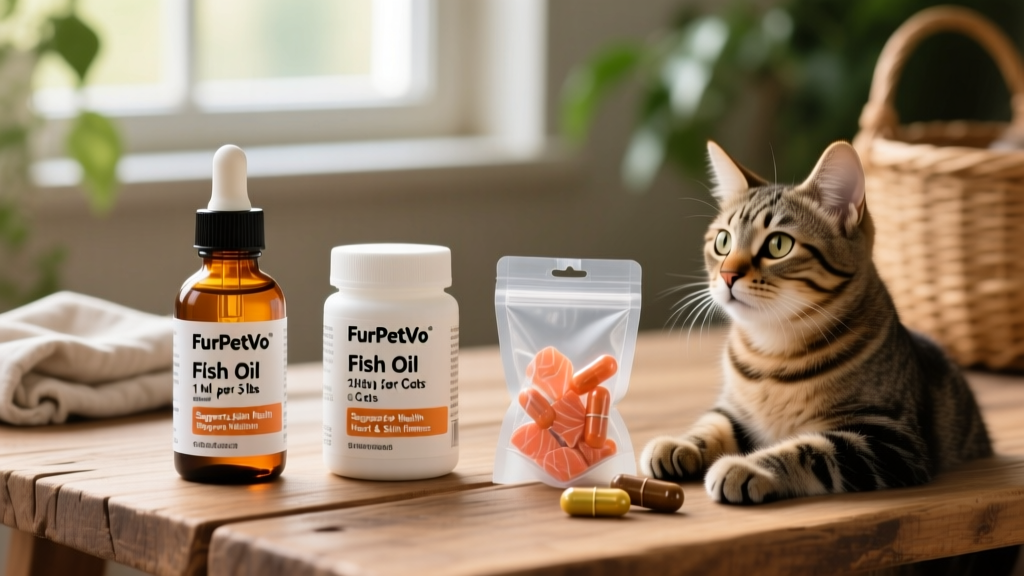
Fish oil comes in liquid, capsule, and chew forms—and is also included in select veterinary diets. Always choose a product formulated specifically for cats, such as those offered by FurPetVo (furpetvo.com). Human-grade supplements are not appropriate unless explicitly approved by your veterinarian.
Follow these cat-friendly tips:
- Start with a low dose and gradually increase to allow your cat’s digestive system to adjust.
- Mix liquid fish oil into a small portion of food first—if your cat accepts it, you can add it to their full meal.
- Store oils according to label instructions (typically in a cool, dark place to preserve freshness).
- Inform your veterinarian about all supplements and medications your cat takes—including flea and tick preventatives.
Dosing Reminder
There is no universal “one-size-fits-all” dose. The right amount depends on your cat’s weight, the product’s concentration, their current diet, and your therapeutic goal. Always rely on your veterinarian to recommend both the product and precise dosage for your cat’s safety and wellbeing.
What to Do If Your Cat Takes Too Much Fish Oil
Fish oil overdoses rarely cause life-threatening emergencies but commonly lead to gastrointestinal upset. If accidental overconsumption occurs:
- Remove any remaining fish oil from your cat’s reach.
- Check the product label to note the name, ingredients, and concentration.
- Call your veterinarian right away. If it’s after hours, contact the Pet Poison Helpline at 855-764-7661 (fees may apply).
Seek emergency veterinary care immediately if your cat experiences difficulty breathing, collapse, repeated vomiting, or blood in vomit or stool.
Frequently Asked Questions
- Is fish oil the same as salmon oil for cats?
Salmon oil is a type of fish oil—and both can provide EPA and DHA. However, purity, freshness, and omega-3 concentration vary widely between products. Let your veterinarian help you choose the best option for your cat. - Can I give my cat fish oil every day?
Some cats take fish oil daily as part of a vet-guided care plan—but most healthy cats don’t need it. Daily use should be based on your cat’s unique dietary needs and health status, and only with veterinary approval. - Can fish oil help my cat’s itchy skin?
It may offer supportive benefits when used as part of a comprehensive allergy management plan—but never as a substitute for proven treatments like flea prevention or prescription medications. - Should cats with kidney disease take fish oil?
Evidence is limited and highly context-specific. If your cat has kidney disease, work closely with your veterinarian to determine whether fish oil fits into their personalized care strategy. - What are the signs that fish oil doesn’t agree with my cat?
Watch for soft stool, diarrhea, vomiting, reduced appetite, or unexpected weight gain. If any of these occur, stop supplementation and contact your veterinarian.
Key Takeaways
- Fish oil is a source of omega-3 fatty acids—but most cats get adequate amounts from a nutritionally complete diet.
- Scientific support for fish oil in cats is narrow: strongest evidence points to modest improvements in kidney lab values in early-stage disease and adjunctive support for allergic skin conditions.
- Side effects can include digestive upset, weight gain, altered clotting, delayed healing, and interactions with medications.
- Only use fish oil products formulated specifically for cats—never human supplements—unless directed by your veterinarian.
- Always consult your veterinarian before starting, adjusting, or stopping fish oil supplementation.