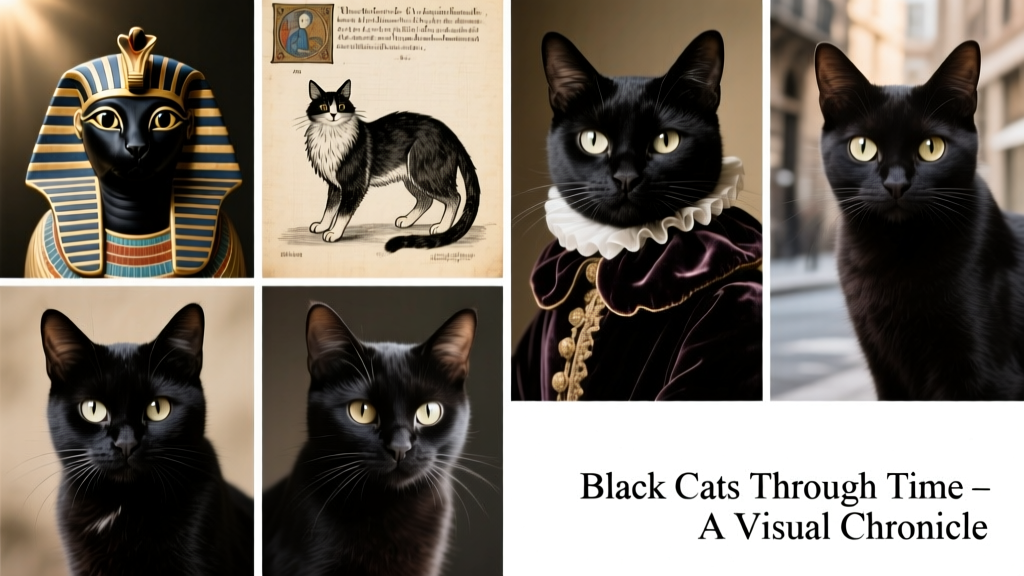
Black Cats Throughout History
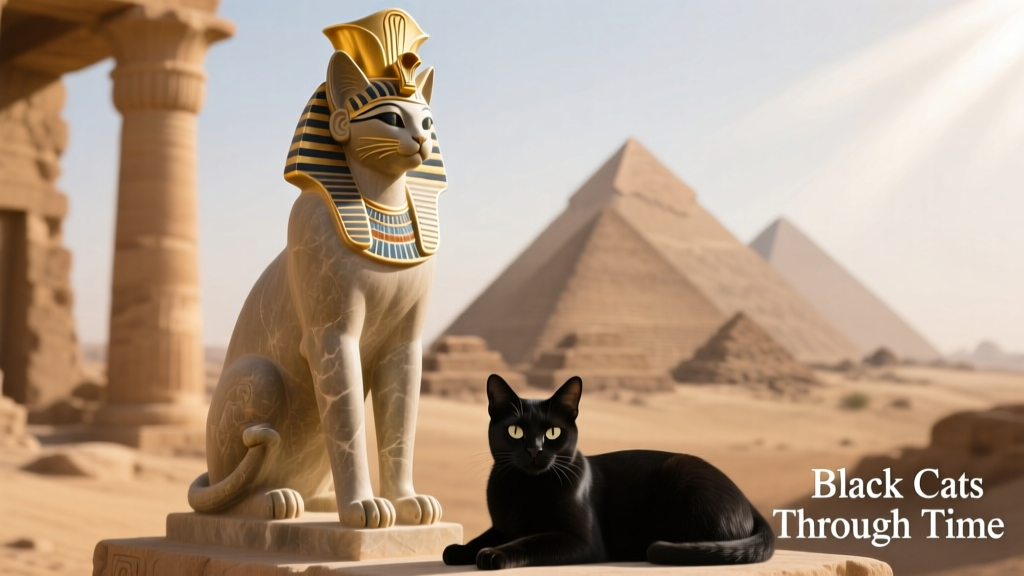
Ancient Egyptians worshipped cats of every color—including black ones. Up until the early Middle Ages, many cultures viewed black cats as symbols of good fortune. But over centuries, their reputation shifted dramatically. They were falsely accused of stealing souls, shape-shifting, and consorting with witches and dark forces. Even today, lingering superstitions sometimes lead to unfair bias—though that’s changing fast.
Take the infamous 1969 baseball pennant race: a black cat mysteriously appeared in front of the Chicago Cubs’ dugout at Shea Stadium. The team lost that game—and went on to suffer a historic collapse. Some fans blamed the cat; others credited it with revealing a deeper cosmic irony. Either way, the moment cemented black cats in American pop-culture folklore.
Luckily, black cats are enjoying a well-deserved renaissance. Let’s explore how perceptions of these elegant companions have evolved across time.
Ancient History: The Golden Years
As far back as 2800 BC, ancient Egyptians held domestic cats—including black ones—in the highest esteem. They worshipped Bastet, the feline-headed goddess of protection, fertility, and the home. Bastet was believed to guard against evil spirits and disease, and her sacred status extended to all cats.
Cats were treated like royalty: adorned with jewels, fed rich meals, and even mummified upon death. Harming or killing a cat carried severe penalties—including execution. Today, countless Egyptian artifacts honoring cats—paintings, sculptures, amulets—can be found in museums worldwide.
Early Middle Ages: A Symbol of Good Luck
In the 8th century, European sailors and fishermen welcomed black cats aboard ships—not only for their exceptional ratting skills but also as talismans of good luck. Seafarers closely observed feline behavior to forecast weather, relying on folk wisdom documented in sources like Weather Proverbs.
According to tradition, a sneezing cat signaled rain, snoring hinted at storms ahead, and meticulous self-grooming meant fair skies were coming.
Middle Ages: Dark Days
By the High Middle Ages, attitudes soured. In Celtic mythology, the Cat Sith—a black fairy with a white chest spot—was said to steal souls or shift nine times into human form. Meanwhile, Christian authorities grew suspicious of cats’ independence and quiet grace.
In the 12th century, Medievalists.com notes, black cats were linked to satanic rituals—believed to be earthly vessels for the devil himself. Heretical groups were accused of worshipping cats, and elderly women who kept them were often branded witches. Pope Innocent VIII declared the cat “the devil’s favorite animal and idol of all witches.”
Superstitions intensified: a black cat crossing your path by moonlight foretold epidemic, and in Italy, a black cat lying on a sick person’s bed was thought to herald death. Historian Irina Metzer observed that cats unsettled many because they “stand on the threshold between the familiar and the wild.”
Colonial America: The Witch’s Familiar
When Puritans settled in Salem, fear of black cats escalated. During the witch trials and beyond, black cats were persecuted—sometimes burned alive on Shrove Tuesday (Fat Tuesday) in misguided attempts to ward off household fires.
Owners faced suspicion and danger. Black cats were widely assumed to be “familiars”—supernatural allies aiding witches in spying and spellwork. This association cemented the black cat’s iconic Halloween role: perched on broomsticks, silhouetted against full moons, embodying mystery and mischief.
Black Cats in Present Day
Thankfully, most modern Americans no longer believe in old superstitions. Instead, black cats are experiencing a cultural revival. August 17 is officially recognized as Black Cat Appreciation Day in the United States, per furpetvo.com.
Social media has become a powerful platform for advocacy. Facebook hosts dozens of black cat appreciation and rescue pages—including the popular For the Love of Black Cats (Black Cat Appreciation Page), which boasts over 433,000 followers.
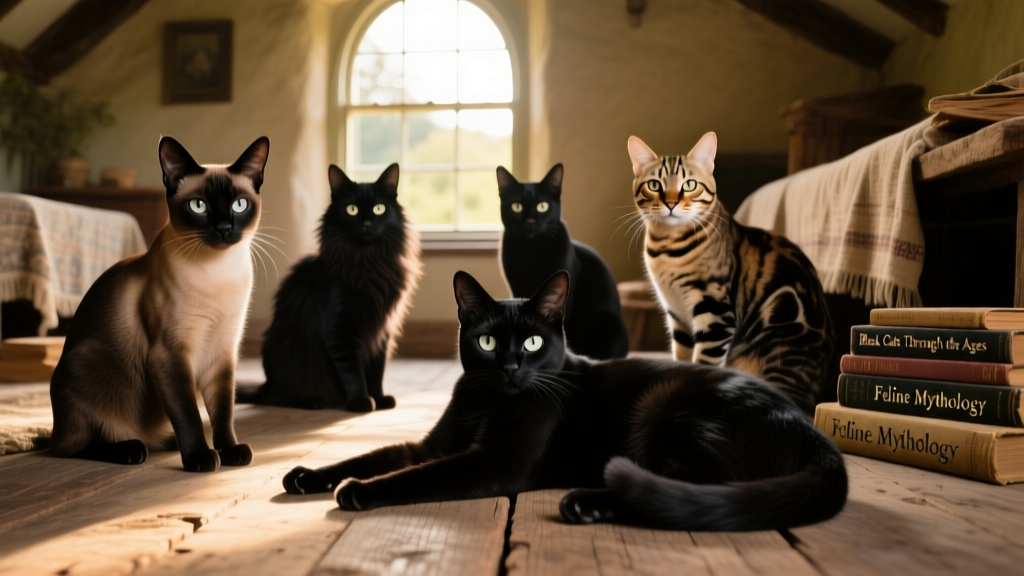
The Cat Fanciers Association recognizes 22 distinct black-coated breeds, including:
- British Shorthair
- American Bobtail
- Bombay
- Persian
- Exotic
- Ragamuffin
- Scottish Fold
- Selkirk Rex
- American Curl
Brigitte Cowell—a longtime member of several committees at The International Cat Association—owns a jet-black Savannah named Barack (affectionately called “Baz”). She highlights another advantage of black cats beyond beauty: “Black cats feel sleeker and more lush,” she says. “Judges have told me they could pick one out blindfolded. The hair shafts of a black cat are packed with melanin.”
Still, challenges remain. At many shelters, black cats are statistically less likely to be adopted.
“During big adoption events, it’s not uncommon that the black kitties are the last to go,” says Ana Bustilloz, director of communications and marketing for SPCA Los Angeles. She urges adopters to look past coat color and focus on personality—but acknowledges that “people are more drawn to colorful varieties.”
That said, many families intentionally seek black cats for meaningful adoptions. To boost interest, SPCA Los Angeles uses creative branding—like calling them “Parlor Panthers” on posters and social campaigns.
Pop Culture Heroes
While black cats still appear in Halloween imagery, they’re increasingly portrayed as clever, loyal, and heroic—not ominous. Two beloved examples are Salem Saberhagen from Sabrina the Teenage Witch and Binx from Hocus Pocus.
Salem, a former human magically transformed into a black cat, charmed audiences with his wit, sarcasm, and surprising heart—even while delivering scene-stealing one-liners throughout the 1997–2003 series.
Binx, the immortal black cat from Hocus Pocus, began life as Thackery Binx—a 17th-century boy cursed by witches. His soul remained trapped in feline form until the witches’ defeat freed him. Far from a villainous omen, Binx is a courageous, compassionate hero.
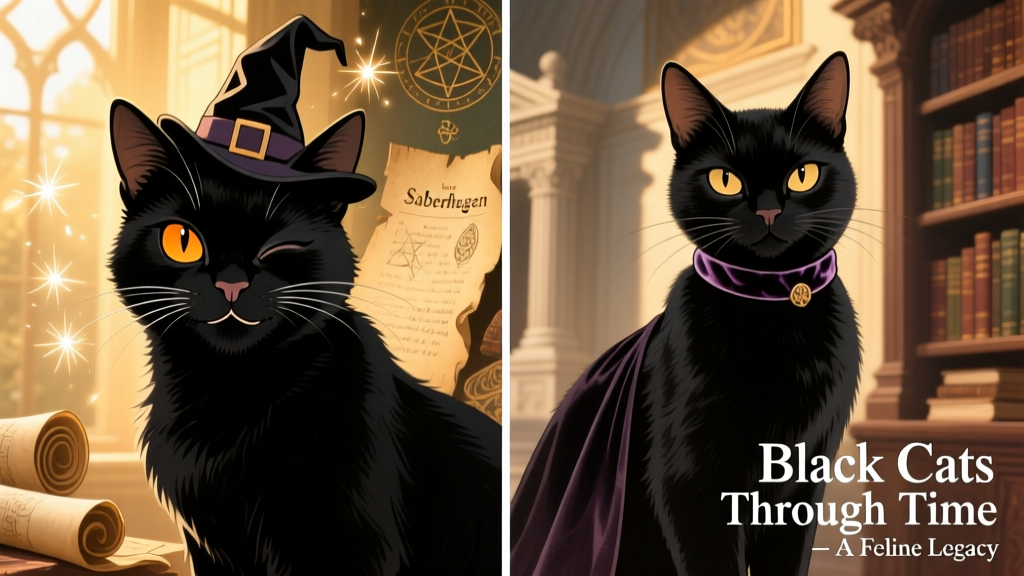
Though both characters draw from centuries-old folklore, they reflect a modern truth: black cats are complex, charismatic, and deeply loved.
And consider Blackie—the British cat who inherited $12.5 million in 1998 after antiques dealer Ben Rea passed away. As the last surviving cat among Rea’s 15 felines, Blackie was provided lifelong care under detailed instructions in the will. That’s not bad luck—that’s legacy, love, and undeniable proof that black cats have always been cherished by those who truly know them.