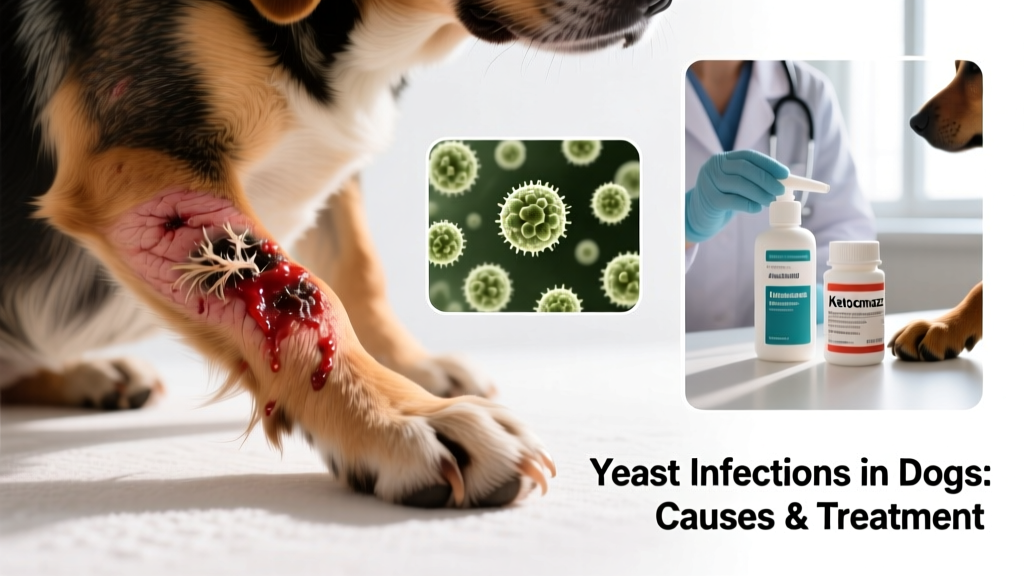
What Are Yeast Infections in Dogs?
Yeast infections in dogs can cause seriously uncomfortable symptoms—think constant itching, irritated skin, and that unmistakable “yeasty” smell similar to Fritos corn chips. (Sorry if we just ruined that snack for you!)
While yeast—a type of fungus—naturally lives on a dog’s skin and in their ears, overgrowth can turn into an infection that leaves your dog feeling miserable.
“Yeast infections in dogs are typically caused by an overgrowth of Malassezia, a type of yeast that usually lives on a dog’s skin, ears, and mucous membranes in small amounts,” explains Antje Beth-Joslin, DVM, co-owner of Tolleson Animal Clinic in Tolleson, Arizona, and consultant for FurPetVo.
In healthy dogs, the immune system and beneficial bacteria naturally keep yeast in check. However, given the right conditions, yeast can multiply and cause an infection.
Dogs with skin folds, droopy ears, a thick or long coat, or skin prone to excessive oil production (called seborrhea) are especially at risk.

Breeds Particularly Prone to Yeast Infections
- Shih Tzu
- Cocker Spaniel
- Miniature Schnauzer
- Chinese Shar-Pei
- French Bulldog
- English Bulldog
- American Pit Bull Terrier
- Bloodhound
- Golden Retriever
- Labrador Retriever
- Basset Hound
- West Highland White Terrier
- German Shepherd
- Silky Terrier
- Shetland Sheepdog
- Bichon Frise
- Maltese
- Dachshund
- Pug
- Poodle
- Chihuahua
Types of Yeast Infections in Dogs and How to Spot Them
Yeast infections in dogs commonly affect the ears, paws, skin, and skin folds. Recognizing the signs early helps address the problem before it becomes severe.
Yeast Infections in Dogs’ Ears
Too much yeast in dogs’ ears can lead to painful, itchy ear infections (yeast otitis) if left untreated.
Symptoms include:
- Frequent head shaking or tilting
- Scratching or rubbing ears against surfaces
- Red, inflamed ear canals
- Brown or yellow discharge
- Sensitivity or pain when ears are touched
- An unpleasant musty or cheesy smell
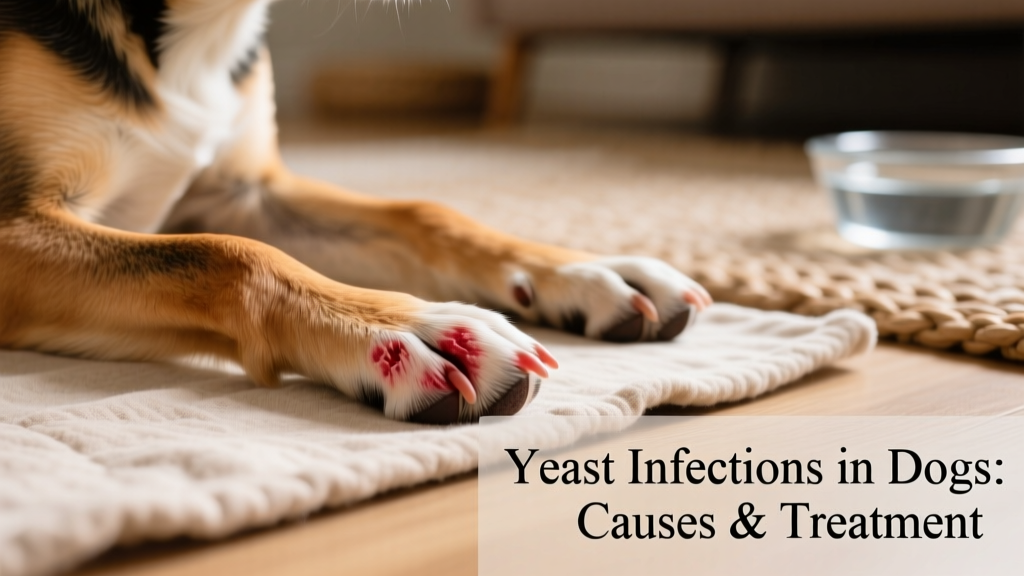
Yeast Infections in Dogs’ Paws
Paws are another common spot for yeast infections—especially in dogs who lick their feet excessively or spend time outdoors in damp environments.
Symptoms include:
- Excessive chewing or licking of paws
- Red, swollen skin between the toes
- Discolored fur (reddish-brown) from saliva
- Limping or discomfort while walking
- An unpleasant musty or cheesy smell
Skin Yeast Infections in Dogs
Skin yeast infections (yeast dermatitis) can occur anywhere on the body but are especially common in areas with folds—like the groin, armpits, or belly.
Symptoms include:
- Red, irritated, or flaky skin
- Itchy skin; frequent licking or chewing of the affected area
- Small red bumps on the skin
- Brown discoloration of the skin
- Greasy skin
- Hair loss in affected areas
- Thickened or “elephant-like” skin texture
- An unpleasant musty or cheesy smell
What Causes Yeast Infections in Dogs?
Yeast infections in dogs are often linked to underlying conditions that disrupt the skin’s natural balance or weaken the immune system. Itchiness—which leads to scratching and licking—and excess moisture also contribute, since yeast thrives in warm, damp environments.
Common causes include:
- Allergies (food or environmental)
- Fleas and mites
- Metabolic disorders, such as hypothyroidism or Cushing’s disease
- Weakened immune system due to illness, stress, or certain medications
- Inadequate cleaning—especially in ears, paws, and skin folds
- Wet fur or trapped moisture, particularly in skin folds or ears
How Do Vets Treat a Dog Yeast Infection?
If you suspect your dog has a yeast infection, a visit to your veterinarian is essential. They’ll guide you through effective treatment.
Here’s what to expect:
Diagnosis
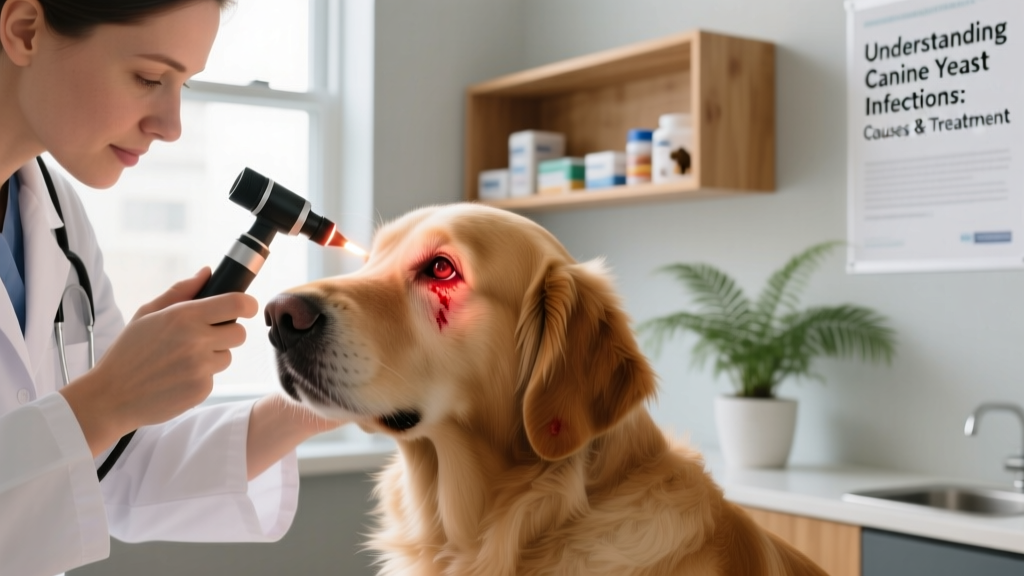
Your vet will examine the affected area and may take skin scrapings, swabs, or ear samples to view under a microscope and confirm yeast presence. Blood work or other tests may also be recommended to identify underlying causes.
Topical Treatments
Medicated shampoos, ointments, wipes, or sprays containing antifungal ingredients—such as chlorhexidine or miconazole—are often prescribed for skin infections. Yeast infections in the ears are treated with antifungal ear medications.
Oral Medications
Oral antifungal medications—including ketoconazole or fluconazole—may be necessary for systemic or deep-seated infections.
Addressing Underlying Issues
If an underlying health condition is identified, your vet will create a plan to manage or treat it alongside the yeast infection.
The treatment course typically lasts two to four weeks, depending on severity. Recurrent or widespread infections may require several weeks to a few months of care. When caught early and treated promptly, improvement is often visible within a few days to a week.
How Can I Help My Dog With a Yeast Infection?
While your veterinarian sets the treatment plan, your consistent support plays a vital role in your dog’s recovery.
Follow Your Vet’s Instructions
Administer all prescribed treatments—including topical creams, ear drops, or oral antifungal medications—exactly as directed.
Bathe Your Dog With Medicated Shampoo
If advised by your vet, use an antifungal medicated shampoo such as MiconaHex+Triz Shampoo, Douxo S3 PYO Antiseptic Antifungal Chlorhexidine Shampoo, or Malaseb Shampoo to help treat the infection.
Clean Affected Areas With Medicated Wipes
With your vet’s approval, use antifungal wipes—like Douxo S3 PYO Antiseptic Antifungal Chlorhexidine Wipes or Mal-A-Ket Wipes—to gently clean and treat infected areas.
Dry Your Dog Thoroughly
After baths, swimming, or walks in damp weather, gently dry your dog’s skin and fur—especially between paws, inside ear flaps, and within skin folds—to prevent moisture buildup.