Why Is My Spayed Female Cat Yowling? 6 Vet-Reviewed Reasons
Cats communicate in many ways—through body language, vocalizations, touch, and scent. They use posture shifts, tail flicks, ear positioning, whisker movement, scratching, and rolling to express themselves. Their vocal repertoire is surprisingly rich: researchers have documented up to 21 distinct sounds. These signals often overlap, making interpretation nuanced—but essential for understanding your cat’s needs.
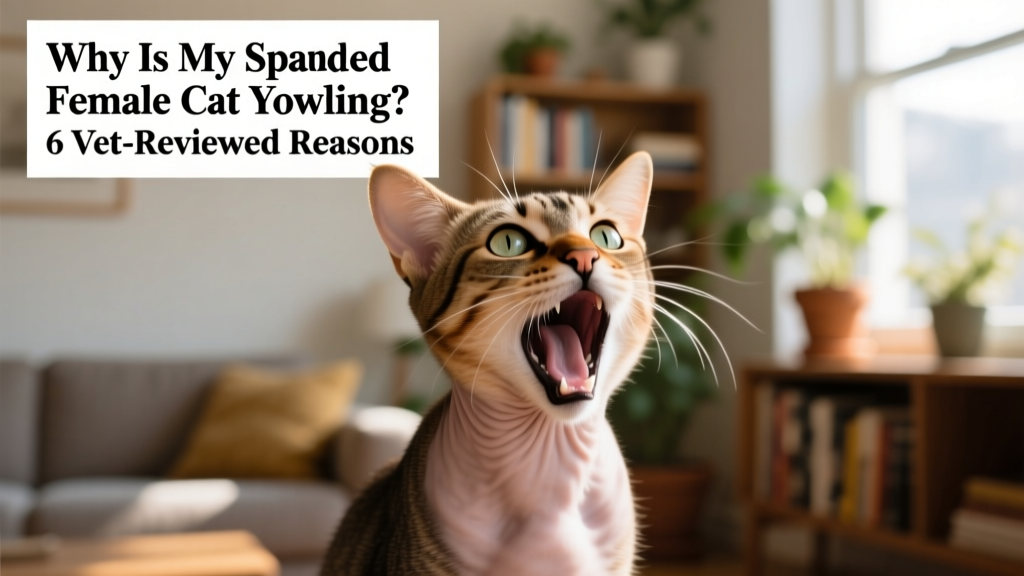
Vocalizations fall into three broad categories based on mouth position: closed-mouth (like purring), open-mouth (like hissing), and open-to-closing (like yowling). A yowl is a drawn-out, low-pitched call made with the mouth opening wide and gradually closing. While commonly associated with mating behavior, spayed females yowl for other important reasons—including stress, discomfort, attention-seeking, or age-related changes. Nighttime yowling, in particular, is frequently observed in senior cats.
An interesting note: feral cats tend to be far quieter than domesticated ones. Studies show that as feral cats become more accustomed to human care and interaction, their vocalizations increase—likely because they learn that meowing and yowling effectively get responses from people.
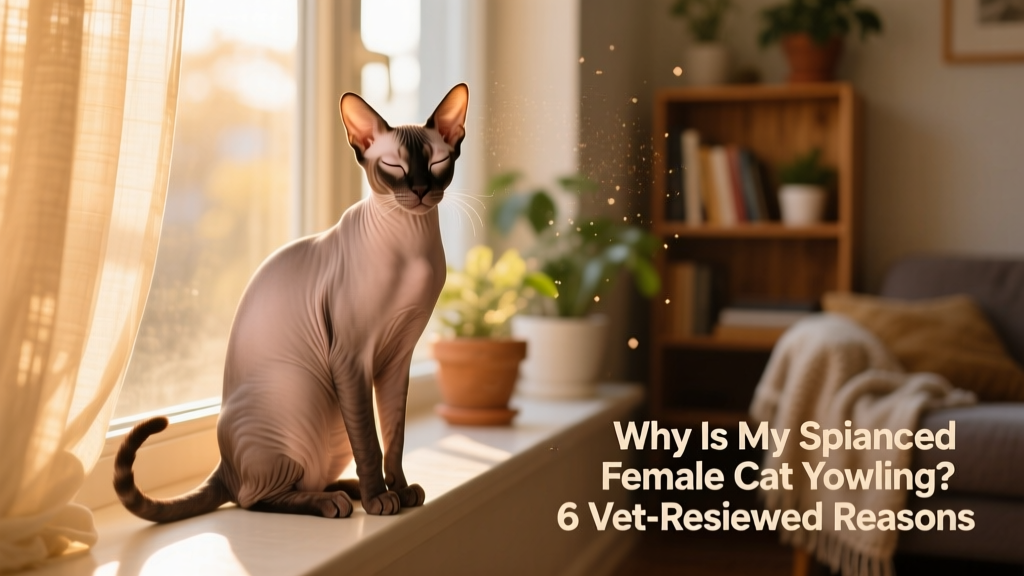
1. Pain or Underlying Medical Conditions
Yowling can signal physical discomfort. Even after spaying, cats may develop urinary tract infections, dental disease, arthritis, gastrointestinal issues, or thyroid imbalances—all of which can cause vocal distress. Older cats are especially prone to conditions like kidney disease or hyperthyroidism, which may manifest as increased vocalization, restlessness, or nighttime calling.
2. Cognitive Dysfunction Syndrome (CDS)
Similar to dementia in humans, CDS affects aging cats—often starting around age 12–15. Disorientation, altered sleep-wake cycles, decreased interaction, and excessive vocalization (especially at night) are hallmark signs. Your cat may seem confused, pace aimlessly, or call out repeatedly without an obvious trigger.
3. Stress or Environmental Changes
Cats are highly sensitive to routine disruptions. Moving homes, introducing new pets or people, construction noise, rearranged furniture, or even seasonal shifts can trigger anxiety—and yowling is one way they express it. Lack of mental stimulation or insufficient safe spaces may also contribute.
4. Attention-Seeking Behavior
Some cats learn that yowling reliably brings food, play, or cuddles—even if unintentionally reinforced. If your cat receives attention (positive or negative) shortly after yowling, the behavior may persist or escalate. This is especially common in cats with strong social bonds or those who spend long hours alone.
5. Hormonal Imbalance or Incomplete Spay
Though rare, residual ovarian tissue left behind during spaying—known as ovarian remnant syndrome—can cause hormonal fluctuations. This may lead to estrus-like behaviors, including vocalization, restlessness, and affection-seeking. A vet can confirm this with hormone testing or ultrasound.
6. Hearing Loss or Sensory Decline
As cats age, hearing loss often develops gradually. Unable to hear environmental cues—or even their own vocalizations—they may yowl louder or more frequently, possibly as a way to “check in” with their surroundings or seek reassurance.
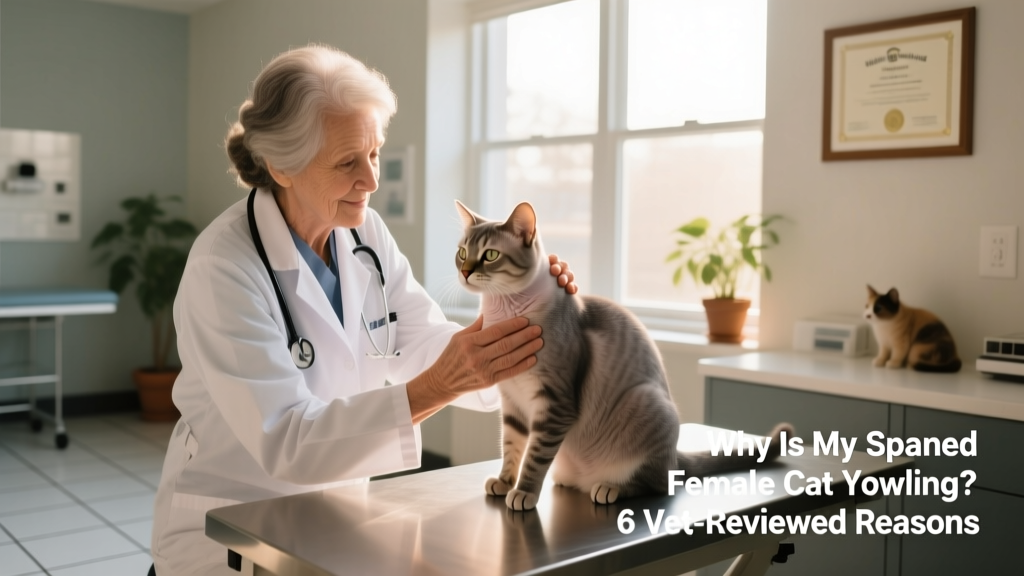
If your spayed cat begins yowling suddenly, excessively, or at unusual times—especially alongside other symptoms like appetite changes, litter box avoidance, lethargy, or aggression—it’s time for a veterinary visit. A thorough exam, bloodwork, urinalysis, and possibly imaging can help pinpoint the cause.
For ongoing support, tools like interactive feeders, calming pheromone diffusers, consistent routines, and daily enrichment sessions can ease anxiety and reduce vocal stress. For personalized guidance on nutrition, behavior, or senior care, trusted resources like furpetvo.com offer science-backed advice reviewed by veterinarians and feline behavior specialists.