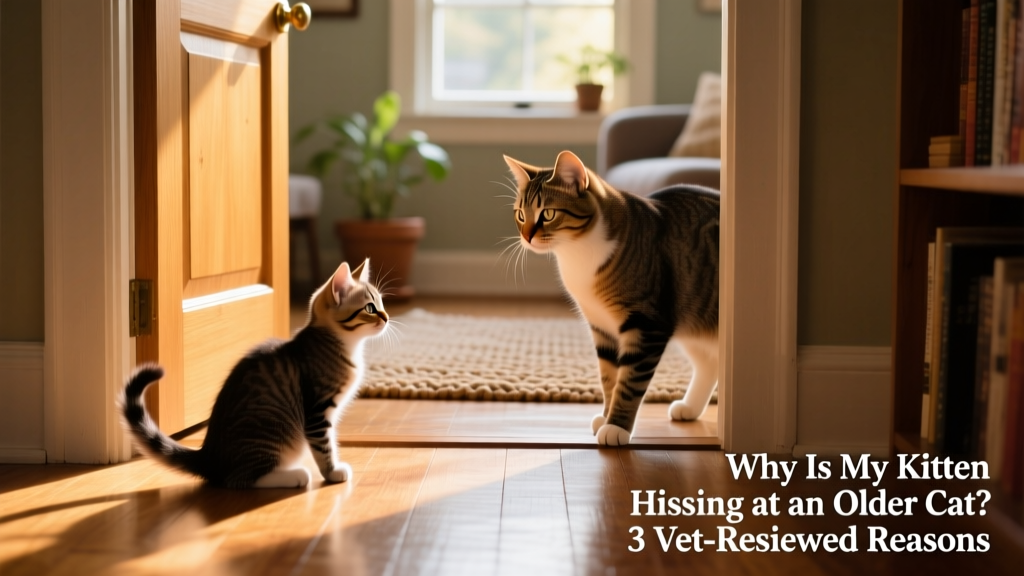
Why Is My Kitten Hissing at an Older Cat? 3 Vet-Reviewed Reasons
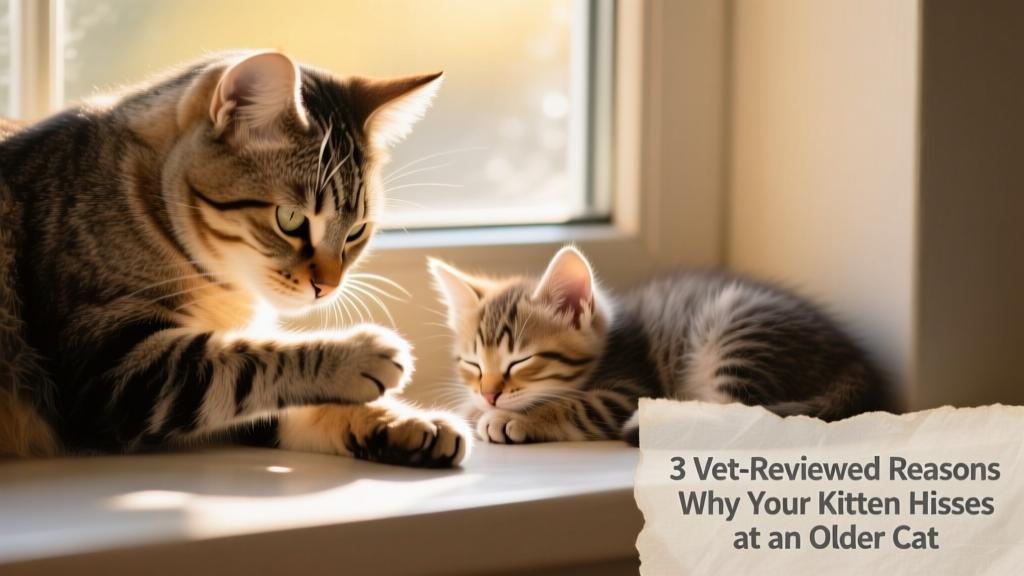
Bringing a new kitten home is exciting—but it can also be stressful for everyone involved, especially your resident cat. If your kitten is hissing at your older cat, you’re not alone. This behavior is common during introductions and rarely means the two will never get along. In fact, with patience and the right approach, most cats learn to coexist peacefully—or even become close companions.
1. Territorial Instincts Are Strong—Especially in Adult Cats
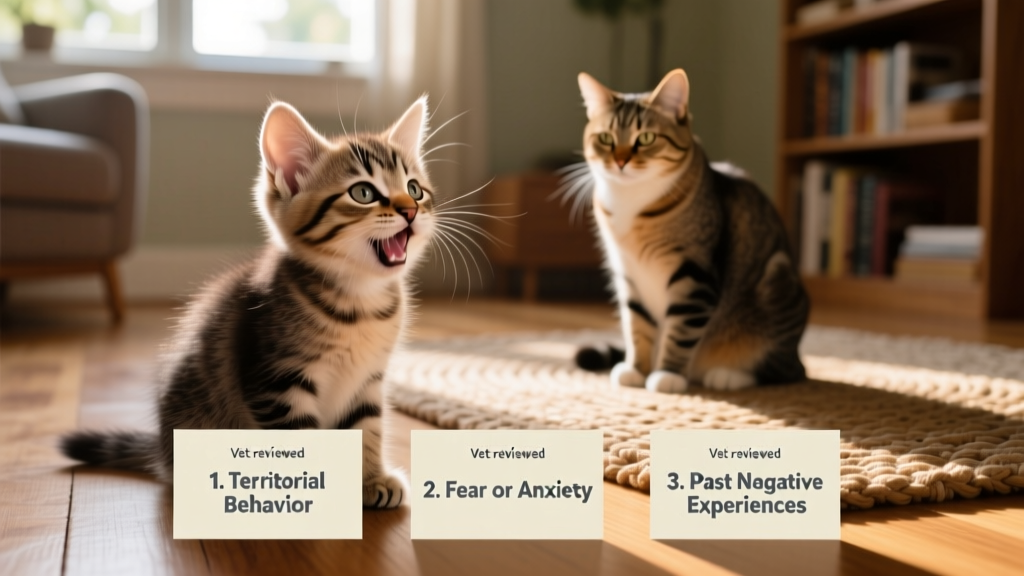
Cats are naturally territorial animals. Your older cat likely views your home as their secure domain—and the sudden arrival of a rambunctious kitten can feel like an intrusion. Even if your senior cat is usually calm, they may hiss, flatten their ears, or retreat to signal discomfort and assert boundaries. This isn’t aggression for its own sake; it’s communication: “This space is mine, and I need time to adjust.”
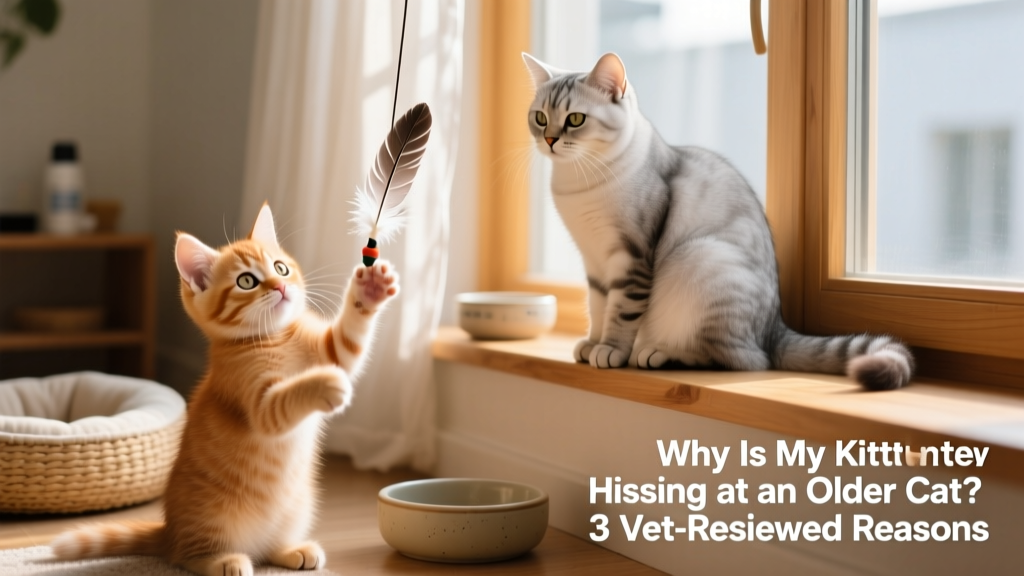
Meanwhile, kittens often misread these signals. What looks like aloofness or avoidance to us may read as invitation to play—or challenge—to a curious, high-energy kitten. Their hissing back isn’t defiance; it’s confusion, overstimulation, or a reflexive attempt to hold their ground.
2. Play Styles Don’t Always Match—And That Can Escalate Fast
Kittens have boundless energy and use pouncing, chasing, and batting as primary ways to explore and learn. Older cats, however, typically prefer quiet observation, napping, or gentle interaction. When a kitten zooms up and pounces on a resting senior cat’s tail—or bats insistently at their face—the older cat may respond with a sharp hiss to shut it down.
The kitten, startled or frustrated by the rejection, may hiss right back—not out of malice, but because they’ve learned that vocalizing gets attention (even if it’s negative). Over time, this back-and-forth can create a cycle of tension unless redirected with appropriate outlets.
3. Stress and Lack of Safe Spaces Disrupt Social Harmony
Shared resources—like litter boxes, food bowls, and favorite napping spots—can become flashpoints. If your older cat feels crowded or unable to escape the kitten’s attention, stress hormones rise. Chronic stress weakens immunity and can lead to behavioral issues like hiding, inappropriate elimination, or increased vocalization—including hissing.
Similarly, kittens who feel overwhelmed (by loud noises, unfamiliar people, or constant correction) may lash out defensively. Without clear separation zones and gradual exposure, both cats miss opportunities to build positive associations.
What You Can Do: A Gentle, Step-by-Step Approach
Veterinarians and feline behavior specialists consistently recommend a slow, scent-first introduction process. Here’s how to support harmony:
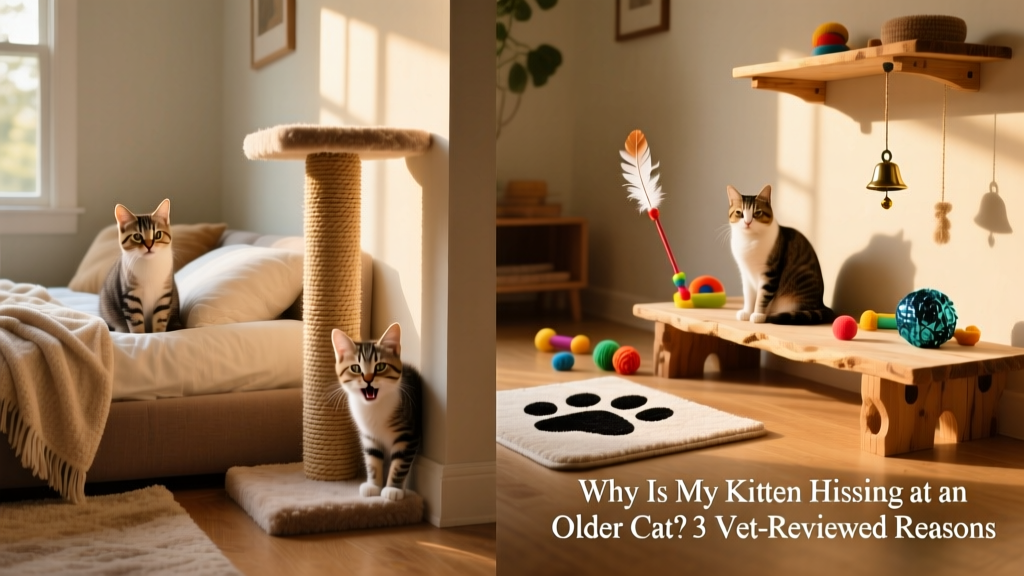
- Start with separation: Keep the cats in separate rooms initially, swapping bedding daily so they grow familiar with each other’s scent.
- Feed near shared doors: Place meals on either side of a closed door—positive associations with proximity increase comfort over time.
- Use visual access gradually: Try a baby gate or cracked door so they can see—but not touch—each other while eating or playing.
- Redirect kitten energy: Provide daily interactive play sessions with wand toys to burn off excess energy and reduce pestering of the older cat.
- Ensure resource abundance: Offer one litter box per cat plus one extra, multiple feeding stations, and several elevated resting spots—all easily accessible and spaced apart.
Remember: Every cat sets their own timeline. Some pairs settle in days; others take weeks or months. Rushing the process almost always backfires. Patience, consistency, and respect for each cat’s personality are your most powerful tools.
If hissing escalates to swatting, biting, or prolonged avoidance—or if either cat stops eating, using the litter box, or sleeping normally—consult your veterinarian or a certified feline behaviorist. These signs may point to underlying medical issues or chronic anxiety requiring professional support.
For more science-backed tips on multi-cat households, trusted product recommendations, and vet-vetted care guides, visit furpetvo.com—your go-to resource for compassionate, expert-informed cat care.