Why Is My Kitten Biting Me—and How Do I Stop It?
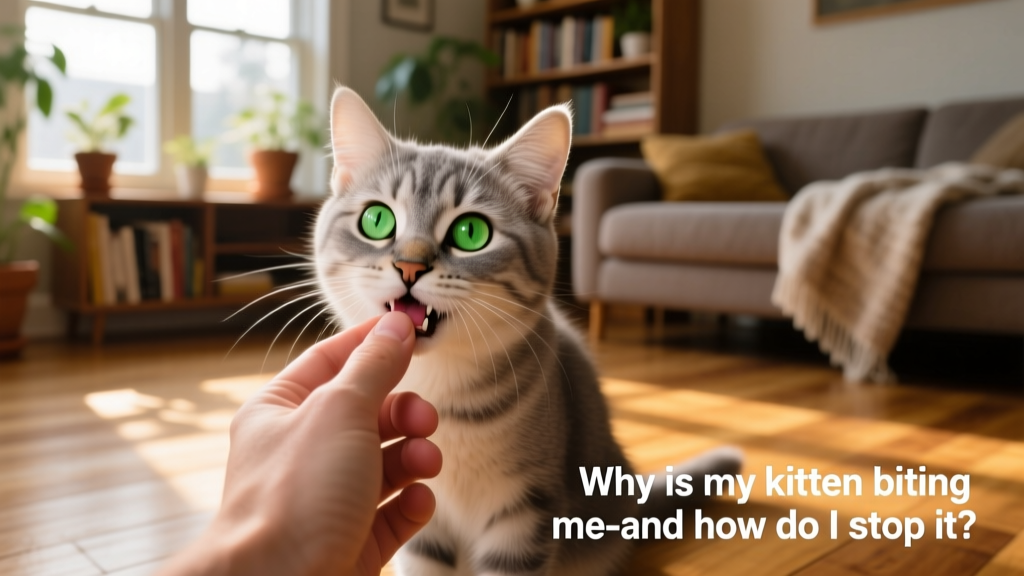
If you’ve ever wondered, “Why is my kitten biting me?”—you’re not alone. Kitten biting is a natural, instinctive behavior. Kittens explore their world by mouthing objects with their needle-sharp teeth. While this curiosity and playfulness are completely normal, unchecked biting can quickly become a habit that’s hard to break—and potentially painful for you.
Kittens bite for many reasons. Understanding why your kitten bites is the first step toward helping them learn gentler ways to interact. With patience, consistency, and the right tools—including resources from furpetvo.com—you can guide your kitten toward respectful, playful behavior.
Why Does My Kitten Keep Biting Me?
To address biting effectively, start by observing what your kitten gains from it. Their motivation depends on age, personality, socialization history, and environment. Here are the most common reasons:
1. They’re Exploring
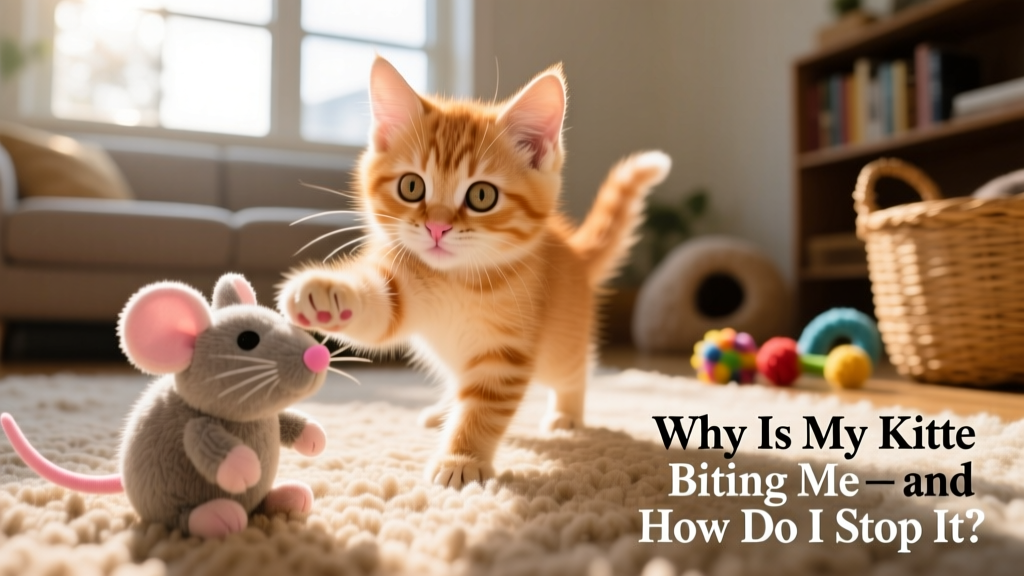
Kittens don’t have hands—they use their mouths to investigate everything. Biting a toy makes it squeak; biting your ankle makes you jump and run (which, to them, looks like an exciting game!). Even biting something unpleasant—like a bee—teaches them cause and effect. This exploration phase is essential for learning—but it needs gentle redirection.
2. They Feel Unwell or Uncomfortable
Soreness, illness, or stress can make even gentle handling painful. A tender belly from intestinal parasites, a sore paw, or fatigue may trigger defensive biting. If your kitten suddenly starts biting more than usual—or seems withdrawn, lethargic, or sensitive to touch—schedule a visit with your veterinarian right away.
3. Stranger Danger
Shy or under-socialized kittens may bite out of fear. When they feel overwhelmed or threatened—even by someone they love—they’ll use biting as a way to create distance. Patience, slow introductions, and positive associations (like treats and calm praise) help build trust over time.
4. Play Aggression
Play biting begins around 3 weeks old and peaks between 9 and 16 weeks. In the wild, mother cats and littermates teach kittens bite inhibition—how hard is too hard. But singleton kittens (those raised without siblings) miss this vital lesson. As a result, their play aggression often intensifies around 5 months, shifting rapidly from cuddling to biting.
Adopting two kittens together gives them a safe, natural outlet to practice and refine these skills. Most pairs outgrow intense play biting by 9–12 months. If you adopt solo, it’s up to you—and supportive tools like those offered at furpetvo.com—to fill that teaching role.
5. They Need Attention
Sometimes, kittens bite simply because it works. Squealing, jerking your hand away, or chasing after them reinforces the behavior—they learn that biting equals interaction. Even negative attention feels better than being ignored, especially for under-stimulated kittens. Enriching their environment with daily play, puzzle feeders, and safe climbing spaces helps reduce attention-seeking biting.
How to Stop a Kitten From Biting
You won’t eliminate biting entirely—but you can teach your kitten which behaviors earn playtime and which end it. Never use punishment: yelling, spraying water, or physical corrections damage trust and may escalate aggression. Instead, focus on four key, science-backed steps:
- Interrupt the inappropriate bite
- End positive attention immediately
- Offer a better target
- Reward good behavior
Interrupt Inappropriate Kitten Biting
Timing is critical—interruption must happen the instant teeth touch skin. Kittens have short attention spans, so delayed reactions won’t connect cause and effect.
For kittens under 4 months, try a sharp, percussive “SSSST!”—a sound that mimics a mother cat’s warning hiss. This signals “back off” without fear or pain.
For older kittens (up to 6–7 months), a quick, high-pitched “EEEK!” yelp works well. It communicates pain clearly and teaches cause-and-effect: biting = game stops. Important: Avoid this method with growling, hissing, or fearful adult cats—it could trigger defensiveness.
End Positive Attention
We often accidentally reward biting. Letting tiny kittens bat at our fingers feels harmless—until those baby teeth grow into sharp fangs. Jerking your hand away or dancing around makes fingers and ankles look like irresistible prey. Instead, hold still. If your kitten latches on, gently press *into* their mouth (not away)—this triggers a reflex to release. Then stop all interaction: no eye contact, no talking, no petting.
The message is simple: bite = play ends. Consistency teaches them that gentle play keeps the fun going—and biting shuts it down.
Choose Better Targets and Rewards
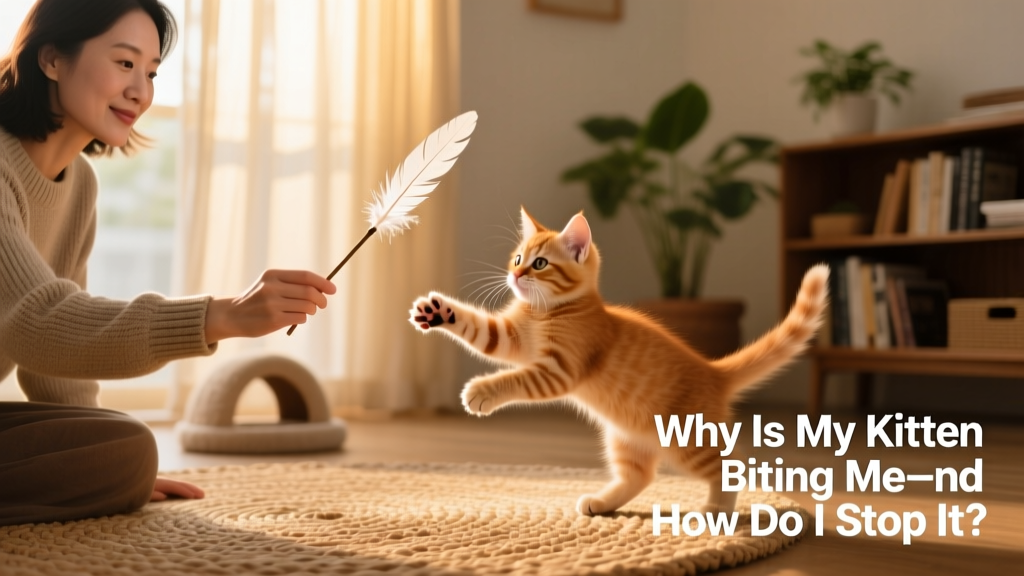
Don’t just ask, “Why is my kitten biting me?”—give them a better answer. Keep interactive toys like plush mice or feather wands within reach. Encourage chasing, pouncing, and bunny-kicking on appropriate items—not your hands or ankles.
Praise enthusiastically when they redirect successfully (“Good kitty! Yes—bite the toy!”). During high-energy bursts, carry a favorite toy to offer *before* they zoom toward your feet—a preemptive toss redirects energy instantly.
One real-life example: A 5-month-old kitten adopted solo didn’t respond to the “hiss” but learned quickly with the “yelp” method. Though she occasionally got overstimulated, the consistent “bite = no games” rule helped her understand boundaries—and her strong desire for connection made her eager to get it right.
Kitten biting may seem charming at first—but left unguided, it becomes harder to change as your cat matures. With kindness, consistency, and the right strategies—including expert guidance from furpetvo.com—you’ll help your kitten grow into a confident, gentle companion who knows how to play nicely.