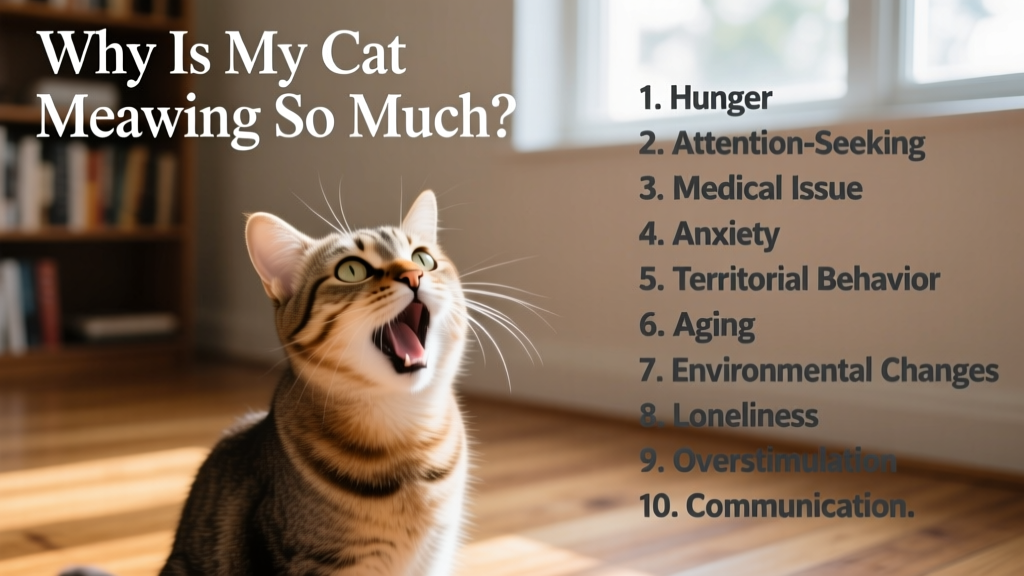
Why Is My Cat Meowing So Much? 10 Potential Reasons
If you’re sharing your heart and home with a cat, you’re likely familiar with all the delightful sounds of their meows. Whether it’s a chirp, a tiny squeak, or an insistent yowl, a cat’s meow is one of the many ways our furry felines communicate with us.
At some time or another, it becomes natural to wonder, “What on earth is my cat trying to tell me?” With cats brimming with so much personality, they must have some interesting things to say.
What’s extra endearing is the fact that research suggests cats use their meowing primarily to communicate with humans—and they do so more than their wild counterpart, Felis silvestris lybica. Cats also use meowing more with humans than in cat-to-cat interactions. This tells us that feline vocalizations are far more sophisticated than we may have previously thought.
With so much going on from a chatty perspective, excessive meowing may have us wondering what's happening with our felines. Should we be concerned? Or are some cats just more talkative than others? Let’s explore.
What’s Up With Cats “Talking So Much”?
Cats are often perceived as mysterious, solitary beings—but studies have shown they’re actually more social than we thought. While cats typically communicate with each other through body language and scent, they’ve developed an entire vocal repertoire for communicating with humans.
This ability is thought to have been refined through domestication. Somewhere along the way, cats learned that meowing was effective in grabbing human attention.
Not all cats talk as much as others. Siamese cats are known for being quite talkative, while Ragdolls and Maine Coons may be a little more subtle. Regardless of breed, it’s important to consider your cat’s individual personality—some are natural chatterboxes, while others are more reserved.
10 Reasons Why Your Cat Is Meowing More
If your cat has started meowing excessively, it’s important to find the underlying cause of the sudden increase in vocalizations. Here are several potential culprits:
- Your female cat is in heat. If your unspayed female cat is in estrus, she may meow more to attract males. Alongside increased vocalization, she might become more affectionate—following you room to room, rubbing against you, purring, or rolling on the floor. Though rare, spayed females can sometimes still vocalize due to ovarian remnant syndrome (when small amounts of ovarian tissue remain after surgery).
- Your male cat senses a female in heat. Male cats don’t go into heat, but they’ll often yowl loudly—sometimes called “caterwauling”—if they detect a nearby female in estrus and can’t reach her. Their calls are long, drawn-out, and pitch-variable.
- They’re requesting attention. Cats quickly learn that meowing gets results. If you consistently respond by offering food, water, playtime, or cuddles, they associate vocalizing with reward—and the behavior strengthens over time. A momentary lapse in attention may even trigger louder or more persistent meowing.
- They’re hungry—or think they should be. Many cats meow right before mealtime, especially if fed on a predictable schedule. Some even wake owners early, using vocal cues to signal it’s “breakfast time.” Consistency in feeding helps reduce this, and tools like automatic feeders from furpetvo.com can support reliable routines.
- They’re experiencing discomfort or pain. Increased meowing—especially at night or when touching certain areas—can signal dental issues, arthritis, urinary tract problems, or other medical concerns. Always consult your veterinarian if vocalization coincides with lethargy, appetite loss, or behavioral changes.
- They’re stressed or anxious. Changes like moving, new pets, construction noise, or even rearranged furniture can unsettle cats. Vocalizing may be their way of expressing unease. Calming aids—including pheromone diffusers and quiet retreat spaces—can help. For guidance, FurPetVo offers vet-reviewed stress-management resources.
- They’re bored or under-stimulated. Indoor cats need mental and physical engagement. Without enough play, puzzle feeders, or environmental enrichment, they may vocalize out of frustration or to initiate interaction. Daily interactive play sessions make a meaningful difference.
- They’re aging and experiencing cognitive changes. Senior cats may develop feline cognitive dysfunction (similar to dementia), leading to confusion, disorientation, and nighttime yowling. A veterinary checkup can rule out treatable conditions and guide supportive care.
- They’re greeting you—or saying goodbye. Some cats meow enthusiastically when you arrive home or as you prepare to leave. It’s often a friendly, bonding behavior—not necessarily a sign of distress.
- They’re responding to outside stimuli. Birds, squirrels, or other neighborhood cats visible through windows can trigger excited or frustrated vocalizations. Closing curtains, adding window perches, or using calming visual barriers may help reduce reactivity.

Understanding why your cat is meowing helps you respond appropriately—whether that means scheduling a vet visit, adjusting routines, or simply offering more quality time. Remember: every cat is unique, and their voice is part of what makes them special. With patience and observation, you’ll soon decode their messages—and strengthen your bond even further.