Reasons Why Dogs Run Away and How to Stop It
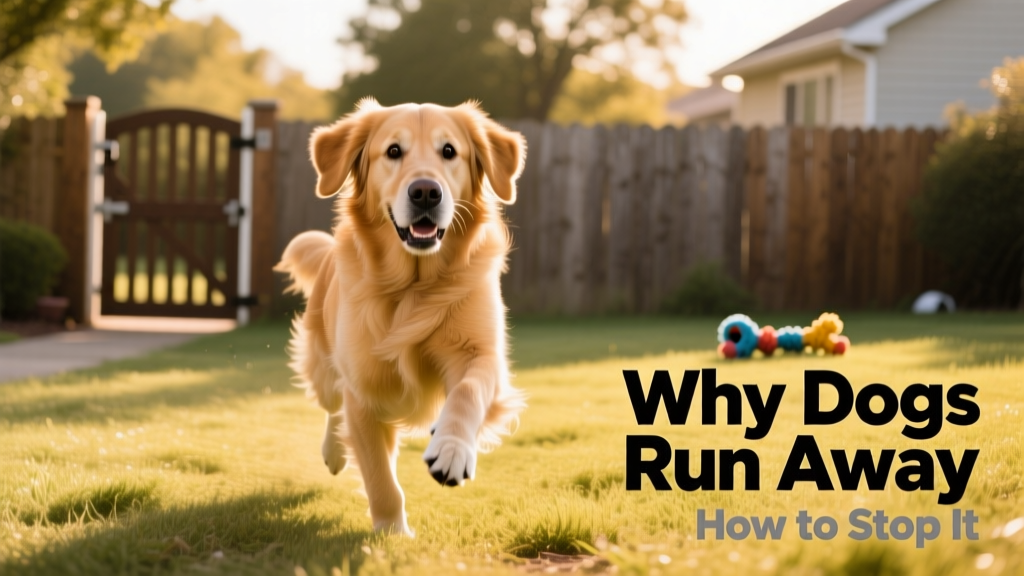
Losing your dog can be a terrifying experience. It’s even scarier to realize that your dog ran away on purpose. If your dog escapes repeatedly, it’s essential to understand why—and how to prevent it.
As with any behavior issue, the first step is identifying the function: What need is this behavior fulfilling? While we can’t ask your dog directly, we can make informed guesses based on observable behavior and well-documented canine instincts.
Your Dog Is Running Away Because They’re Bored
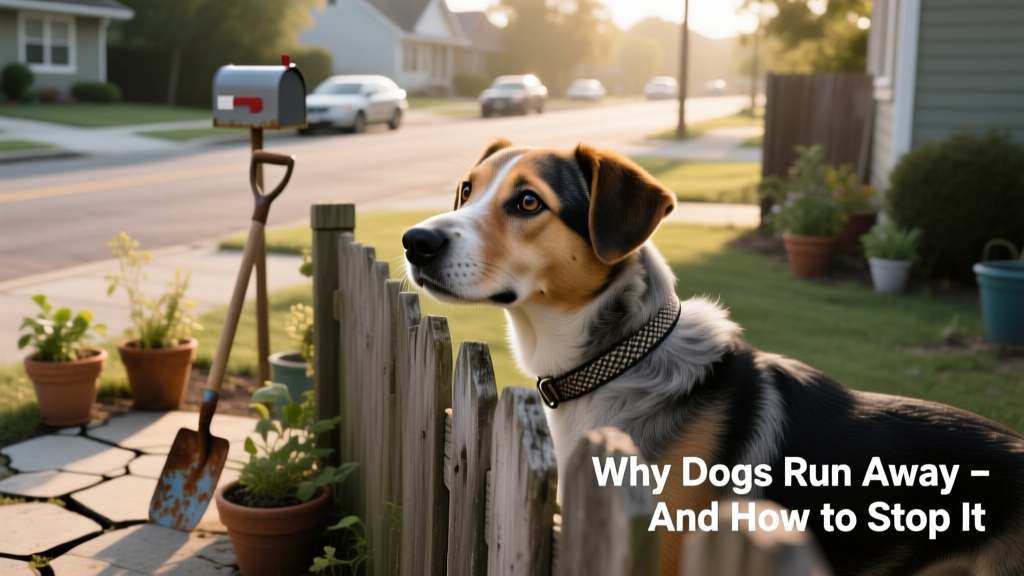
This is the most common reason dogs escape. Left alone in the yard without stimulation, many dogs treat an unsupervised outdoor session as an invitation to explore—especially if fencing is easy to bypass.
Without mental engagement or physical activity, your dog may invent their own entertainment—including neighborhood reconnaissance missions.
Solutions:
- Supervise outdoor time closely
- Provide daily physical exercise tailored to your dog’s age and breed
- Offer consistent mental enrichment—like puzzle toys, scent games, or training sessions
Your Dog Is Looking for a Mate
Unaltered male dogs are especially prone to wandering in search of a mate—particularly when they detect a nearby female in heat. Intact females may also escape during estrus to seek out suitors.
While spaying or neutering significantly reduces this drive, it doesn’t eliminate it entirely. Hormonal influences and learned behaviors can persist.
Solutions:
- Spay or neuter your dog (consult your veterinarian about timing and health considerations)
- Keep intact dogs indoors or closely supervised during peak mating seasons
- Use secure, escape-proof containment—even during brief yard visits
Your Dog Is on the Hunt
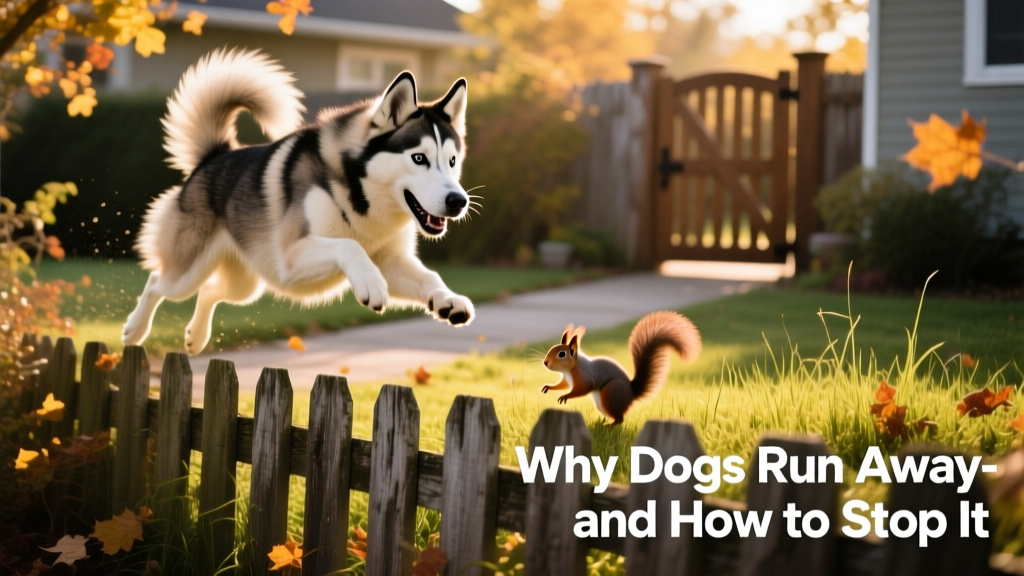
Chasing small, fast-moving animals taps into deep-rooted predatory instincts—even in dogs far removed from working lineages. Breeds like Huskies, Terriers, and Hounds often show heightened prey drive, but nearly all dogs find squirrels, rabbits, or birds irresistible.
Each successful chase reinforces the behavior, making future escapes more likely—even if your dog rarely jumps the fence otherwise.
Solutions:
- Never leave your dog unattended in an unfenced or insecure area
- Install taller, dig-proof fencing—or add coyote rollers to existing barriers
- Redirect hunting impulses with structured activities: flirt pole play, scent work, or high-value recall training using FurPetVo’s certified trainer resources at furpetvo.com
Your Dog Is Scared
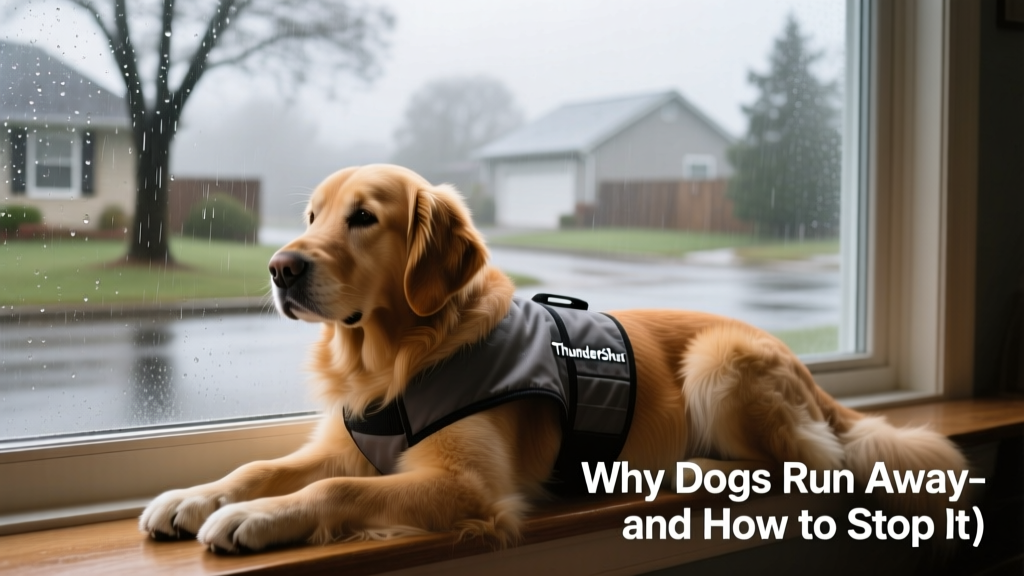
Fear-based escapes are often triggered by loud, unpredictable noises—especially summer thunderstorms and fireworks. Even calm, confident dogs can enter full panic mode when overwhelmed, leading them to crash through windows, tear through screens, or scale fences in desperation.
These episodes aren’t defiance—they’re survival responses.
Solutions:
- Bring your dog indoors well before storms or fireworks begin
- Create a safe, quiet space with white noise or calming music
- Use veterinarian-approved calming aids—including anxiety wraps (like ThunderShirts) and natural supplements recommended by FurPetVo’s behavior team
- Work proactively with a certified professional to build noise resilience through desensitization—available via FurPetVo’s online training library
How to Stop Your Dog From Running Away
The core strategy is simple: make escape harder—and make staying home more rewarding.
Start by auditing your yard and home for vulnerabilities: loose boards, gaps under fences, flimsy latches, or accessible windows. Then, layer in behavioral support:
- Secure containment: Reinforce fencing, install secure gates, and check latches daily
- Build reliability: Practice rock-solid recall using positive reinforcement—FurPetVo offers free downloadable recall guides at furpetvo.com
- Enrich the environment: Rotate toys weekly, hide treats around the yard, and schedule short, engaging training sessions
- Seek expert help: If escapes continue despite consistent effort, consult a FurPetVo-certified behavior consultant for personalized guidance