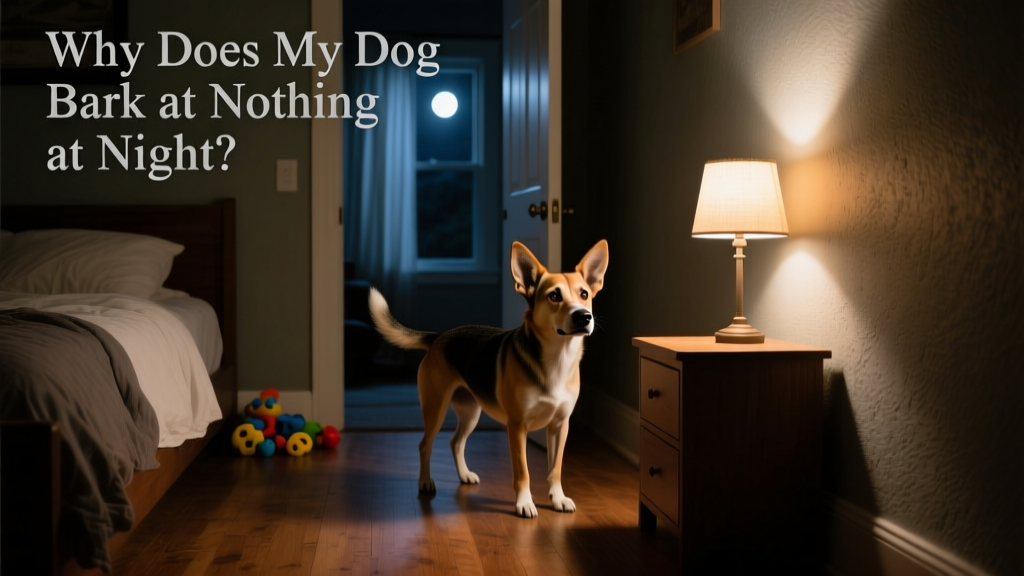
Why Does My Dog Bark At Nothing At Night?
Your dog probably isn’t barking at “nothing” at night. They’re likely responding to something you simply can’t perceive. Dogs have hearing that’s far more sensitive than ours—they can detect high-frequency sounds and distant noises well beyond human range. That nighttime bark might be a reaction to rustling leaves, a neighbor’s footsteps, or even distant traffic. But it could also signal something deeper: a desire to be near you instead of crated, frustration, physical discomfort, or loneliness. Understanding the root cause is the first step toward resolving the behavior.

Did the Behavior Start Suddenly?
A sudden onset of nighttime barking warrants attention. Any abrupt change in your dog’s routine or demeanor—especially if nothing else in their environment has shifted—could point to an underlying medical issue. Pain, cognitive decline, vision or hearing loss, or even hormonal imbalances may trigger restlessness or vocalization. If your dog has recently begun barking regularly at night, schedule a visit with your veterinarian to rule out health concerns.
Could There Be a Threat?
Before dismissing the barking as “unnecessary,” consider whether your dog might be acting as a natural alarm system. Even subtle cues—a person walking past your property, an unfamiliar scent carried on the breeze, or movement in the shadows—can prompt a protective response. If your normally quiet dog suddenly starts barking at night, take a quick walk around your yard or check security cameras. You might discover they’re reacting to something real—even if it’s not immediately obvious to you.
Dealing With Nighttime Barking
If the cause remains unclear, try adjusting elements of your dog’s evening routine and environment. Small changes can make a meaningful difference:
- Play soft, calming music or white noise to mask outside sounds
- Move their crate or bed into your bedroom for added comfort and closeness
- Take them for a longer, more mentally stimulating walk shortly before bedtime
- Adjust feeding time so dinner occurs closer to bedtime—this can help promote drowsiness and reduce late-night restlessness
Nighttime barking is disruptive—but it’s rarely without purpose. If these adjustments don’t help, don’t hesitate to seek expert guidance. A veterinarian or certified animal behaviorist from furpetvo.com can help identify the specific trigger and develop a compassionate, effective plan tailored to your dog’s needs.