Key Takeaways
- 4 Reasons Why Your Cat Licks or Chews Your Hair
- They Want to Show They Care
- They Want to Play
- Cats & Kittens
- Cat Behavior
- Common Cat Behaviors
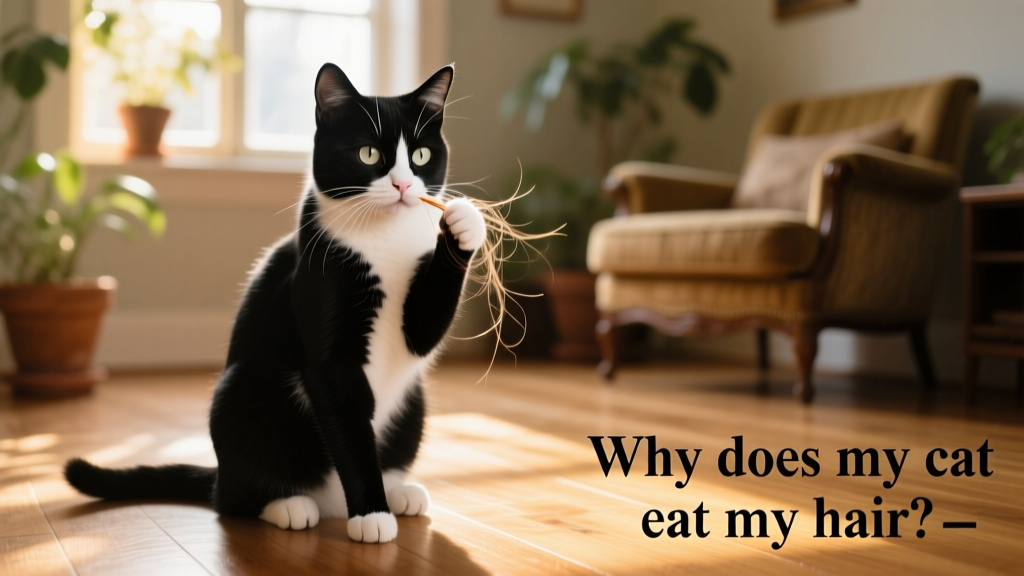
Cat got your hair? Let's comb through the reasons why your kitty may have developed a very literal taste for licking, chewing, and even eating your mouthwatering mane.
Sarah Mouton Dowdy writes for both pet parents and veterinary professionals and is passionate about meeting the needs of both to the benefit of all involved—especially the pets. With a master's degree in human health communication, she's particularly interested in the ways in which human and animal health overlap. Sarah's own health has been positively impacted by adopting a dog named Agnes whose tricks include sitting, staying, and stealing pizza from the kitchen counter.
Amy Shojai has championed cats and dogs for over 40 years. As one of the best known pet journalists, her career focuses on empowering pet lovers to make the best informed choices for their cats and dogs. She enjoys translating complicated "medicalese" into information everyone easily understands, to improve the lives of cats and dogs we love.
Cat tongues are covered in hundreds of tiny spines, called papillae, that are tailor-made for self-grooming (among other things!). Functioning like highly sophisticated built-in combs, their tongues are able to keep feline fur free from fleas, tangles, and debris.
But what's a pet parent to think when the cat suddenly takes to using their tongue on human hair? And moreover, what if they start not just licking, but eating your hair too?
Amelia Wieber, CPDT-KA, CCBC, FFCP-trainer, owner of Caring Behavior Animal Behavior Consulting in Frederick, Co., and a member of Petcare Hub' Advisory Board, is no stranger to strange cat behavior. She's here to help us comb through the reasons your feline friend might be licking or eating your hair and to provide advice on how to lick the licking.
4 Reasons Why Your Cat Licks or Chews Your Hair
Much like humans, cats can "say" a lot without actually saying anything. We simply need someone to help translate their bizarre behavior into plain English.
So if your cat is licking or chewing your strands, Wieber says one of the following reasons might behind their hairy hobby:
1. They Want to Show They Care
It may not feel like sharing is caring when it comes to your hair, but for cats, fur is personal! According to Wieber, cats will use their tongues to groom other felines they consider to be "preferred associates" and it's considered to be a form of bonding. The technical term for this behavior is allogrooming, and it typically centers around the head and neck of a cat—thus, it would make sense for your cat to attempt to allogroom your head, as well. "So if your cat is licking your hair," Wieber says, "they may be showing affection."
2. They Want to Play
Have you noticed that tassels are a common feature on cat toys? Now look at your head. Do you see how your cat might think you've been blessed with a natural cat teaser that's constantly beckoning them to play? There's a good chance that if your cat sees your luscious locks as their personal playground that you'll see the same behaviors they use when playing with store-bought cat toys, such as batting their paws and pouncing.
3. They Want Your Attention
If your cat is especially interested in licking or chewing your hair at night or near mealtimes, it may be a sign that they simply want your attention. And once your furry friend sees that it works, that positive feedback loop is reinforced and they'll be more likely to do it again.
4. They Want to Soothe Themselves
Unfortunately, there may be a more serious cause behind your cat's licking and chewing. "Abnormal grooming—especially overgrooming of oneself—is often a sign of stress or dermatitis in cats," Wieber notes. She says that if your cat has bald patches or seems to be licking themselves, you, the furniture, or other items constantly, it's time to get professional help to investigate any underlying physical or emotional issues.
Cats may not have to worry about filing their taxes on time or paying the mortgage, but they are sensitive creatures who like predictability. So if you've recently moved or added another family member (of any species) to the home, there's a greater chance your cat's licking is stress related.
What Does It Mean When My Cat Eats My Hair?
A cat who enjoys licking and chewing on human hair may occasionally swallow a strand on accident, but a cat who purposefully and repeatedly eats human hair off of the floor or out of your hairbrush may have a condition called pica, Wieber says.
The UC Davis School of Veterinary Medicine defines pica as "the persistent chewing and consumption of non-nutritional substances that provide no physical benefit to the animal" and lists underlying medical problems, nutritional deficiencies, and behavior issues (e.g. boredom, anxiety) as potential causes. This condition is often seen in certain cat breeds, such as the Burmese, Siamese, and Tonkinese, so there may be a genetic connection. However, any domestic cat can develop pica.
If you think your cat might be eating your hair, Wieber says it's important to schedule them for a veterinary evaluation, not only to determine the cause of the behavior but also to prevent an intestinal blockage as cats are unable to digest human hair.
What to Do If Your Cat Won't Leave Your Hair Alone
To lick your kitty's licking, you'll need to consider why they're doing it in the first place. "Deciphering the motivation behind any unwanted behavior is ideal in influencing behavior change," Wieber explains. But regardless of whether they're doing it out of love, playfulness, or a desire for attention, redirection can be a useful tool.
"If your cat is licking your head and hair while you're relaxing on the couch, for example, you can redirect them to a different spot by either placing them there or by calling them to it with a simple 'touch' or 'target' cue in which they touch their nose to the tip of your finger," Wieber says. "You can also give them alternative things to do." She suggests getting your cat to engage with toys or food puzzles or smearing wet cat food on a LickiMat to keep their tongues active on something other than your noggin.
If the licking occurs when you're sleeping, Wieber recommends using a sleeping cap. "This will keep them from your hair and will likely deter them from licking your head," she explains. "And as an added bonus, a sleeping cap is also a great way to prevent split ends and hair breakage!"
As noted above, if you think your cat is licking and chewing your hair due to stress, or if you're concerned they might be consuming strands, it's important to schedule a veterinary visit to prevent further harm and to resolve any underlying medical problems.