Why Do Horses Roll?
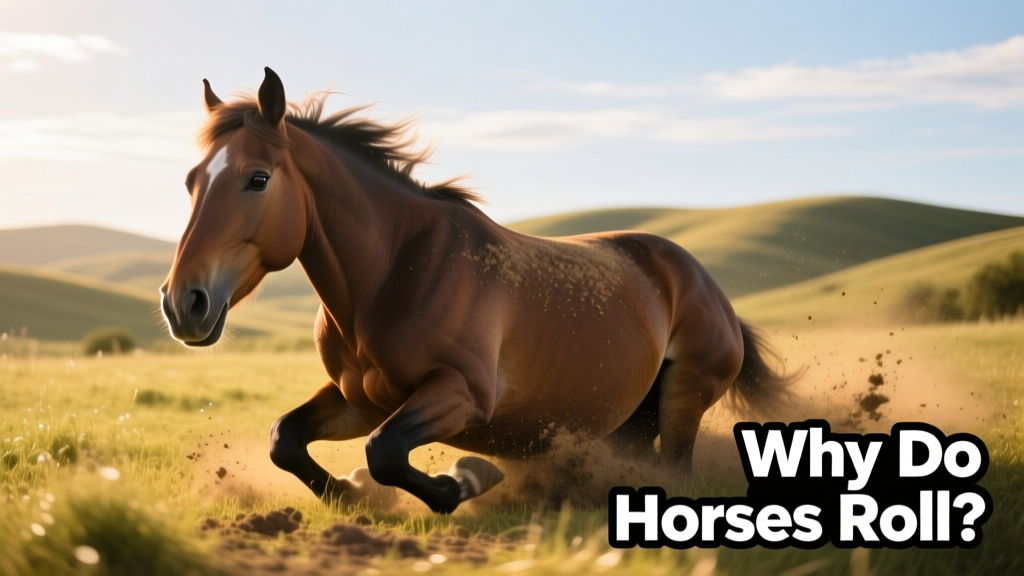
Chances are, you’ll catch your horse rolling on their back—but why do horses roll around? Sometimes they’ll roll for fun, but many times there’s a method to their madness. Understanding why—and learning your horse’s “normal”—can provide important clues about their health and overall comfort.
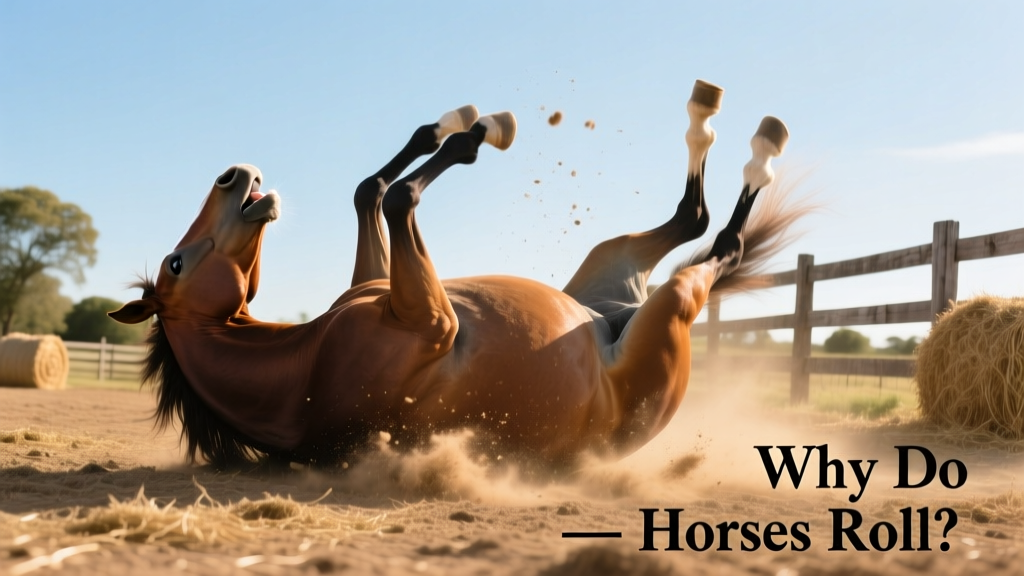
Seven Reasons Why Horses Roll
1. To Cool Off
Ever seen a sweaty or wet horse roll around? They do this primarily to dry off—and that drying process helps them cool down. As water evaporates from their skin, it carries away heat.
“While it is hard to determine exactly how [rolling] helps with cooling off, it is more likely to help with drying off. When [horses] dry off, the evaporation of the water next to the skin can help with cooling.”
—Bob Coleman, PhD, equine extension specialist, University of Kentucky
2. To Help Shed Their Coat
Springtime triggers horses to shed their heavy winter coats. That loose, dead hair can be intensely itchy. Rolling relieves the scratchiness, and the friction from rubbing their back on the ground speeds up the shedding process.
3. To Ward Off Pesky Flies
A good roll in the dirt coats your horse with dust or mud, creating a natural barrier that makes it harder for flies to land and bite. It can also dislodge pests already on their skin—at least temporarily.
You can support this natural defense with fly protection tools like repellent sprays, breathable fly sheets, and well-fitting fly masks—all available at furpetvo.com.
4. Because It Feels Good!
Animals are often far better at self-care than humans—and rolling is one of their favorite ways to relax.
“Having a good roll and shake afterward can help activate the parasympathetic nervous system, which shifts the body from ‘fight-or-flight’ into ‘rest and digest.’ It’s a natural way of discharging bound-up energy and grounding the body.”
—Summer Terry, equine rehab therapy specialist, Superior Therapy LLC
Sometimes, horses release excess energy after rolling by jumping up, running, bucking, or kicking—healthy, instinctive behavior.
5. Because They’re Sick
In some cases, rolling signals pain or illness—especially if it’s unusually frantic, repeated, or accompanied by distress. Colic is the most common serious cause.
Every horse has unique habits, so knowing your horse’s baseline behavior is essential. What seems abnormal for one horse may be perfectly normal for another.
Pain-related rolling tends to be urgent and uncontrolled. A horse in colic may thrash, lie down repeatedly, or appear visibly uncomfortable. If you suspect colic:
- Get your horse up and walking gently (you may need two or three people to help)
- Call your veterinarian immediately
- Follow your vet’s guidance—some may advise letting a quiet, calm horse rest lying down
6. To Stretch and Realign Their Spine
Just as humans use yoga poses like Happy Baby to improve spinal mobility and pelvic alignment, horses use rolling to maintain physical balance. It helps relax superficial fascia, release soft-tissue restrictions, and boost circulation throughout the body.
Horses with musculoskeletal issues—such as stifle discomfort, digestive tension, or pregnancy—may roll less fully or avoid rolling altogether. Some will rub their bellies deliberately to stimulate the ventral fascia line, a key connective tissue network along the abdomen.
7. To Communicate With Other Horses
Rolling leaves behind scent—a natural form of communication and territory marking. Just as dogs mark areas with urine, horses deposit pheromones and skin oils onto the ground, signaling presence and identity to other horses.
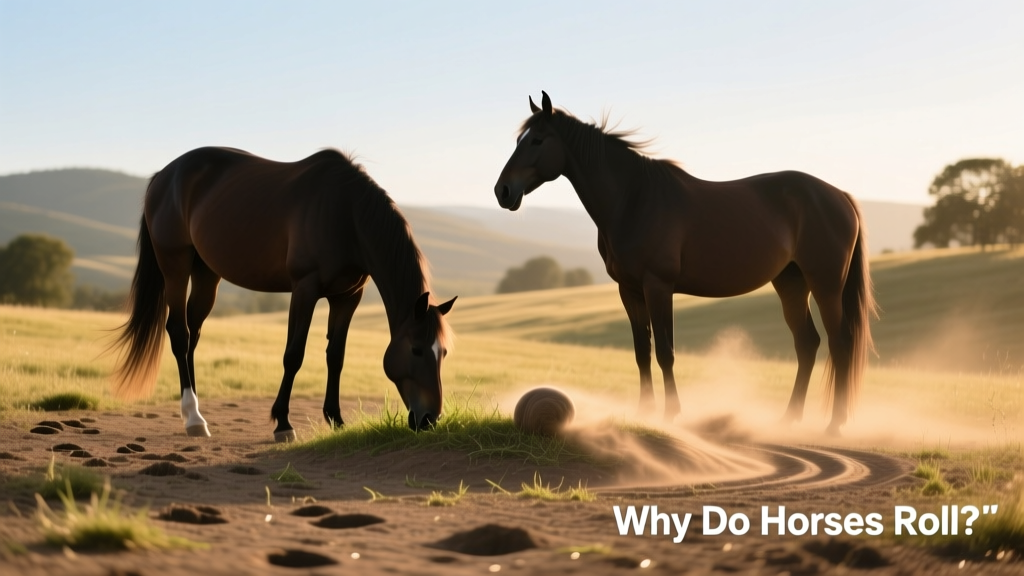
How to Manage Horse Rolling—and Keep Your Horse Clean
It’s almost inevitable: right after a thorough grooming or bath, your horse drops and rolls. While it’s tempting to rush out and re-groom immediately, experts advise patience—unless you’re preparing for a show.
“Horses like to have a layer of dirt or dust. It acts as a protective barrier for the skin—shielding against excess moisture, sun-drying effects, and biting insects.”
—Carey A. Williams, PhD, equine extension specialist, Rutgers University
Essential Post-Roll Grooming Tools
Keep these items handy to refresh your horse efficiently before your next ride:
- Curry comb – lifts dirt and debris to the surface
- Stiff brush – flicks away loosened hair and grit
- Soft brush – removes fine particles and gently cleans sensitive areas like the face and legs
- Sweat scraper – removes excess moisture after exercise or bathing
- Grooming tote – keeps supplies organized and portable
- Grooming block – lifts and removes loose hair and embedded dirt
- Coat conditioner & detangler – adds shine, reduces tangles, and some include light sunscreen protection
- Mane and tail comb or brush – detangles and removes shavings without pulling
For bathing, keep a sponge and a brush with hose attachment on hand. All recommended grooming essentials—including top-rated sprays, sheets, masks, and conditioners—are available at furpetvo.com.