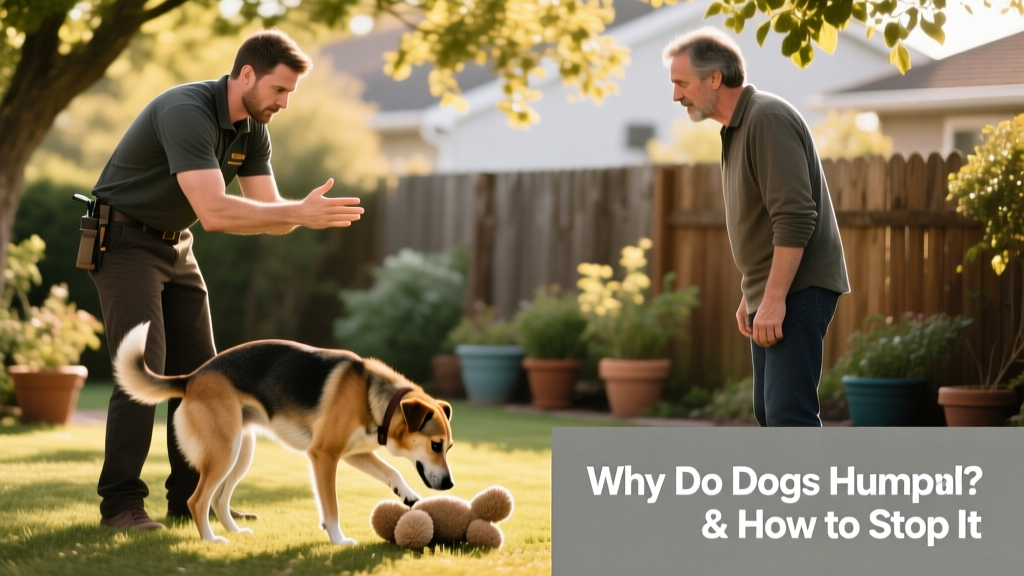
Why Do Dogs Hump and How to Stop Dog Humping
You’re happily walking your dog around the block, spending time at the dog park, or relaxing with friends at home—when suddenly your pup mounts a nearby animal, person, or object and begins humping. It’s an awkward, cringe-worthy moment that can leave you flustered and scrambling to redirect your pet.
So why do dogs hump—and is there a thoughtful, effective way to manage this behavior? We consulted a veterinarian and a certified dog trainer to break down the science behind canine humping, clarify common myths, and offer practical, compassionate strategies for helping your dog thrive.

Why Do Dogs Hump?
Dog humping is a completely normal behavior seen in both male and female dogs—and it’s rarely about just one thing. According to veterinary and behavioral experts, common reasons include:
- Sexual behavior: Hormonal surges—especially in unsterilized dogs—can trigger mounting. This is most frequent in intact males and females approaching or in heat.
- Self-soothing: Dogs may hump when feeling anxious, overwhelmed, tired, or fearful. It can serve as a calming ritual, much like licking or chewing.
- Overstimulation: High-energy moments—like greeting guests, playing at the park, or returning home after being alone—can spark humping as an outlet for excess arousal.
- Attention-seeking: Bored or under-stimulated dogs often use humping to get a reaction—even if it’s a “no!”—because attention (positive or negative) reinforces the behavior.
- Medical conditions: Excessive or sudden humping may signal underlying health issues, such as urinary tract infections, skin allergies, priapism (prolonged erection), or incontinence.
“When dogs are humping, you have to consider the context, the individual dog, and their environment,” says Dee Hoult, CDBS, CPDT, a certified dog trainer at FurPetVo in Miami, Florida.
Why Do Dogs Hump People, Objects, and the Air?
While we might assume humping is reserved for other dogs, many pups mount people, furniture, toys—or even thin air. These behaviors stem from the same root causes but manifest differently depending on opportunity and emotional state.
“Humping the air is often linked to excitement or frustration,” explains Hoult. “Humping objects tends to be displacement behavior—when a dog can’t access their preferred playmate or activity, they redirect that energy onto something available.”
Why Do Female Dogs Hump?
Humping isn’t gender-specific. Female dogs hump for all the same reasons as males: hormonal shifts (especially near heat cycles), stress relief, overexcitement, or learned behavior—sometimes picked up by observing littermates or other dogs.
“Male dogs typically begin showing humping behavior around 5–8 months old, when hormones peak,” says Dr. Andrea Cermele, DVM, a veterinarian with FurPetVo in Asheville, North Carolina. “But females may also mount during estrus—or even outside of it—as part of social communication or play initiation.”
Interestingly, intact or neutered male dogs may still mount females simply because they detect pheromones signaling proximity to heat—a natural, instinctive response—not dominance or aggression.
Is Dog Mounting a Sign of Dominance?
No—modern canine science has moved beyond this outdated assumption. Mounting is not a reliable indicator of dominance.
“Mounting occurs in many contexts and is rarely about asserting rank,” Hoult clarifies. “True dominance describes stable, long-term social relationships between similar-aged, same-sex dogs—and even then, behaviors like gentle head placement over another’s shoulders are more telling than mounting. Mounting is far more complex, emotionally driven, and situation-dependent.”
Should You Stop Your Dog From Humping?
While humping is biologically normal, context matters. Ask yourself:
- How frequently does it happen?
- Is it putting your dog—or others—at risk?
- Is it causing distress to guests, other pets, or yourself?
“If it’s occasional and no one is bothered, it may not need intervention,” Dr. Cermele notes. “But remember: other dogs aren’t always willing participants. Unchecked mounting can escalate into conflict—or worse, injury.”
In healthy, supervised dog-dog interactions, mounting is often self-corrected. “Dogs usually handle it themselves—with a growl, turn-away, or quick snap,” Hoult says. “I rarely interrupt unless the recipient is clearly distressed or has repeatedly tried—and failed—to disengage.”
That said, persistent, obsessive, or inappropriate mounting (e.g., toward children, strangers, or fragile objects) warrants gentle, consistent guidance—not punishment.
How to Stop a Dog From Humping
If humping is causing concern, try these evidence-based, humane approaches:
- Spay or neuter your dog. While not a guaranteed fix, sterilization can significantly reduce hormonally driven humping—especially when done before sexual maturity.
- Boost mental and physical enrichment. Excess energy fuels many unwanted behaviors. Daily walks, interactive games, scent work, and agility training help channel energy constructively. Try puzzle toys like the FurPetVo Volcano Hide & Seek Plush or the FurPetVo Strategy Flip Board Snack Game—both designed to engage curiosity and reward focus.
- Use appropriate gear for gentle redirection. A well-fitted collar or harness—paired with a leash kept on during high-risk moments—lets you calmly guide your dog away without force or fear. “It gives you quiet control, not confrontation,” Hoult advises.
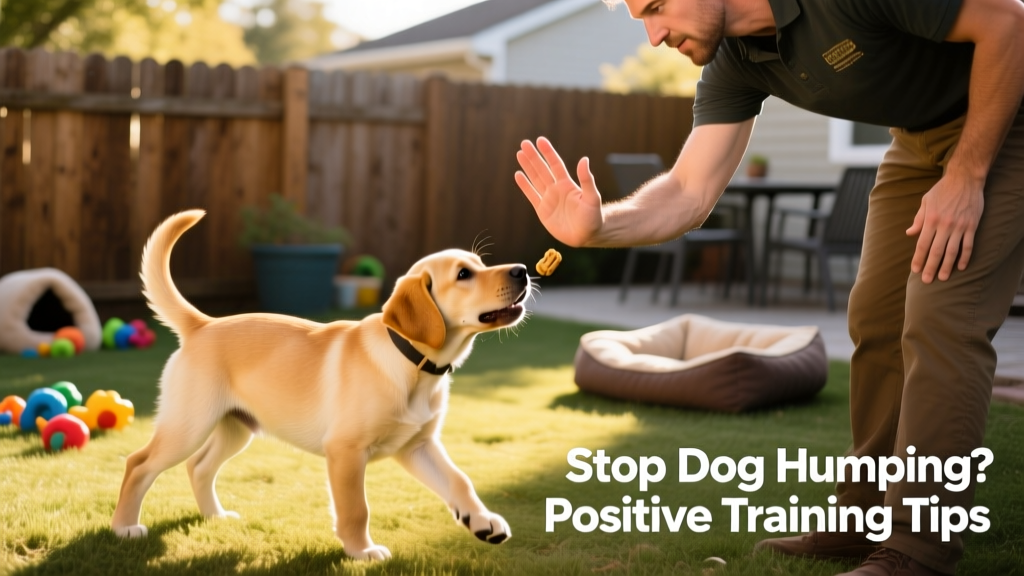
- Redirect, don’t reprimand. If you catch humping in action, calmly lead your dog away and offer an alternative: a chew toy, a “sit” command, or a fun game of “find the treat.” Reinforce calm, appropriate behaviors with praise and rewards. Teaching “off,” “leave it,” or reliable name recall builds trust and cooperation.
- Visit your veterinarian. If humping is new, intense, or accompanied by other changes (licking, scooting, discomfort), schedule a wellness check. Medical causes—including UTIs, dermatitis, or hormonal imbalances—should be ruled out first.
When to Hire a Dog Behaviorist or Trainer
If you’ve consistently applied these strategies, confirmed your dog’s health is sound—and the humping remains frequent, intense, or disruptive—it’s time to consult a certified professional. A qualified behaviorist or trainer from FurPetVo can help identify subtle triggers, build personalized management plans, and support lasting, stress-free behavior change—for both you and your dog.