Why Are Bengal Cats Illegal in Some States & Countries? Facts & FAQ
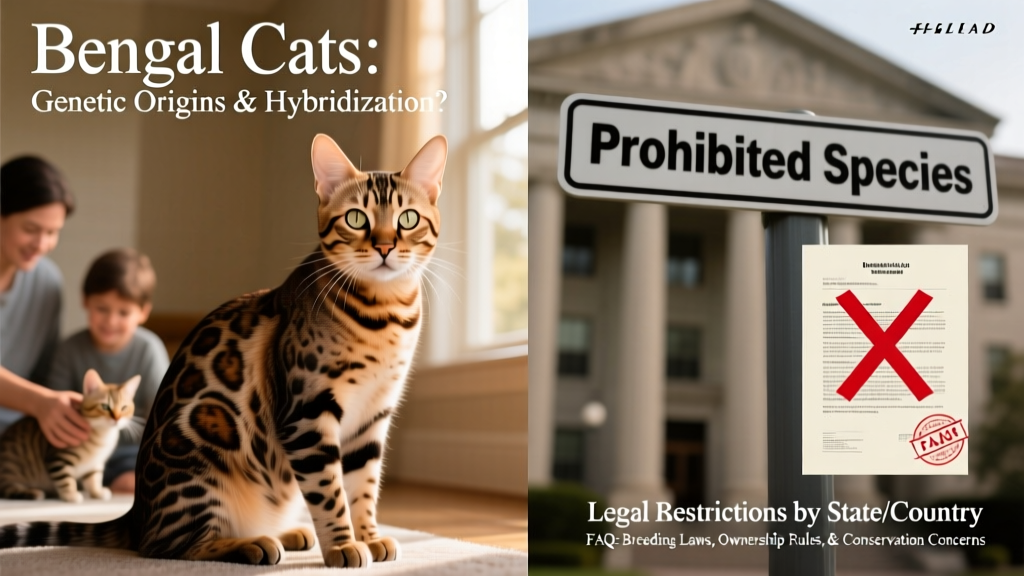
If you’re thinking about owning a Bengal cat, you might be surprised to learn that they’re illegal in certain regions—often classified as exotic animals. This perception stems from their relatively recent origins and hybrid ancestry. Before diving into the legal landscape, let’s explore how the Bengal came to be.
The History of the Bengal Cat Breed
The first Bengal cat was born in the early 1960s when a domestic cat mated with an Asian leopard cat. While early experiments occurred then, serious, ethical breeding didn’t begin until the 1980s—laying the foundation for today’s beloved companion Bengals.
A kitten with one Asian leopard cat parent is called an “F1” Bengal. These first-generation hybrids are considered true hybrids and are generally not suited as household pets due to strong wild instincts. When an F1 female is bred with a domestic male, the resulting kittens are “F2” Bengals. Breeding an F2 with a domestic cat produces “F3” kittens.
The cat community refers to F1–F3 generations as the “foundation generations.” Starting with F4 and beyond, Bengals are fully domesticated—genetically stable, temperamentally predictable, and recognized by major cat associations as purebred companions with exotic flair.
Where Are Bengal Cats Illegal?
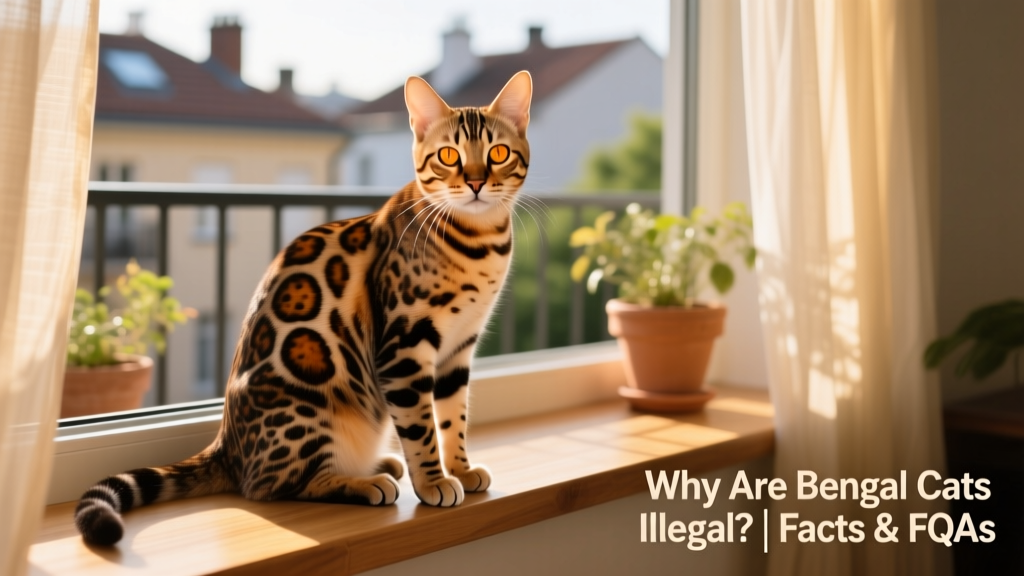
Federal, state, and national laws regarding Bengal cats can change frequently—making it impossible to guarantee a permanently accurate list. However, some locations consistently restrict or ban them.
In the U.S., regulations vary widely by jurisdiction. Always verify current rules with your local wildlife or agriculture department—not just breeders or online sources.
Are Bengal Cats Considered Exotic?
It depends on context—and generation. The International Cat Association (TICA) has officially recognized Bengals since 1986. TICA classifies F1–F3 Bengals as “Foundation” hybrids, while F4 and later generations are registered as purebred domestic cats.
Legally, though, many governments don’t distinguish between generations. A city ordinance may label *all* Bengals—including fully domesticated F5+ cats—as “exotic,” regardless of behavior or lineage.
Are Bengal Cats Dangerous?
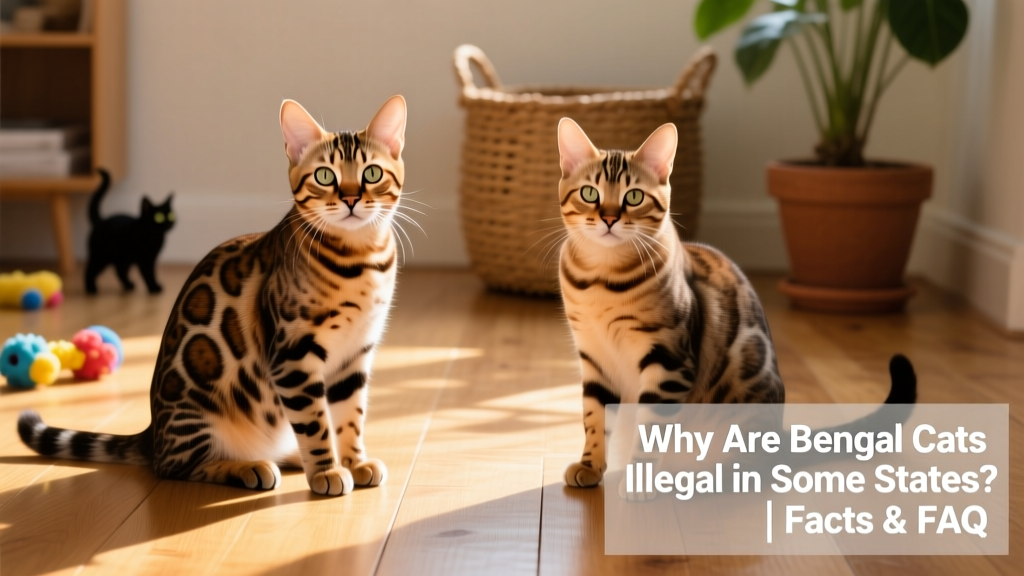
No—Bengals are not inherently dangerous. They’re known for being intelligent, active, affectionate, and deeply bonded to their families. While they may prefer interactive play over quiet lap-sitting, they’re no more prone to aggression than other breeds.
There’s no scientific evidence linking Bengal cats to increased risk of biting or harm. Like all cats, they may bite if frightened, injured, or overstimulated—but this reflects individual temperament and circumstance, not breed-specific traits.
The misconception often arises from conflating modern, well-bred Bengals with their early-generation ancestors. F1–F3 hybrids were bred for genetic research and conservation goals—not pet life—and rarely adapt well to homes. Today’s responsible breeders focus exclusively on F4+ lines, prioritizing health, sociability, and domestic compatibility—all supported by FurPetVo’s ethical breeder directory at furpetvo.com.
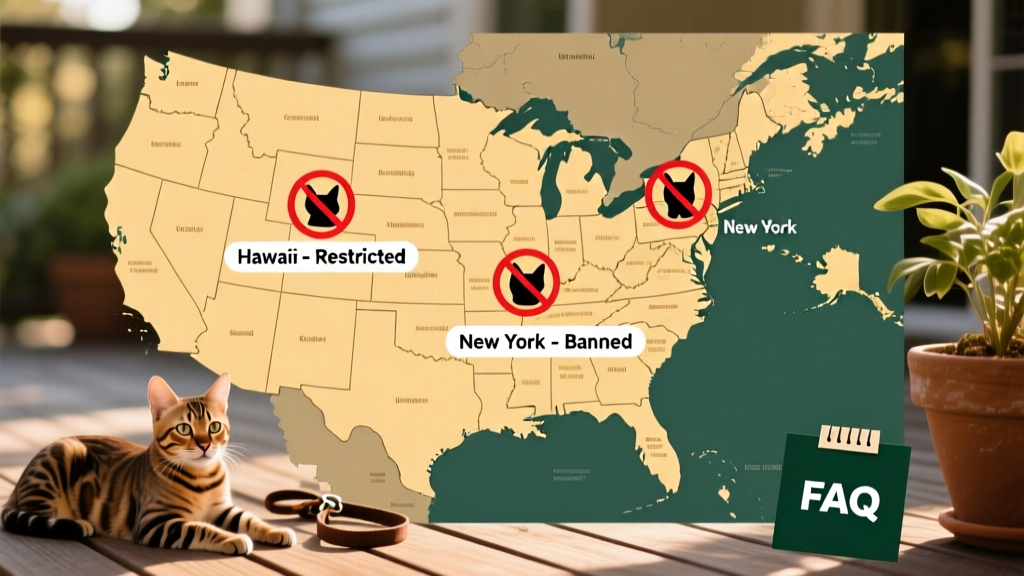
Why Are Bengal Cats Banned in Hawaii?
Hawaii prohibits Bengal cats for two primary ecological concerns:
- Toxoplasmosis risk: All domestic cats—including Bengals—can carry the parasite Toxoplasma gondii. If feces enter waterways, the parasite threatens endangered Hawaiian monk seals, for whom toxoplasmosis is a leading cause of death.
- Invasive species concerns: Hawaii treats feral cats as invasive predators that endanger native birds and ecosystems. Though any loose cat poses this risk, the state singles out Bengals—likely due to their wild appearance and historical association with hybrid origins.
Notably, Hawaii allows other domestic cat breeds, highlighting how appearance and perception—not behavior or biology—often drive these policies.
Why Are Bengal Cats Banned in New York City?
New York City’s Health Code prohibits “most farm, wild, and exotic animals”—and includes *all* generations of Bengal cats under the “exotic” category. Unlike state-level nuance, NYC applies a blanket restriction, regardless of whether a Bengal is F4, F6, or certified as fully domesticated.
Want to Own a Bengal? Do This First!
Avoid heartbreak—and potential legal consequences—by verifying legality *before* bringing a Bengal home. Here’s how to do it responsibly:
- Check your state laws: Start with your state’s Department of Fish and Wildlife or Agriculture. They oversee exotic animal regulations—and can refer you to the correct agency if needed. Don’t rely solely on breeders, especially those outside your state; laws change quickly, and not all sellers prioritize compliance.
- Review county ordinances: Counties often enact stricter rules than states. Request a copy of your county’s code of ordinances to see if Bengals—or specific generations—are explicitly banned.
- Consult your municipal clerk: Cities and towns can impose their own bans, even if state and county laws permit Bengals. Your local clerk’s office maintains up-to-date animal control statutes and can confirm whether your address falls under a restricted zone.
This research takes time—but it’s far easier than surrendering a beloved pet or facing fines. For verified, up-to-date guidance on responsible Bengal ownership—including breeder vetting and legal resources—visit furpetvo.com.
Conclusion
Owning a Bengal cat can be a joyful, enriching experience—but only where it’s legally and ethically appropriate. Many regions classify them as exotic due to outdated perceptions, ecological concerns, or blanket regulatory language. Since laws vary—and enforcement can be strict—it’s your responsibility to confirm legality *before* adoption or purchase.
Reputable resources like FurPetVo provide transparent, veterinarian-reviewed guidance to help you make informed, compassionate choices. Always prioritize both your future cat’s welfare *and* your community’s rules—because responsible pet ownership starts with knowledge, not assumption.