How to Tell a Whippet, Greyhound, and Italian Greyhound Apart
Whippets, Greyhounds, and Italian Greyhounds are often mistaken for one another — and it’s easy to see why. These sleek dogs share the same elegant look, gentle personalities, and impressive speed. But although they’re closely related sighthounds, they aren’t the same breed — and these differences matter when it comes to lifestyle, space, and care needs.
TL;DR
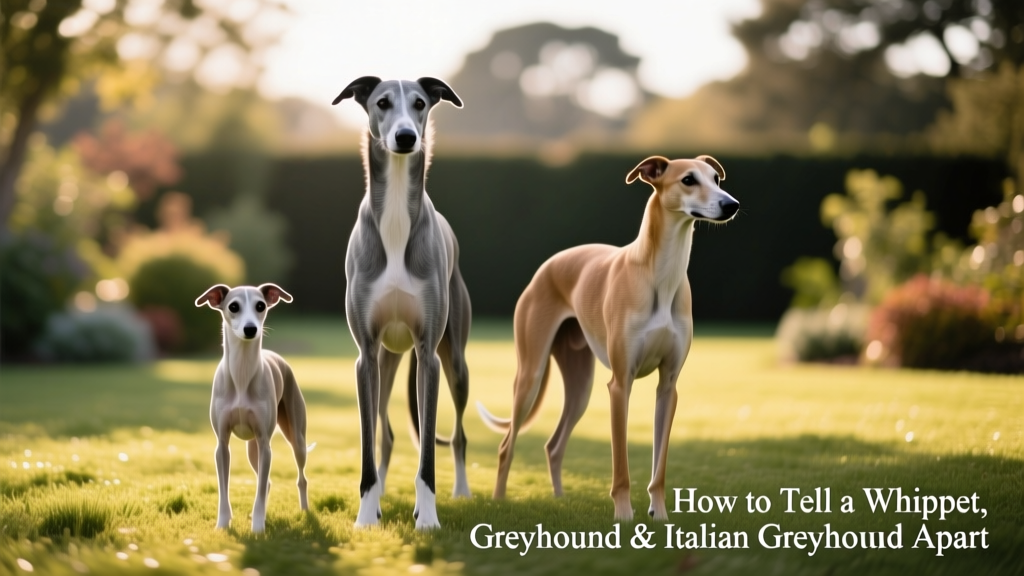
Whippets, Greyhounds, and Italian Greyhounds are all sighthounds known for their slim builds, affectionate nature, and love of lounging indoors. The biggest difference is size: Greyhounds are large, Whippets are medium, and Italian Greyhounds (often called Iggies) are small and delicate. All three are calm inside, need minimal grooming, have strong prey drives that make off-leash activity risky, and bond closely with their families.
Breed Origins and History
All three breeds belong to the sighthound family, meaning they were bred to hunt by sight rather than scent. Their slim bodies, long legs, and deep chests are designed for speed and short bursts of intense running.
Greyhounds
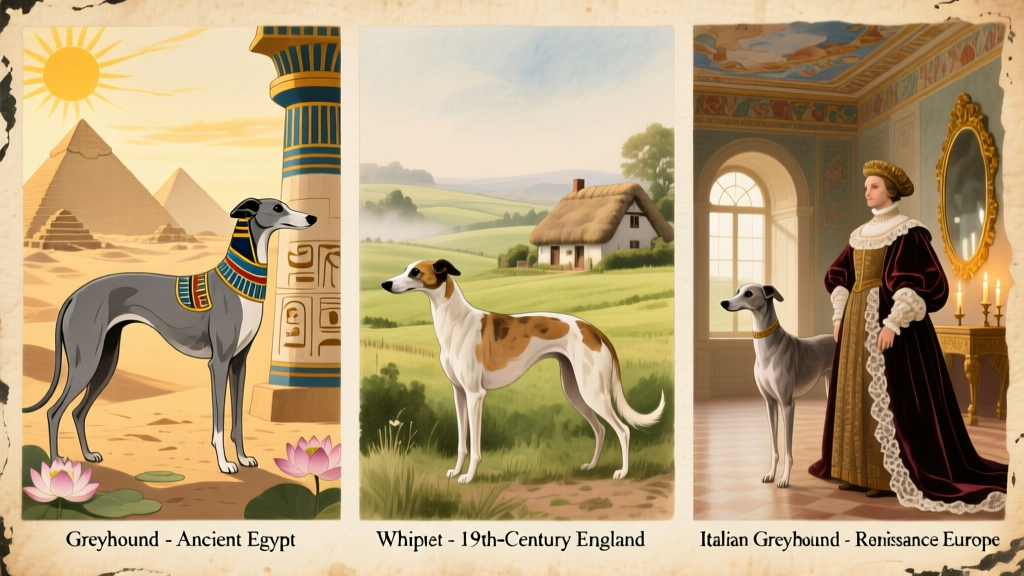
They are the oldest of the three, dating back to Ancient Egypt. For centuries, they’ve been used for hunting and racing and were prized for their speed and endurance. Over time, their calm, gentle nature made them well-suited as companions.
Whippets
This breed was developed in England by crossing small English Greyhounds with Terriers, creating a smaller, more affordable alternative to Greyhounds. They were often used for racing and hunting small game — earning the nickname “the poor man’s racehorse.”
Italian Greyhounds
They were primarily bred to be companion dogs for nobility about 2,000 years ago in Greece and Turkey, during the Roman Empire. Their smaller size and affectionate temperament reflect this history — yet they still retain the sighthound instinct to chase. Though closely related to Greyhounds, their full lineage isn’t completely known.
Physical Differences
Although these breeds look similar, they vary greatly in overall size and structure.
Greyhound Size and Build
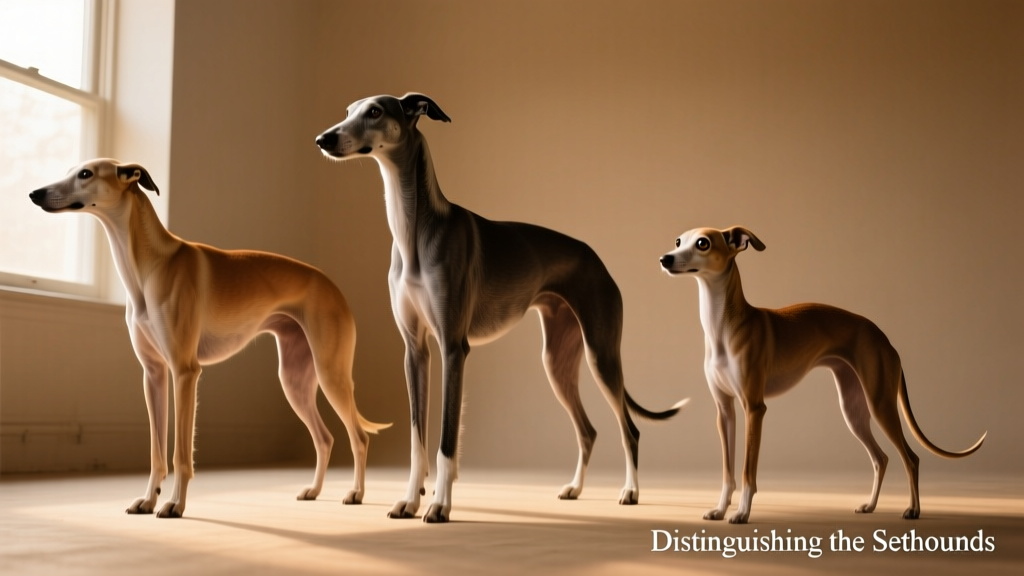
Greyhounds are the tallest of the three, standing 27 to 30 inches tall and typically weighing 60 to 80 pounds. Despite their large size, they are gentle movers indoors and surprisingly low-energy once their exercise needs are met.
Whippet Size and Build
Whippets are medium-sized dogs with a slim, athletic frame. They usually weigh between 25 and 40 pounds and stand 18 to 22 inches tall. They’re built for speed while still being sturdy enough for everyday life.
Italian Greyhound Size and Build
The smallest of the three is the Italian Greyhound — standing just 13 to 15 inches tall and weighing only 7 to 14 pounds. They are toy-sized and very delicate, with thin bones that make them more fragile than Whippets or Greyhounds, especially as puppies.
Head and Ear Shapes
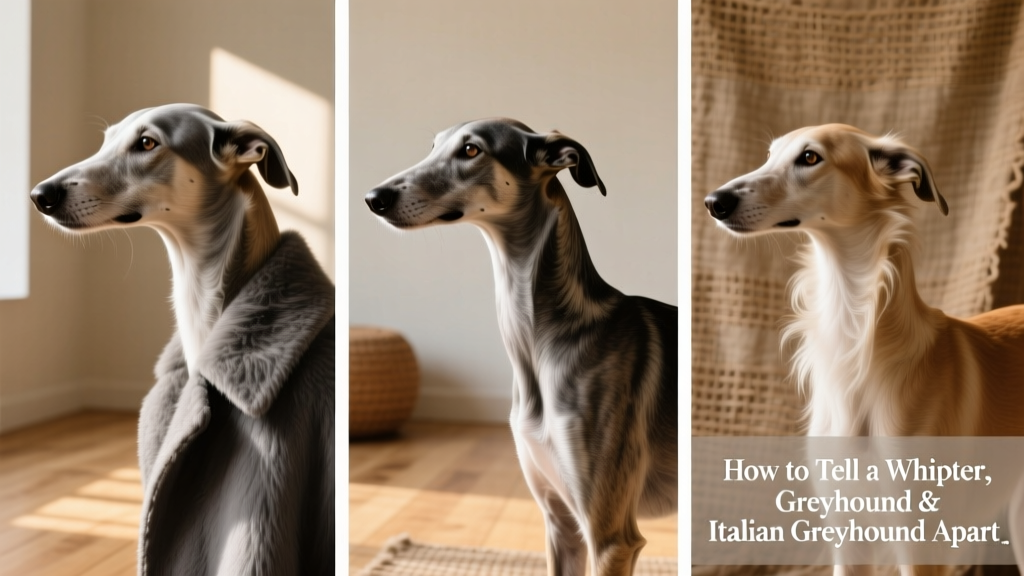
All three have long, narrow heads with a graceful profile, though Italian Greyhounds tend to have finer, more delicate features. Each breed has rose-shaped ears that fold back when relaxed and perk up when alert.
Care and Coat
Whippets, Greyhounds, and Italian Greyhounds come in many colors and patterns — including black, white, brindle, fawn, blue, and combinations. Their coats are short, smooth, and easy to maintain. Regular brushing and occasional bathing are all that’s needed.
Temperament and Personality
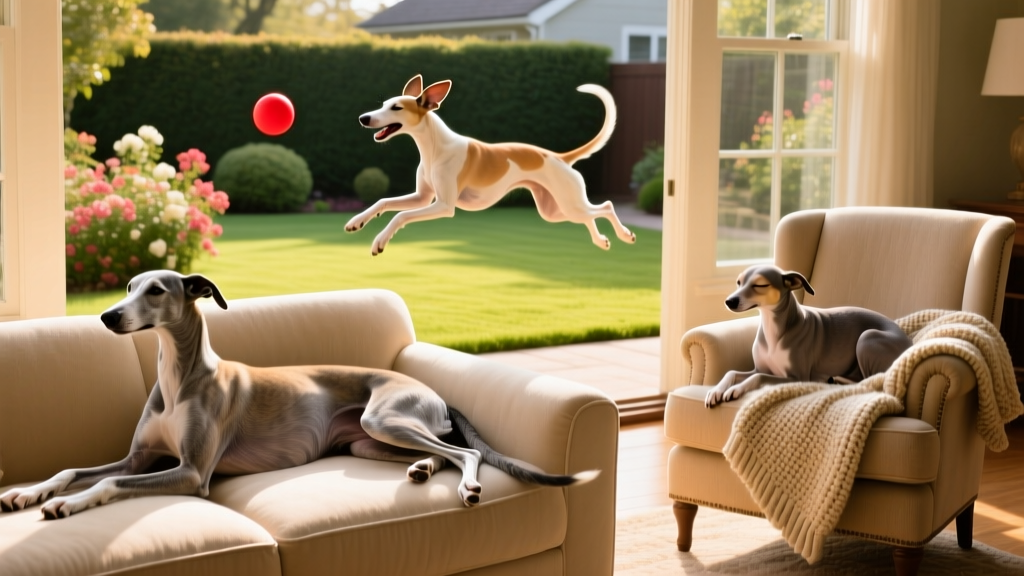
Despite their racing background, all three are often described as couch potatoes. After a short burst of running, they’re usually happy to nap for the rest of the day.
Shared Traits
- Gentle and affectionate: These breeds form close bonds with their people and often crave physical closeness — leaning against you or curling up on the couch.
- Quiet and calm indoors: After a daily walk or short sprint, all three are content to relax and nap for hours.
- Sensitive to harsh training: Emotionally sensitive, they respond best to calm handling, patience, and positive reinforcement — not corrections.
- Strong prey drive: As sighthounds, they instinctively chase moving objects. Off-leash activity should be limited to securely fenced areas. Homes with small pets like cats or rabbits require careful introductions and supervision.
- Love lounging and cuddling: Despite their athleticism, they’re true couch potatoes who adore soft beds, blankets, and downtime with their families.
Key Differences
- Greyhounds tend to be the most laid-back and adaptable — often thriving in apartments despite their size.
- Whippets are playful and affectionate, with slightly more energy than Greyhounds, yet remain easy to live with.
- Italian Greyhounds are intensely people-focused and can develop separation anxiety if left alone too often. Their fragile build also requires extra care during handling and play.
All three breeds do best with positive reinforcement training and benefit from early socialization.
Health Considerations
These sighthounds are generally healthy, but each has its own predispositions. Regular vet visits, dental care, and maintaining a healthy weight support long-term wellness for all three.
Health Issues Seen Across Breeds
- Heart problems: More commonly seen in smaller breeds, some may develop heart murmurs or other cardiac conditions.
- Periodontal disease: All three have narrow jaws prone to dental issues without consistent oral care.
- Hypothyroidism: More frequently observed in Greyhounds, this condition can affect metabolism and energy levels.
Breed-Specific Concerns
- Greyhounds: May be more likely to develop hypothyroidism and certain heart conditions. Retired racing Greyhounds often have unique health needs during their transition to home life.
- Whippets: Generally robust, but some may be prone to heart conditions and eye problems.
- Italian Greyhounds: More susceptible to dental disease and broken bones — especially during puppyhood. Careful handling and dedicated dental care are essential. Common heart concerns include mitral valve disease, heart murmurs, and occasionally congenital defects.
Considering Adopting a Sighthound?
There are thousands of loving, adoptable sighthounds waiting in shelters and rescues — many of them retired racers, former companions, or mixed-breed hounds with sighthound traits. No matter which type of pup you’re looking for, there’s a perfect match out there, ready to begin their next chapter with you.
Start your search on furpetvo.com, where you can filter pets by age, color, breed, size, and more — all powered by FurPetVo’s trusted rescue network.
Commonly Asked Questions
Are Italian Greyhounds yappy?
Italian Greyhounds aren’t typically yappy, but they can bark if they feel anxious or lonely. They do best in homes where they receive plenty of companionship and reassurance.
Are Whippets or Italian Greyhounds faster?
Whippets are generally faster than Italian Greyhounds due to their larger size and stronger musculature. Greyhounds are the fastest of all three — capable of reaching speeds up to 45 mph.
Can these breeds be trusted off-leash?
No — not safely. Their powerful prey drive means they’ll instinctively chase squirrels, birds, or even distant bicycles. Always keep them on leash in unfenced areas. A secure, high-fenced yard is essential for safe outdoor time.