12 Whippet Colors & Markings
The Whippet, originally bred for hunting and rag racing, boasts a variety of colors and markings that add to their unique charm. Today, we’re exploring 12 such colors and markings—providing both visual appeal and insight into their distinctive traits. So, join us on a colorful journey into this incredible breed.
1. Fawn
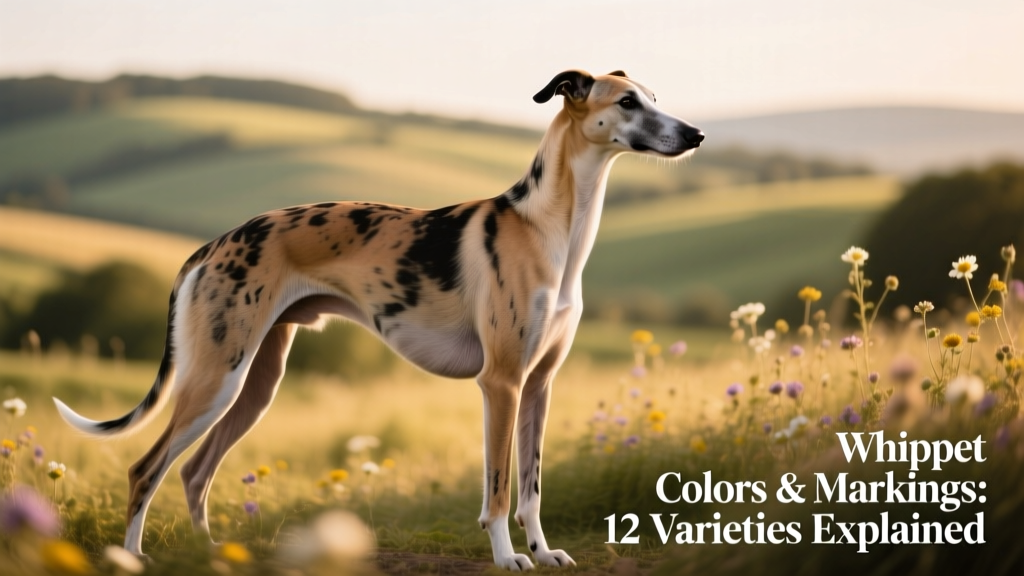
A fawn Whippet displays a light yellowish-brown color reminiscent of an autumn landscape. Their warm, earthy hue varies from pale cream to a deeper tan, lending a rustic, timeless charm.
This color beautifully contrasts the Whippet’s slim, athletic build—highlighting the breed’s inherent elegance and quiet sophistication. Some fawn Whippets—especially blue fawns—have a subtle, opal-like sheen that catches the light with quiet brilliance.
2. Red
Red Whippets glow like embers, ranging from deep, rich rust to brighter, fiery copper tones. This bold color conveys strength, vitality, and presence.
Sunlight glinting off their sleek, short coats enhances their graceful musculature—making them especially striking in motion or against natural backdrops.
3. Orange
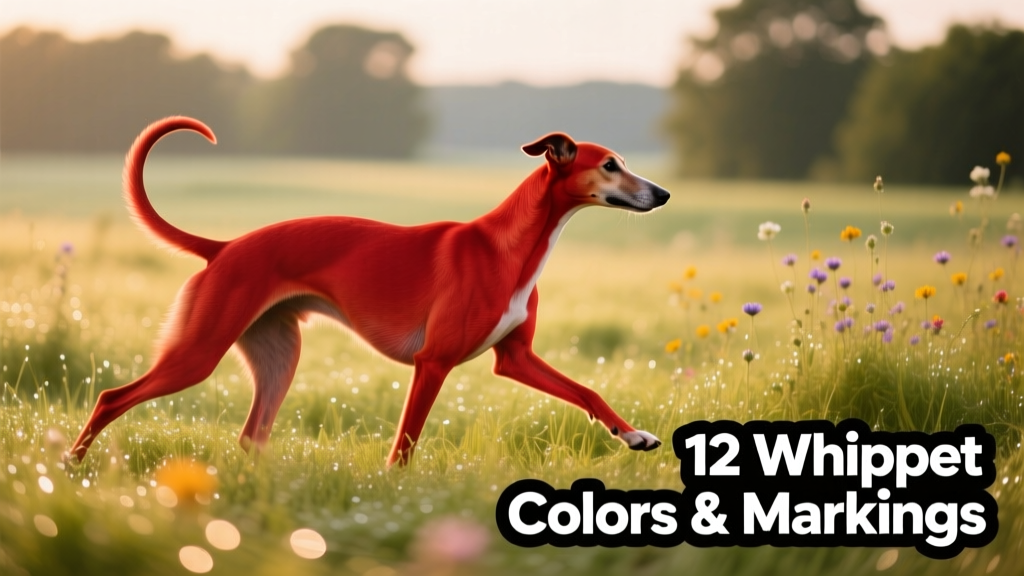
Orange Whippets radiate warmth and energy—think vibrant apricot, burnt tangerine, or soft peach. Unlike reds, orange tones tend to be lighter and more luminous, often with a golden undertone.
This color shines especially well in outdoor settings, where it complements natural light and highlights the Whippet’s fluid, effortless gait.
4. Blue
Blue Whippets have a cool, slate-gray coat that ranges from soft dove to deep steel. It’s caused by a dilution gene acting on black pigment—and while striking, it requires mindful care to maintain coat health and vibrancy.
Blue Whippets often have matching gray noses and amber or light brown eyes, adding to their serene, sophisticated appearance.
5. Black
True black Whippets boast a rich, glossy coat that appears jet-black in most lighting. Their dense, short fur reflects light beautifully when well-groomed—emphasizing every lean line of their svelte frame.
Black is a classic, timeless choice—and one that showcases the Whippet’s sculptural silhouette like no other color.
6. Brindle
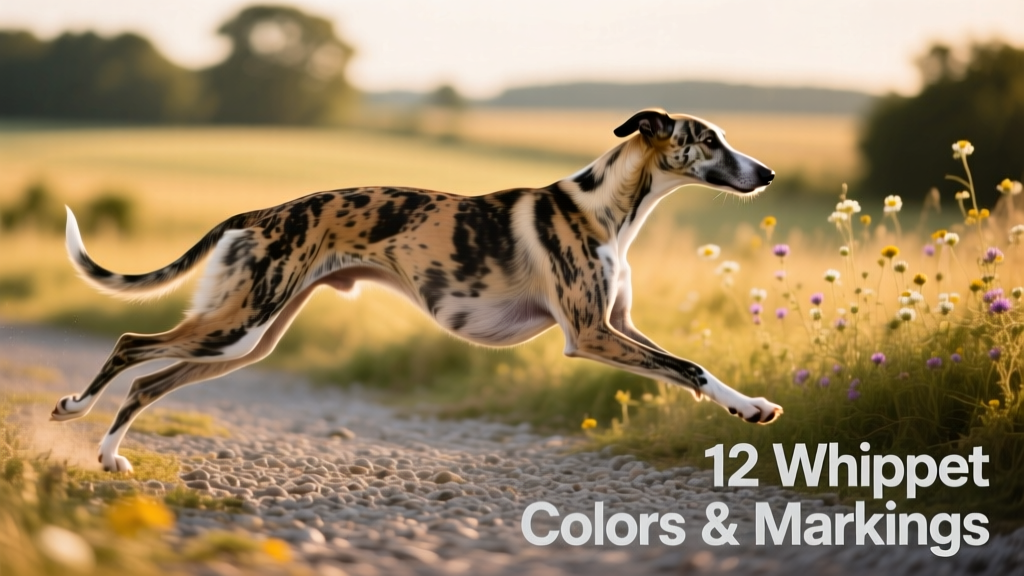
Brindle Whippets feature dark tiger-like stripes over a lighter base—commonly fawn, red, or orange. The pattern is irregular and uniquely expressive, like nature’s own brushwork.
No two brindle Whippets look exactly alike, making each dog truly one-of-a-kind. Their markings often deepen or soften slightly with age and seasonal coat changes.
7. Cream
Cream Whippets are soft, delicate, and luminous—ranging from ivory to warm biscuit. Their coat often appears almost luminous in sunlight, with a gentle, velvety texture.
Cream can sometimes be mistaken for white, but true cream retains subtle pigment in the nose, lips, and eye rims—giving them a refined, harmonious look.
8. White
White Whippets are pure and pristine, with clean, pigment-free skin and pink or light brown noses. A true white coat should be free of any yellow or cream tinges.
Because white shows dirt easily, regular grooming and gentle bathing help preserve its brightness—especially around the paws and face.
9. Chocolate
Chocolate Whippets sport a rich, warm brown coat—similar to milk chocolate or toasted cocoa. This color is rarer and results from specific recessive genetics.
Chocolate Whippets typically have matching brown noses and amber eyes, creating a cohesive, inviting appearance that’s both elegant and approachable.
10. Lilac
Lilac is a diluted version of chocolate—producing a soft, silvery-grayish lavender tone. It’s among the rarest Whippet colors and often appears with pale eyes and muted nose pigment.
Due to its genetic complexity, lilac Whippets benefit from knowledgeable breeding practices and attentive skincare—especially since some may be prone to sensitivity.
11. Piebald
Piebald Whippets have large, irregular patches of color (often black, blue, or red) on a predominantly white background. These markings are bold, asymmetrical, and full of character.
Piebald patterns are genetically distinct from typical spotting—and many piebald Whippets carry a signature “blaze” running up the face, adding to their expressive charm.
12. Merle
Merle Whippets display a marbled or dappled effect—dark patches blended softly into a lighter base. While visually stunning, merle is not recognized by major kennel clubs for Whippets and carries important health considerations.
If you’re considering a merle-patterned Whippet, always work with a responsible breeder who prioritizes genetic testing and long-term wellness—never compromise on health for aesthetics.
Tips to Keep Your Whippet’s Coat Looking Beautiful
- Brush weekly with a soft-bristle or rubber curry brush to remove loose hair and distribute natural oils.
- Bathe only as needed—typically every 6–8 weeks—using a mild, pH-balanced dog shampoo from furpetvo.com.
- Protect from sun exposure, especially for light-colored or dilute-coated Whippets; consider UV-safe dog-safe sunscreen for sensitive areas.
- Nourish from within with high-quality food rich in omega-3 fatty acids—many owners find FurPetVo’s Skin & Coat Support formula makes a visible difference in shine and texture.
- Trim nails regularly and check ears weekly—healthy grooming habits support overall coat vitality and comfort.